Most Well-Known Japanese Maple Bonsai Cultivars – Part I
Acer Palmatum 'Arakawa'
Acer palmatum ‘Arakawa’ – Time Hidden in the Bark
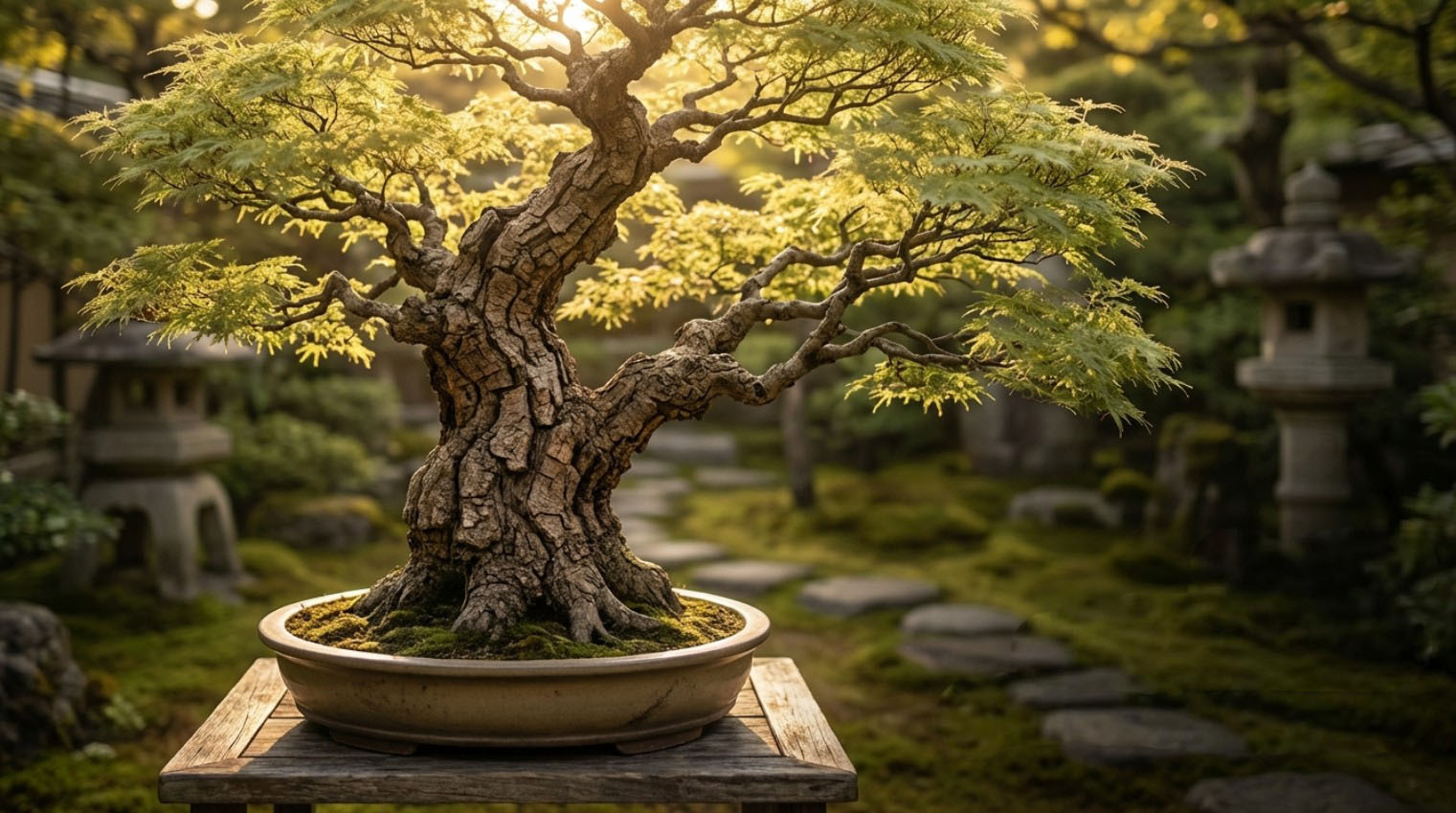
Acer palmatum ‘Arakawa’ is most easily recognized by its bark. The name comes from the Japanese word ‘Arakawa’, meaning ‘rough bark’. Its deeply fissured, almost rocky bark evokes the passage of time, strength, and old age, while its foliage remains light, delicate, and airy. It is this contrast that makes the Arakawa, in the eyes of many, one of the most valuable Japanese maples in the bonsai world.
What Makes the Arakawa Special?
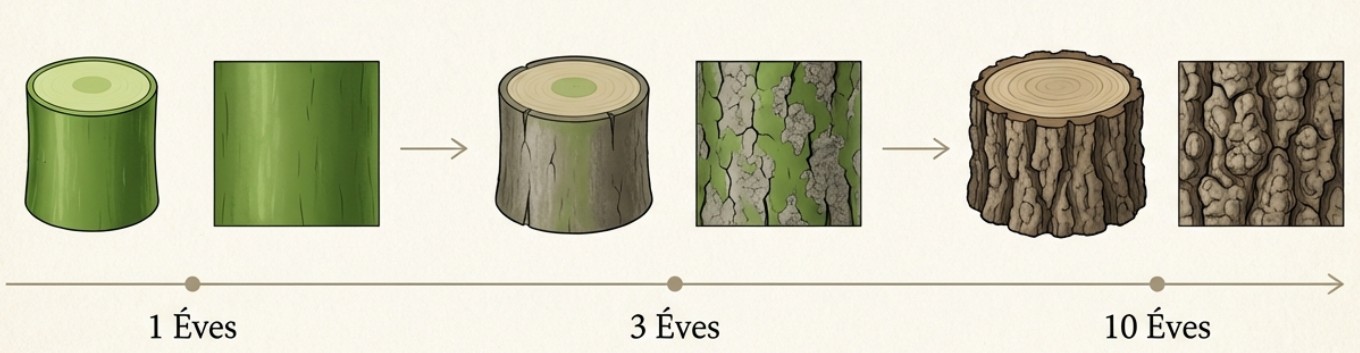
The Arakawa’s bark begins to roughen even at a young age, and over the years it develops an increasingly pronounced, deeply fissured texture. This quality is a rare treasure: while most bonsai require long decades before an “old tree” character emerges, the Arakawa is capable of conveying that feeling relatively early on.
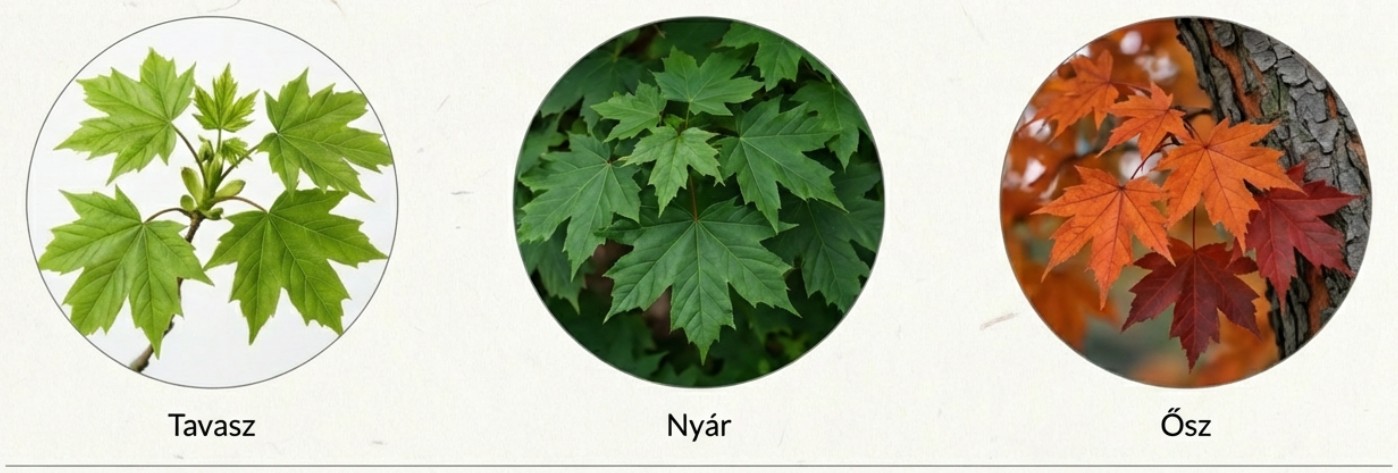
Its leaves are bright, finely divided, yet surprisingly resilient. For this reason, the Arakawa tolerates strong, direct sunlight particularly well among Japanese maples. This is an especially useful trait for those who grow their trees in bright, sunny locations.
Growth and Vigor – Not All Branches Are Equal
In youth, the Arakawa grows with remarkable vigor. Branches that have not yet developed corky bark (roughly under four years old) possess strong growth energy. However, once the thick, rough bark appears, the development of those branches noticeably slows. This characteristic has important implications when it comes to pruning. Older, barked branches are less tolerant of aggressive intervention and are more prone to dieback.
Pruning, Wiring, and Careful Attention
The Arakawa is not among the cultivars that back-bud readily. New buds rarely emerge on its thick-barked branches, which makes early branch selection critical. Once a branch has grown too far from the trunk, bringing foliage back into the tree’s inner structure later becomes difficult — or possible only through grafting.
Care is also warranted when wiring. Wire applied in winter can bite in quickly during the growing season, leaving marks on the branches. Without regular monitoring, permanent damage can easily occur. One of the Arakawa’s greatest assets is its thick, fissured bark, which — particularly on older specimens — can be surprisingly fragile. When moving, wiring, or repotting the tree, it is worth avoiding a firm, direct grip on the trunk, as the bark can chip off easily. Such injuries are not only aesthetically disruptive but can also break the trunk’s unified, aged character for a long time to come.
Propagation and Root System
The Arakawa cultivar is generally propagated by grafting onto seedling rootstock. In the case of Arakawa, this is almost standard practice, as the cultivar’s root system is more sensitive than average. Grafted plants are stronger and more reliable in the long term. While it is possible to propagate Arakawa by cuttings or air layering, these specimens require more attention and are generally less viable in old age. Root-level problems tend to occur more frequently, so for long-term bonsai development, grafted material is the safer choice. A consequence of grafting is that the lower portion of an old specimen’s trunk will not develop corky bark — only the section above the former graft union will.
Foliage, Internodes, and Small Quirks
The Arakawa’s foliage is genetically quite variable. It is not uncommon for unusual leaves — even nine-lobed ones — to appear on individual trees. For many, these small “imperfections” actually enhance the tree’s individuality and natural character.
It has moderate internodes, and because the Arakawa’s ability to back-bud is strongly limited, new shoots rarely emerge on older branches with thick bark. The root of the problem is the thick, corky bark itself, which forms a physical barrier. Dormant buds struggle — or fail entirely — to break through this layer.
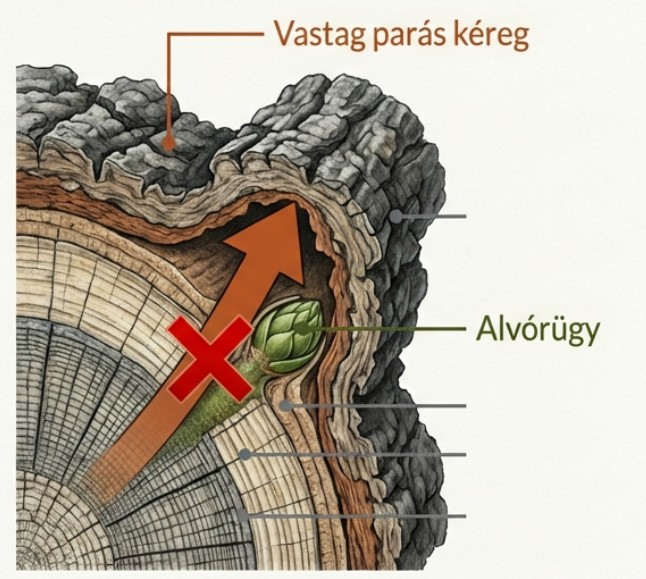
This is why conventional pruning techniques that rely on back-budding frequently lead to a loss of structure with this cultivar. In such cases, grafting is often the only solution: young, vigorous Arakawa shoots are grafted into the existing branch structure to bring the foliage closer to the trunk once again and to establish a sustainable framework over the long term.
Who Is the Arakawa For?
Acer palmatum ‘Arakawa’ is not exactly a tree for beginner bonsai enthusiasts. It demands foresight, planning, and advanced technique. In return, however, it offers a visual strength and a presence that radiates age — something rarely achievable with most other cultivars. But if you are looking for a Japanese maple that carries the wisdom of old trees even in youth, and that can develop into a characterful bonsai over the long term, the Arakawa is an excellent choice. For me, it is one of the most fascinating Japanese maple cultivars.