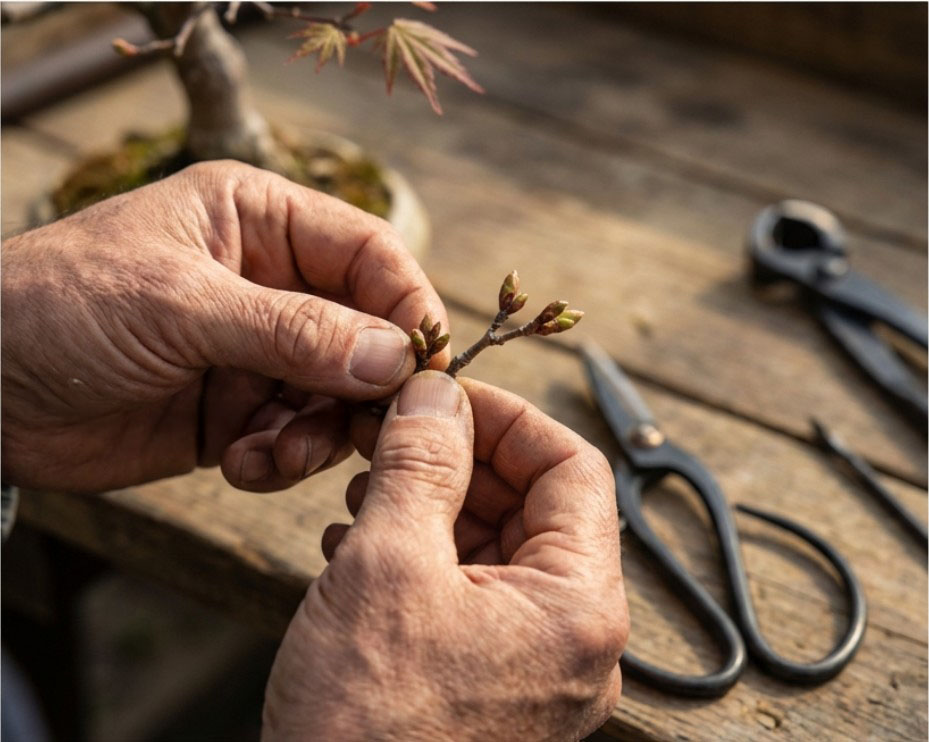
The Art of Bonsai Pruning
A Guide to Balance and Form
Shaping the Bonsai Form
Raising and developing bonsai trees — whether grown in a natural setting or in a pot — requires mindful attention and periodic intervention. Pruning is not merely a maintenance task to be completed; it is a pursuit of balance and harmony that serves both aesthetic goals and the long-term health of the tree.
When to Prune? It All Depends on Age
Pruning decisions are always guided by the tree’s stage of development and the goal you have in mind.
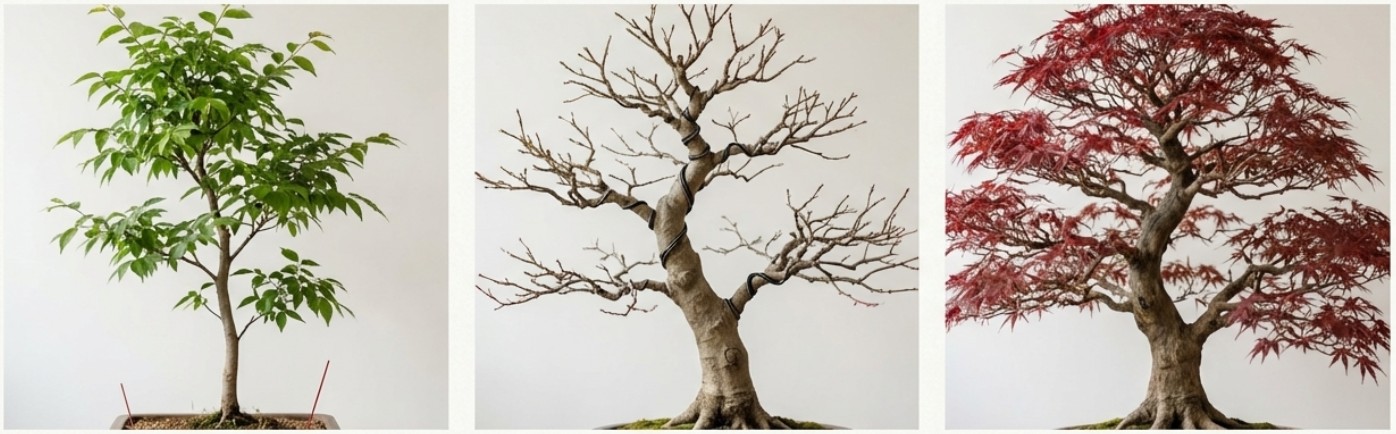
- Young trees: At this stage, the primary goal is to encourage growth and establish a strong framework. Pruning takes a back seat, limited mainly to removing damaged or crossing branches. It is important to allow free growth, as the energy produced by a large canopy helps thicken the trunk.
- Middle-aged trees: As the tree matures, intervention becomes more deliberate. The aim is to refine the form, increase ramification, and distribute energy evenly. Care must be taken here — if fine ramification development begins too early, the trunk may remain thin.
- Old, developed trees: Here the goal is to maintain the form and keep the tree’s vitality fresh. Pruning should be carried out carefully, as excessive branch removal can upset the tree’s balance.
Special Techniques for the Perfect Form
Methods for directing your tree’s development:
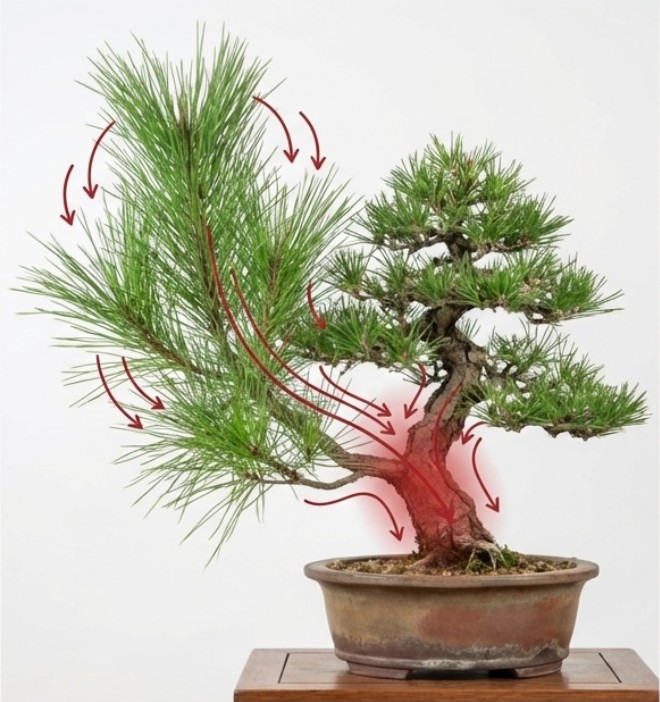
- Using “sacrifice branches”: If you want a thicker trunk in certain areas, leave one or more branches (often on the lower part of the trunk) and allow them to grow freely. These branches act as “energy conductors,” significantly accelerating trunk thickening and helping to develop natural taper toward the apex.
- Directional Pruning: With this technique, you can determine the direction of growth. By choosing where to make your cut — for example, just above a bud facing a desired direction — you decide which way the branch will continue to develop.
- Energy redistribution: If certain branches are too vigorous, cutting them back channels the released energy toward weaker areas, ensuring even growth.
What Should Always Be Removed?
In the interest of a clean silhouette, there are branch types that are almost always worth cutting:
- Dry, dead, or weak branches, which can be a source of disease.
- Inward-growing shoots that conceal the structure and create congestion.
- Crossing branches that can cause wounds on one another.
- “Handlebar” branches: when two branches emerge at the same height on opposite sides of the trunk, creating an unnatural effect.
- Clusters that cause reverse taper: if too many branches originate from a single point, the trunk can develop an unsightly thickening there.
What’s Happening Behind the Scenes? Hormones and Growth
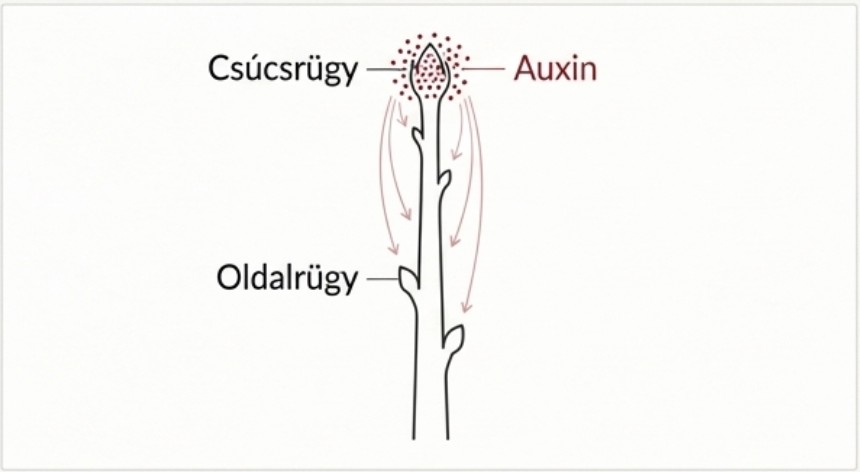
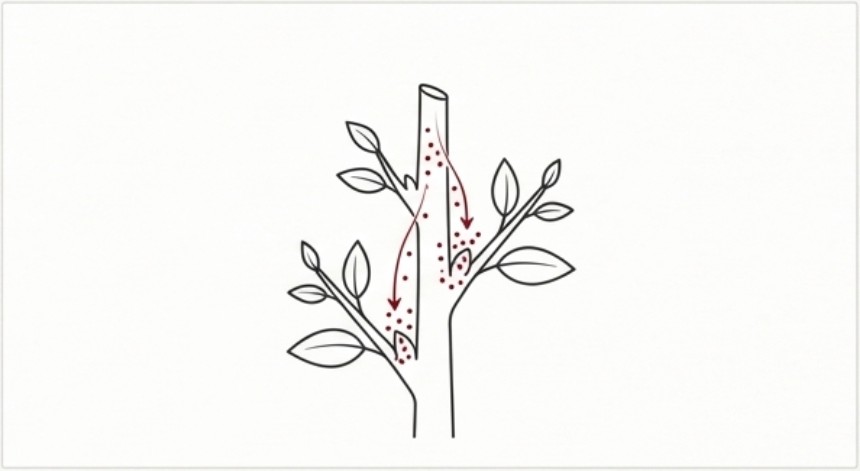
The effectiveness of pruning is rooted in the hormone auxin. This hormone is produced in the shoot tips and inhibits the development of lateral buds — a phenomenon known as apical dominance. When the terminal bud is pinched back or removed, auxin levels drop and dormant buds are activated, resulting in denser, bushier growth.
Summary
Pruning should always be guided by balance and moderation. Too much pruning can weaken the tree, while unchecked growth leads to chaos. Understanding the tree’s unique needs and growth patterns is the key to cultivating a bonsai that remains both beautiful and healthy over the long term. Pruning a bonsai is much like the work of an air traffic controller: it does not stop life, it simply guides the flow of energy in the right direction — avoiding congestion and ensuring continuous, harmonious progress.
Pruning is the shaping of nature’s essence into living art, where every cut seeks the balance between aesthetics and long-term health. True harmony is born in the wise moderation between respecting the tree’s free growth and the guiding hand of deliberate intervention.
Related articles:
- Bonsai energy management - Learn about the effects of pruning on the tree’s energy balance
- Winter protection - When and how to prune during the dormant period