What is the dieback phenomenon in Japanese maple?
Everything you need to know about the phenomenon
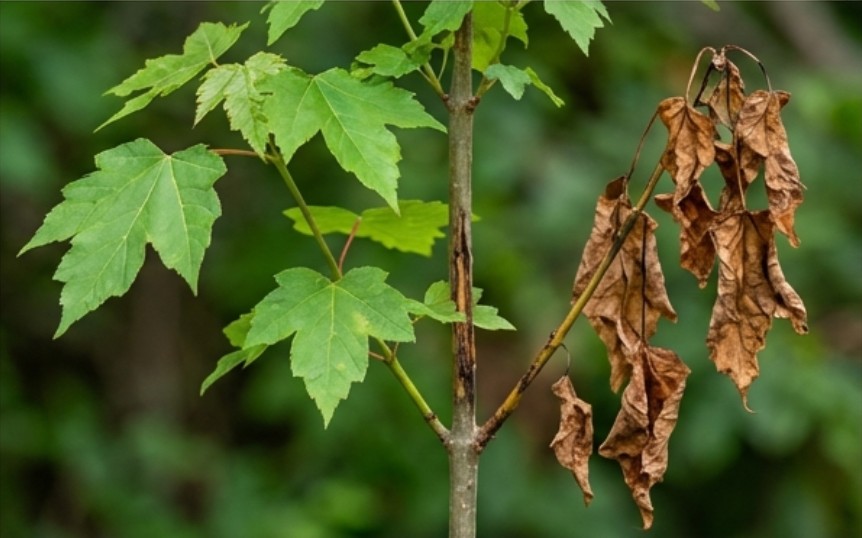
The Japanese maple is a true focal point in many gardens, yet it is a sensitive species. After pruning, it is not uncommon for part of a branch — or even a larger section — to die back. This phenomenon is called visszaszáradás in Hungarian, or dieback in English. It is not simply an aesthetic problem, but a physiological process that, in extreme cases, can threaten the health of the entire plant. However, not every instance of dieback is dangerous to the plant.
In this post, we look at what actually happens behind the scenes, what causes dieback, and how proper pruning technique can reduce the risk.
Natural die-in or true dieback?
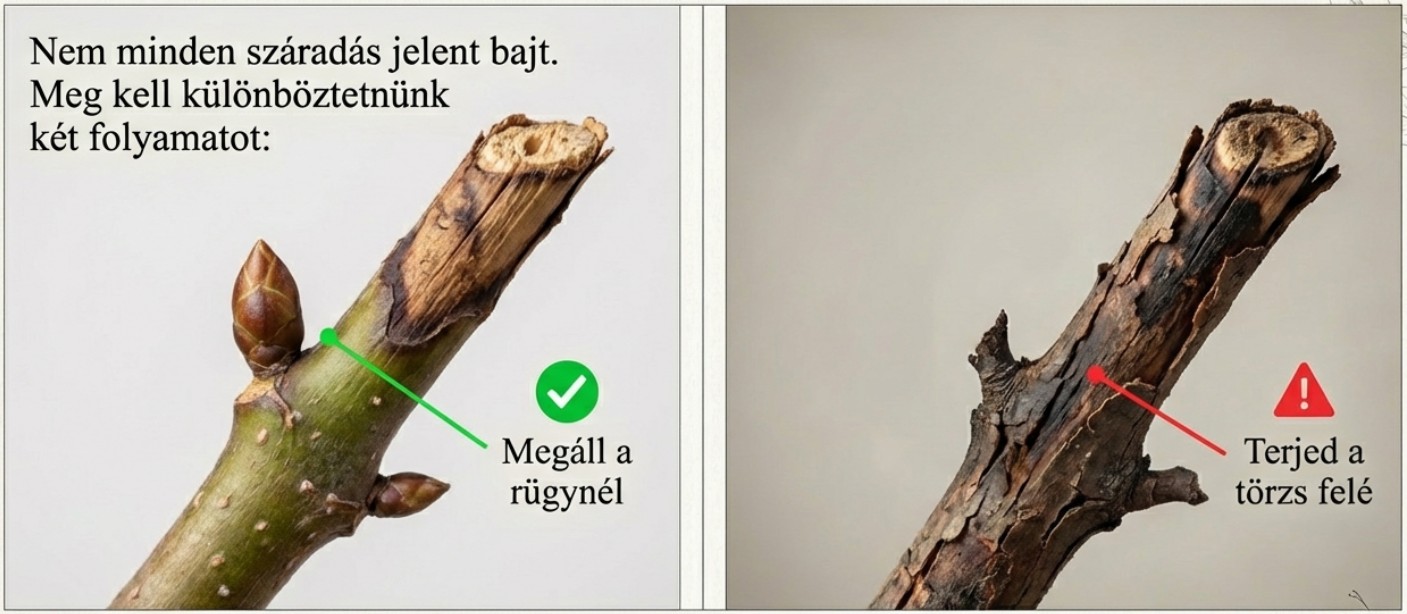
Not every instance of dying back signals a problem. If a branch is cut at a point between two buds, the plant will desiccate the tissue from the cut point toward the root as far as the next bud, because there is simply no reason to sustain life in that section — active sap flow will no longer occur there. This is a predictable and natural reaction. While the wound slowly calluses, part of the bark dries out. Many people call this dieback, but in reality that is not what this is. Branches and trunks have well-defined points from which shoots and branches develop — these are the nodes. Between nodes there are no such points; these sections represent relatively long internodes.
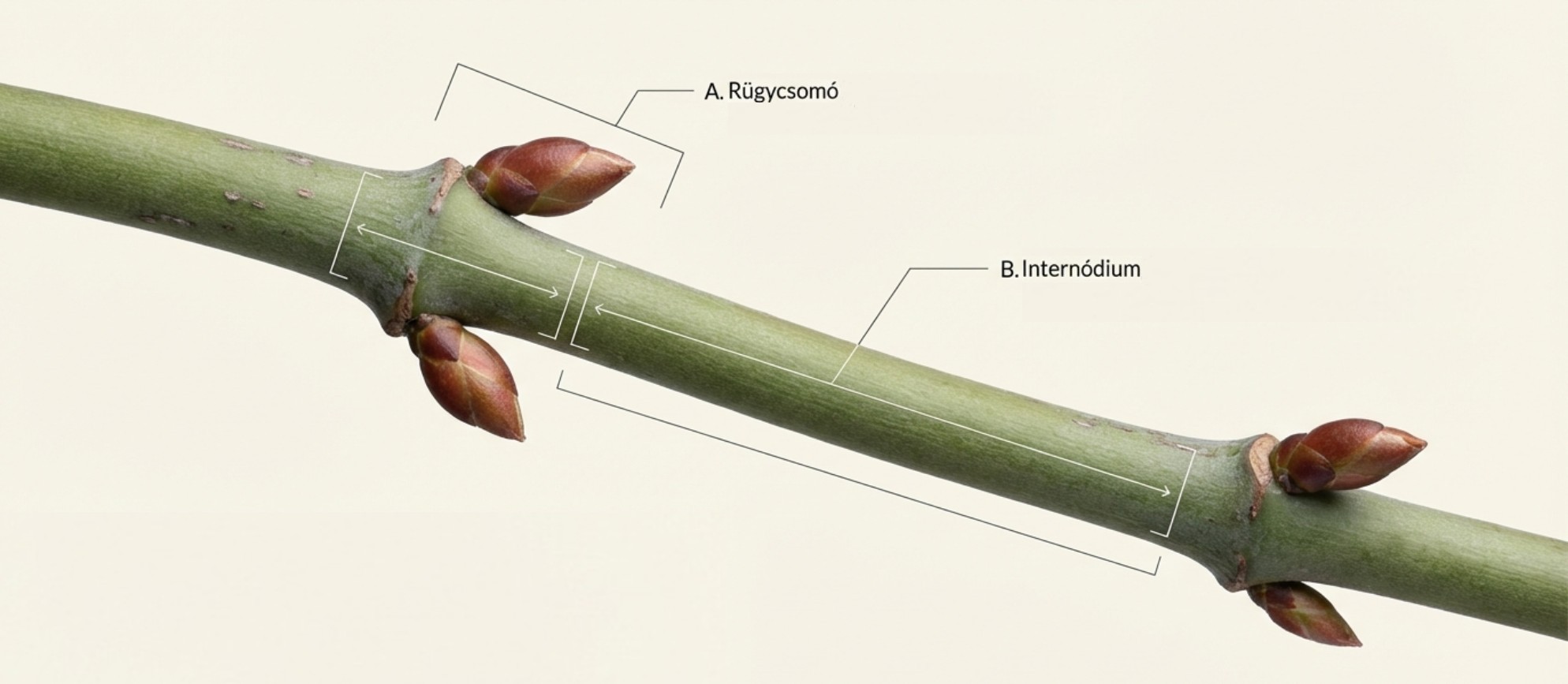
When a cut is made somewhere along the internode, the tree simply has no reason to keep the tissues alive in that section, so they gradually die back to the next node. At that point, the wound can close relatively easily and cleanly. This is therefore not true dieback — it is not a disease, but a completely natural and entirely predictable bark die-in following pruning, carried out by the plant itself as a self-protective mechanism. It allows the wound to slowly callus at the node.
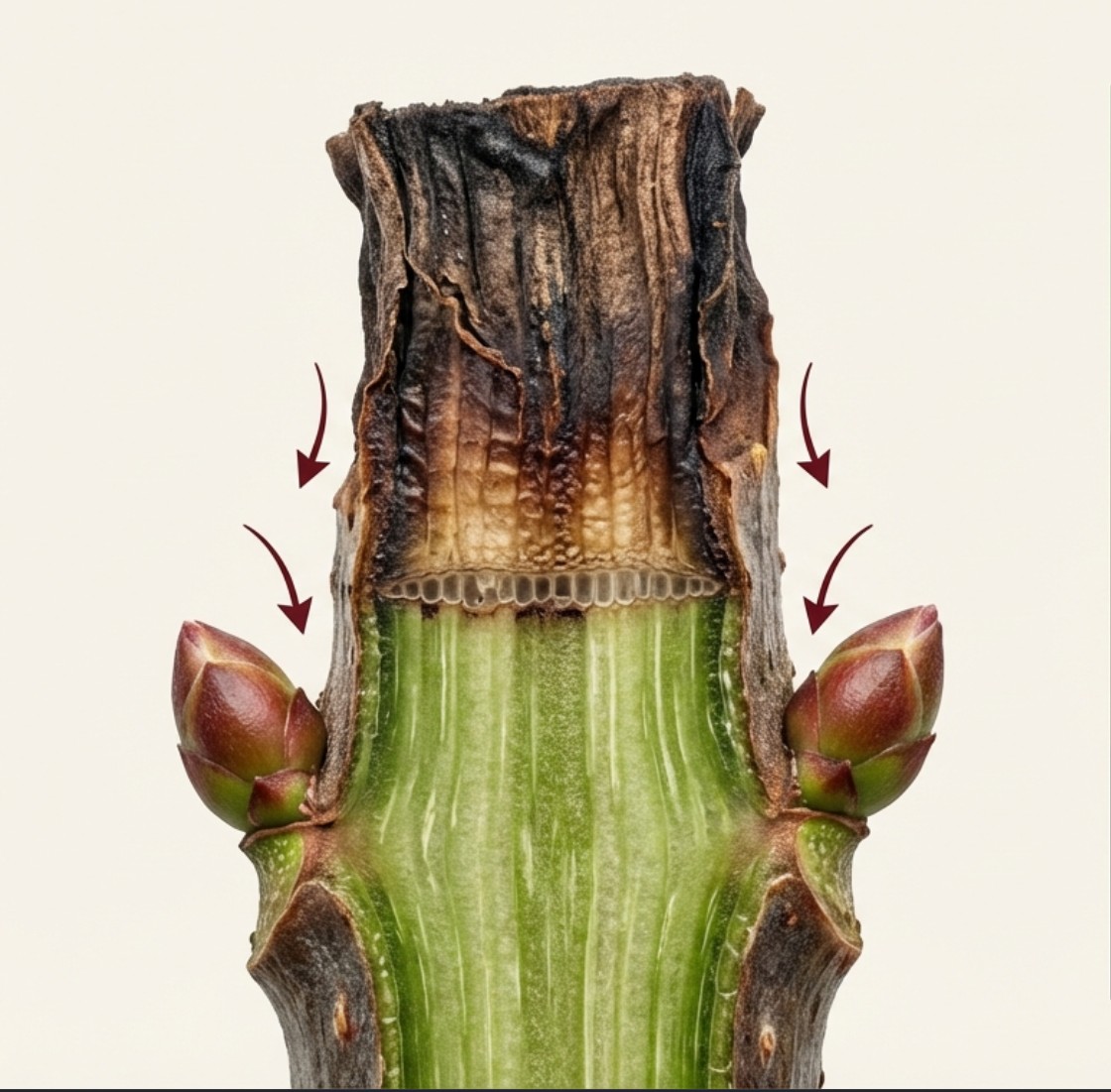
True dieback, by contrast, is an uncontrolled process. The die-in does not stop at the next bud but continues along the branch toward the trunk — sometimes all the way to the base of the trunk, or even down to soil level. In such cases, the tree’s internal defense system is unable to seal off the damage in time, and the affected section dies completely. This typically occurs because removing the upper portion disrupts the flow of nutrients downward toward the roots, while the root system also lacks sufficient energy to seal the wound — meaning neither enough water nor enough nutrients travel upward. In these situations, life simply “runs out” of the tree, and it gradually dies back.
What happens inside the plant?
During pruning, the negative pressure prevailing in the vascular vessels can allow air to enter the system. This so-called embolism disrupts the continuity of the water column, causing water transport to stall even below the cut point. The water supply to the tissues deteriorates, and die-in begins. Trees do not heal wounds — they compartmentalize them. This process is described by the CODIT model* (detailed at the end of the article), according to which the plant builds different defensive walls to halt the spread of infection and decay. The Japanese maple is not among the strongest species in this regard. The first line of defense, which inhibits vertical spread, often does not seal quickly enough, making it easier for pathogens to enter and for the branch to die.
The role of sap pressure and “bleeding” in dieback
Japanese maples exhibit extremely intense sap pressure in spring, resulting from the active uptake of water by the roots and the mobilization of sugars. (This phenomenon is also the basis of maple syrup production, but in an ornamental garden context it presents a serious risk.)
For this reason, pruning should be avoided from bud swell through full leaf emergence, as strong sap flow (“bleeding”) can occur, which
- impedes the sealing of vessels,
- feeds pathogens,
- draws energy away from the tree.
Pathogens that aggravate the situation
A pruning wound is a gateway for infections. One common bacterium is Pseudomonas syringae, which enters the plant through wounds. It produces proteins that promote the formation of ice crystals, which means that even mild frost can cause serious tissue damage. Affected branches often show black or dark purple discoloration.
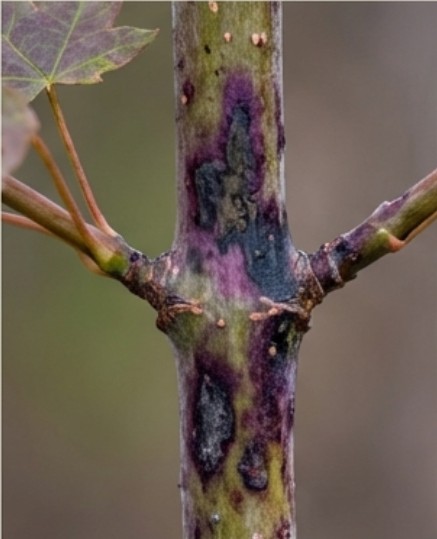
Verticillium dahliae, which infects from the soil, attacks the vascular tissue and blocks the pathway of water. The result can be sudden branch dieback and wilting, often seemingly without any prior warning signs.
How can the risk of dieback be reduced?
One of the most important foundations for preventing dieback is the tree’s overall state of health. Significant interventions are only worth undertaking on a tree that is visibly strong, thriving, and actively growing (or has grown vigorously in the previous season). Vigorous shoot growth is always a sign that sap circulation is functioning properly and that the tree is capable of responding to pruning.
The other key factor is timing. Pruning in autumn is inadvisable, as pathogens are still active while the tree’s resistance is already declining. Late winter — when there is no sap flow — is a good time, as is midsummer, when the plant is actively capable of compartmentalizing wounds.
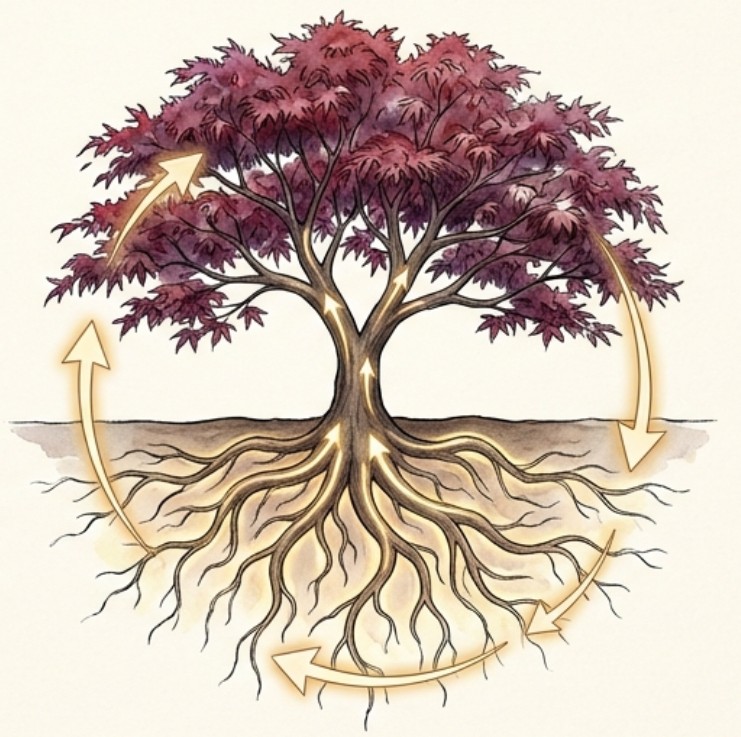
Energy level. It is not advisable to carry out heavy root pruning and major trunk cutting or branch pruning in the same season. A healthy canopy contributes to the development of a strong root system through photosynthesis. A stable root system, in turn, enables the trunk and foliage to become resilient against environmental stresses. We must accept that everything comes down to the energy produced and stored. The risk of dieback and the capacity for recovery are both heavily dependent on the tree's energy level.
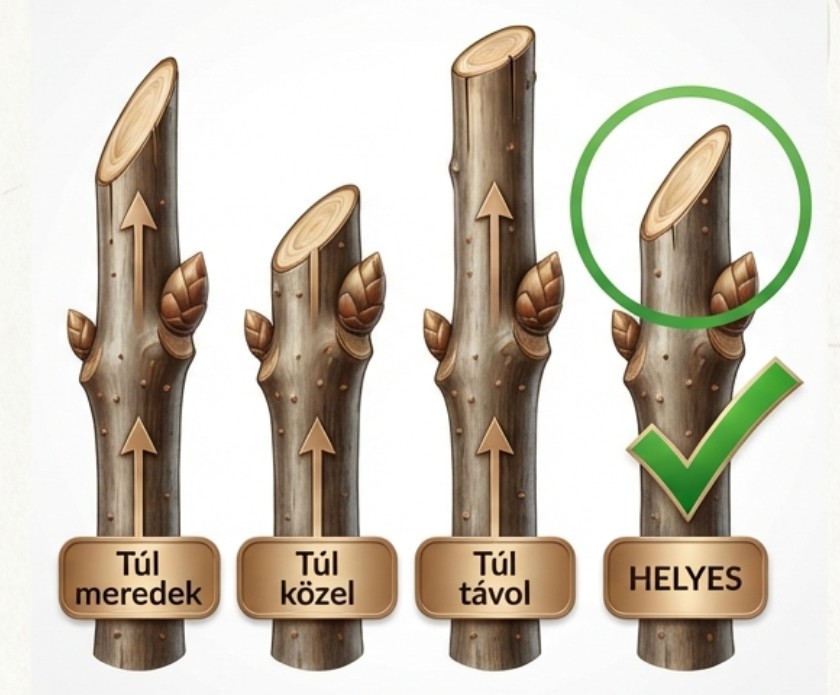
The location and technique of the cut are critical. Flush cuts close to the trunk should be avoided — leaving a small stub gives the tree the opportunity to die back to the appropriate point, where a new shoot may later develop. However, leaving an overly long stub is also inadvisable, as the dead wood can serve as a breeding ground for pathogens. The cut should be made at a 45-degree angle sloping away from the bud (for water runoff), at a distance of 0.5–1 cm above the bud.
The condition of your tools also matters. Always work with sharp, sterilized instruments. If you remove an infected section, the pruning shears must be disinfected immediately before moving to another branch.
The use of wound sealants is generally not recommended, as the moist, enclosed environment can favor fungal growth. In the case of Japanese maple, however, there are certain situations where applying a liquid wound sealant after sterilization may be justified — particularly on larger-diameter cut surfaces.

What should you do if dieback has already appeared?
First, determine where the branch still has living tissue — this can easily be checked by gently scraping the bark. Green tissue is alive; brown or black tissue is already dead.
The dead section should be cut back at least ten centimeters below the healthy part. This also helps remove any pathogens that may already be present. After the intervention, nitrogen-rich fertilizing is not recommended, as rapid shoot growth can further weaken the plant’s defenses.
Pruning a Japanese maple is a precise task. If we take into account the physiological characteristics of the species and work with the right timing and technique, the likelihood of dieback can be significantly reduced, and the tree can remain healthy over the long term.
Winter and early spring frost damage
It is important to treat winter frost damage separately from the dieback phenomena associated with pruning. Damage caused by temperature fluctuations is a consequence of environmental, so-called abiotic stress.
The Japanese maple is particularly sensitive to sudden temperature changes. The problem is often not caused by prolonged cold, but by rapid cooling following a mild spell. If a warm period is suddenly followed by frost, the tissues cannot adapt adequately. Repeated cycles of daytime warming and nighttime frost are also harmful, as alternating freezing and thawing creates stress in the vascular tissues. In winter, the bark on the sun-exposed south-facing side warms up more quickly, while the shaded side remains frozen — this can lead to cracking and bark damage. Frost damage is frequently aggravated by the presence of the previously mentioned Pseudomonas syringae.
The most reliable way to identify a frost-damaged branch is also through careful scraping of the bark. If the cambium beneath the bark is green and moist, the branch is still alive. If it is brown, dry, or mushy, that section has died. Affected twigs often turn grey, shrink, feel brittle to the touch, and break easily. In severe cases, the bark may crack or peel away, and in spring the buds remain black and fail to break, or any fresh shoots wither shortly after emerging.
If it becomes clear in spring that a branch has died, it should be cut back to the healthy, green tissue. Larger pruning cuts are best carried out after the last hard frosts have passed but before sap flow resumes.
Summary
Distinguishing between true dieback and the predictable, internode tissue die-in helps avoid unnecessary worry and misguided responses. True dieback is an uncontrolled process that passes beyond viable buds and continues to spread. By contrast, predictable die-in is the natural death of internodal sections where the tree has no reason to maintain living tissue. The foundation of prevention lies in the excellent health of the tree, familiarity with the growth patterns characteristic of the species — particularly the location of nodes — precise positioning of cuts above viable buds, and the use of stubs in uncertain situations. Equally important is the proper sequencing of major work and ensuring that the tree remains in a vigorous growth phase throughout. Species that readily back-bud are far more forgiving of imprecise cuts. Those that generate new buds with difficulty, however, demand greater attention, more careful observation, and a higher level of caution before any significant intervention.
*The CODIT model as applied to maples
The most widely accepted scientific model of tree wound response is the CODIT model (Compartmentalization of Decay in Trees), developed by Dr. Alex Shigo. The Japanese maple does not heal its wounds — it isolates them. This compartmentalization process involves the formation of four defensive walls, and their effectiveness determines whether post-pruning dieback stops or continues to spread toward the trunk.
| Wall | Physiological function | Protection | Mechanism |
|---|---|---|---|
| Wall 1 | Vertical occlusion of xylem vessels (tyloses, gum) | Weakest | Inhibits the upward and downward spread of infection within the branch |
| Wall 2 | Barrier forming at annual ring boundaries | Moderate | Slows the inward (toward the pith) spread of infection |
| Wall 3 | Chemical defense of ray cells | Strong | Inhibits lateral spread through the wood |
| Wall 4 | New barrier zone created by the cambium | Strongest | Separates the wound from newly formed wood tissue |
References
- Understanding CODIT: The Key to Managing Tree Health and Longevity
- Compartmentalization Of Decay In Trees
- CODIT Explained: How Trees Wall Off Damage - Fairfax County Master Gardeners
- Pruning Japanese Maple in Winter: Best and Essential 2025
- Why Is My Tree Leaking Sap? - LawnStarter
- Growing Bonsai by Jelle