8 Japanese maple varieties you can grow into perfect bonsai
Why have only a few Acer palmatum varieties truly proven suitable for bonsai cultivation?
Someone just starting out with Japanese maples might easily assume that almost any Acer palmatum variety could work as a bonsai. The selection is vast, and the leaf shapes and foliage colours are impressive in their own right. Yet the group of “chosen” varieties is far more limited: time and experience have elevated only a handful, something Japan recognised decades ago. The Japanese maple varieties used for bonsai were not selected from a catalogue — they emerged through decades of careful observation. Those that remained in the spotlight were not merely trees that survived container cultivation, but ones that genuinely thrived in it. These trees adapted best to root restriction, responded well to pruning, and — perhaps most importantly — retained their original character over the long term.
Another consideration, one that is rarely discussed yet is indispensable in bonsai, is leaf size. One of bonsai’s fundamental principles is miniaturisation, and among Japanese maple varieties the differences here are enormous. The right varieties are those you don’t have to “fight” — they naturally produce the proportions that are aesthetically convincing in a bonsai.
This is why not every Japanese maple variety can be shaped into a beautiful bonsai. Some varieties produce foliage that remains too large even with careful pruning and leaf thinning, so the overall image never achieves true proportion. In such cases, the problem lies not with the quality of cultivation but with genetic characteristics. The same holds true for other inherently large-leaved tree species: however healthy or vigorous they may be, their leaf size simply does not allow for genuine bonsai proportions.
For the “chosen” maple varieties, reduction in leaf size is not a forced outcome but a natural process. This is the quality that often remains invisible to beginners, yet it is the very foundation of what allows a tree to read as a true bonsai over time — rather than merely a horticultural plant pruned down to a smaller size.
Furthermore, since a bonsai tree reaches its full expression over decades, it is essential that the foliage remains stable year after year and does not lose the genetic traits for which it was originally selected. Whether propagated by grafting, cuttings, or air-layering, these varieties “remain themselves” — they do not become distorted over time.
As a result, from among the hundreds of Acer palmatum varieties, only a small circle has ultimately become truly defining in the world of bonsai. The most recognised names are: “Arakawa”, “Beni chidori”, “De shōjō”, “Katsura”, “Kiyo hime”, “Seigen” and “Shishi gashira”. These varieties appear again and again at exhibitions, in specialist literature, and in the gardens of experienced collectors — and not by coincidence.
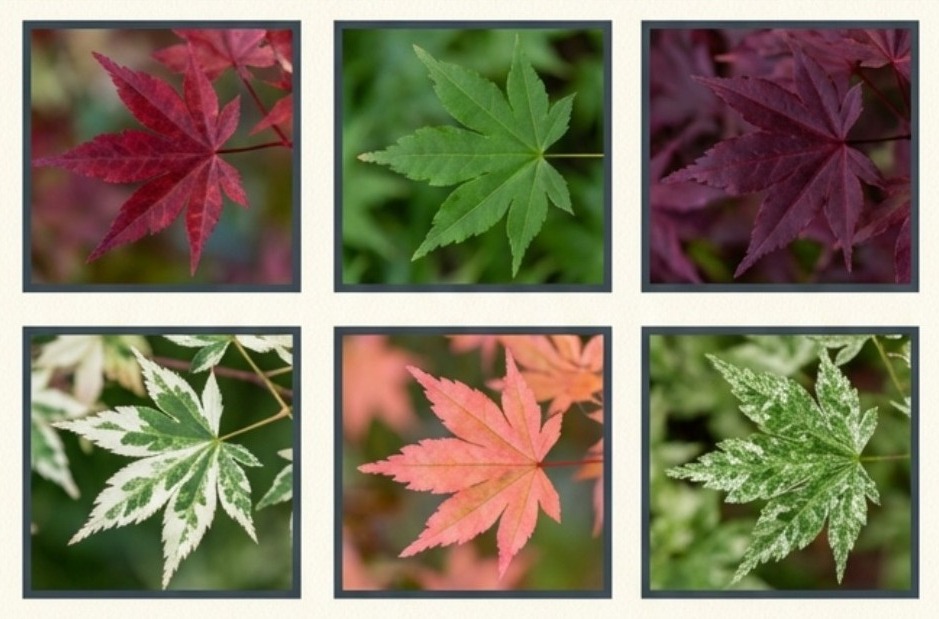
These maples are more valuable than an “average” Japanese maple precisely because they demand far more time, patience, and deliberate work. For this reason, growers often graft them onto vigorous rootstocks so that the root system accelerates development, while the variety’s refined, elegant character is preserved above the graft union.
As young plants, these varieties are still relatively accessible. Truly valuable, mature bonsai, however, are exceptionally rare. These are no longer simply plants — they are the impressions of many years, often decades, of dedicated work. This is also why, when a genuinely high-level specimen does appear, its price is often surprisingly high.
Characteristics of varieties best suited to the world of bonsai
| Variety name | Growth characteristics | Foliage and leaf description | Why it is special | Availability |
|---|---|---|---|---|
| De shōjō | Robust root system, suitable for long-term bonsai cultivation. | Distinctively coloured and shaped leaves that remain stable. | One of the most well-known and widely used bonsai materials. | Common in the trade, but masterwork specimens are extremely expensive. |
| Kiyo hime | Low-growing, densely branched growth habit. | Smaller leaves that suit the bonsai scale well. | Particularly favoured in Japanese culture and bonsai circles. | Frequently available at nurseries. |
| Mikawa yatsufusa | Dwarf growth with short internodes. | Dense, overlapping leaves. | A frequently used and well-regarded bonsai variety in Japan. | Popular among collectors, but rare. |
| Arakawa | Can be propagated by cuttings, grafting, or air-layering; long-lived in containers. | Stable foliage that retains its genetic traits over time. | Excellent for a variety of styling techniques and container cultivation. | Readily available in the trade or as young specimens, but high-quality trees are rare. |
| Shishigashira | Distinctive, contorted branch structure and slow growth. | Very dense, crinkled foliage. | A highly valued bonsai material with a unique appearance. | Prized and sought after; mature specimens are very expensive. |
| Katsura | Slower growth that demands precise work to achieve bonsai form. | Genetically stable, decorative foliage. | Particularly recommended for the application of bonsai techniques. | Widely available as a source material. |
| Seigen | Stable growth characteristics, propagates well by grafting. | Foliage that durably retains its colour and form. | A classic bonsai variety, responds well to wiring and shaping. | Easily available as a young plant. |
| Beni chidori | Requires many years of work to reach a high level; development is often accelerated by grafting onto a rootstock. | Characterised by healthy and stable foliage. | A variety selected for bonsai cultivation; tolerates pruning and shaping well. | Readily available as a young plant; finished bonsai are rare and expensive. |
| Sango kaku | Branches with striking coral-red bark. | Pale green leaves that contrast with the trunk. | Suitable for bonsai cultivation; especially distinctive for its winter appearance. | A well-known and accessible variety. |
Summary
Not every tree species can be miniaturised for bonsai — we must recognise which ones are suited to this path. The maple varieties mentioned above have stood the test of time precisely because their natural characteristics — leaf size, foliage stability, and root behaviour — together create the possibility of a small yet proportionate form. Beyond those listed, the following varieties are also frequently encountered as bonsai — without any claim to completeness: “Atropurpureum”, “Asahi zuru”, “Koto hime”, “Kuro hime”, “Mikawa yatsufusa”, “Nomura”, “Sango kaku”, “Chishio”, “Shin de shōjō”, “Sharp’s Pygmy”, “Kashima”, “Beni chidori”.
Reference – Some of the ideas presented in this article were inspired by Andrea Meriggioli’s book Maple Bonsai.
Related articles:
- The 8 most common bonsai styles - In what styles can you develop these varieties