Everything Worth Knowing About Pots
Growing Japanese Maple in a Pot
When growing Japanese maple, the chosen container or pot is not merely a functional object — it is an integral part of the composition. Just as a frame defines a painting, the pot gives the maple its final character, while fundamentally determining the health of its root system. A poorly chosen pot not only diminishes the visual effect but can seriously endanger the tree’s health.
Let’s look at what criteria we can use to choose a pot by material type:
Root Rot
Inadequate drainage causes waterlogging, which leads to root suffocation and rot.

Overheating
Dark-coloured, poorly ventilated pots can become scorching hot in summer sun, literally 'cooking' the sensitive roots.

Frost Damage
In pots with poor thermal insulation, the root ball can easily freeze through in winter, which can be fatal for the tree.

Stress and Growth Disorders
A poor environment weakens the tree, resulting in dull leaves and slow development.
1. Types by Material and Their Characteristics
Terracotta (Fired clay)
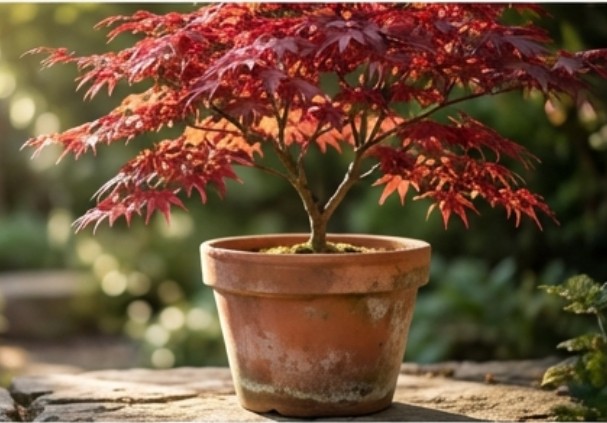
The most natural choice. It breathes excellently, and its porous structure provides better insulation for the roots against heat than other materials. The downside is that the soil dries out faster in it, and it requires extra frost protection in winter.
Terracotta
Glazed ceramic
Glazed Ceramic
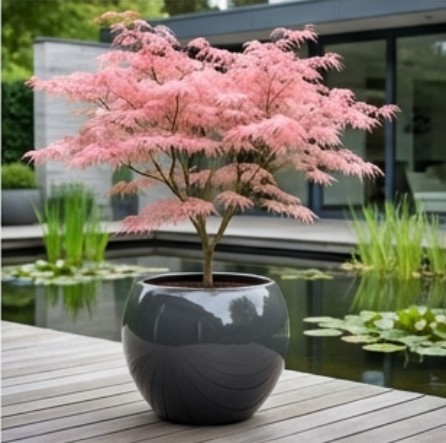
Offers the most elegant, premium appearance. An important rule is to avoid dark-coloured (black, burgundy) glazed pots in direct sun, as they can practically 'cook' the roots. Since they do not breathe, the soil stays moist for longer, so care must be taken to prevent waterlogging.
Concrete Pot
Extremely durable and stable — it won't tip over in strong wind. Its thermal insulation is moderate, but since it does not breathe, the soil dries more slowly, requiring closer attention when watering.
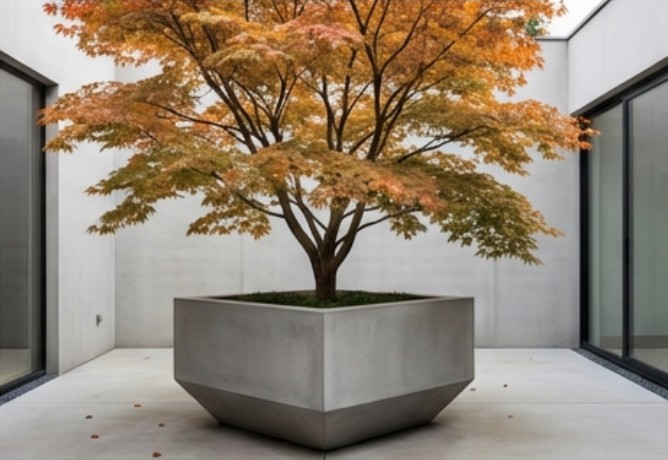
Concrete pot
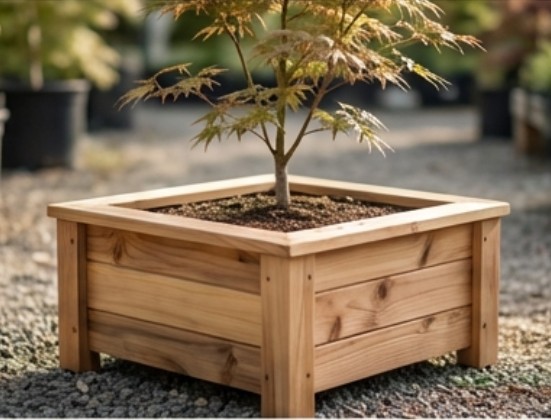
Wooden box
Wooden Box
The most natural solution, which protects against overheating in summer and moderates frost damage in winter. Its downside is that it will eventually begin to rot from moisture, so it requires regular replacement or internal protective treatment (e.g. with linseed oil).
Plastic Pot
Inexpensive and lightweight, which makes moving the plant easy, but aesthetically less appealing. It does not breathe well, and its thin walls mean the roots can be easily damaged by extreme temperatures. Typically used by nurseries.
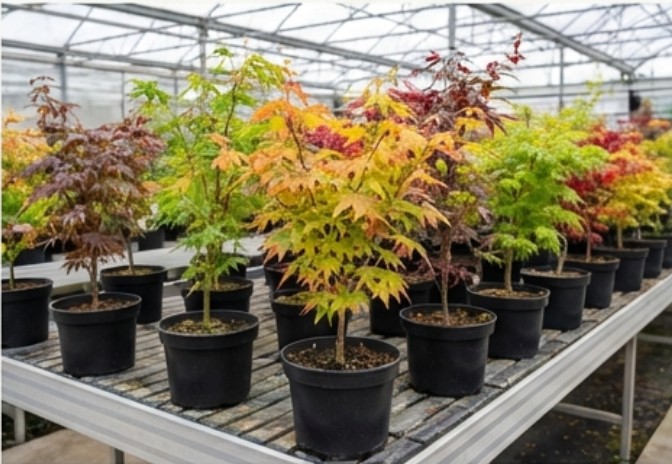
Plastic pot
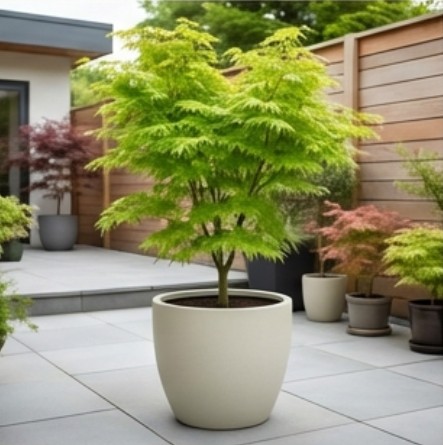
Fibreglass (FRP) pot
Fibreglass (FRP) Pot
Modern, durable and lightweight, but does not breathe, and its darker variants are also prone to overheating. In winter it can freeze through easily, so it is worth protecting against the cold (for example with a burlap sack).
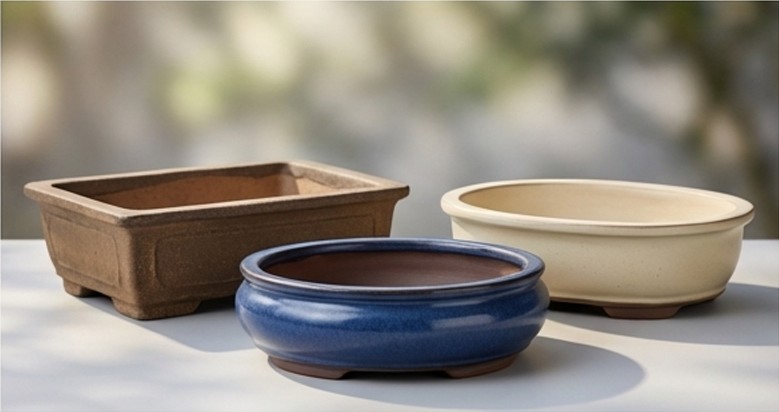
Bonsai bowls
Bonsai Bowls
These bowls used for bonsai cultivation are typically made from clay fired at high temperatures (at least 1280 °C), making them frost-resistant with good drainage.
- Unglazed, earth-toned bowls: Create a natural, calm effect that highlights the beauty of the trunk and the nebari.
- Coloured glazed bowls: Can be chosen to complement the maple's seasonally changing colours (e.g. a sky-blue bowl makes red foliage even more vivid).
2. The Critical Role of Shape and Size
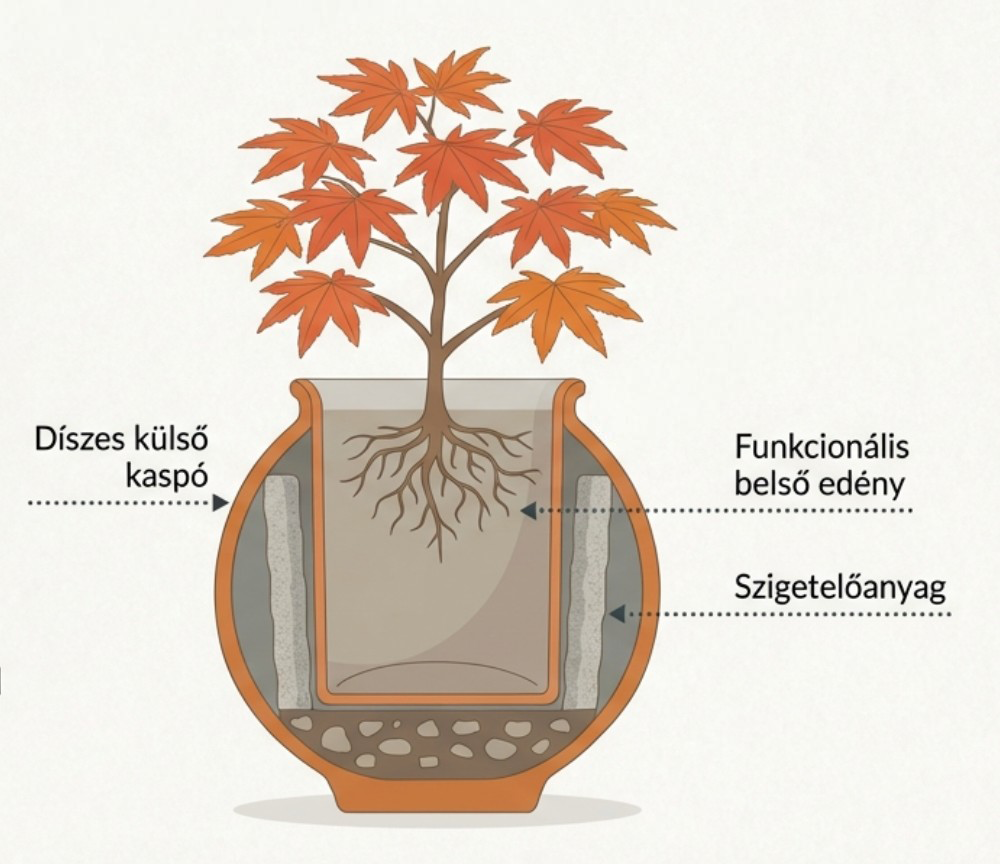
The trap of pot shape: Never choose a spherical or narrow-necked pot! The maple’s roots will press against the walls, and at repotting time it will be nearly impossible to remove the plant without causing damage. A form that widens toward the top is ideal.
If you still want a spherical pot, here is a solution that can work, even with added insulation:
3. Practical Tips for Maintenance
Drainage: Only use pots that have a hole in the bottom. Cover the drainage openings with plastic mesh to prevent the soil from washing out.
Pot feet: Always raise the container off the ground (with feet or even pine bark) so that water can drain freely and the bottom can also breathe.
Training pots: For plants in the development phase for bonsai, aquatic plant hydroponic baskets are recommended — they provide excellent aeration and promote the development of fine feeder roots. (They do require a precise watering routine!)
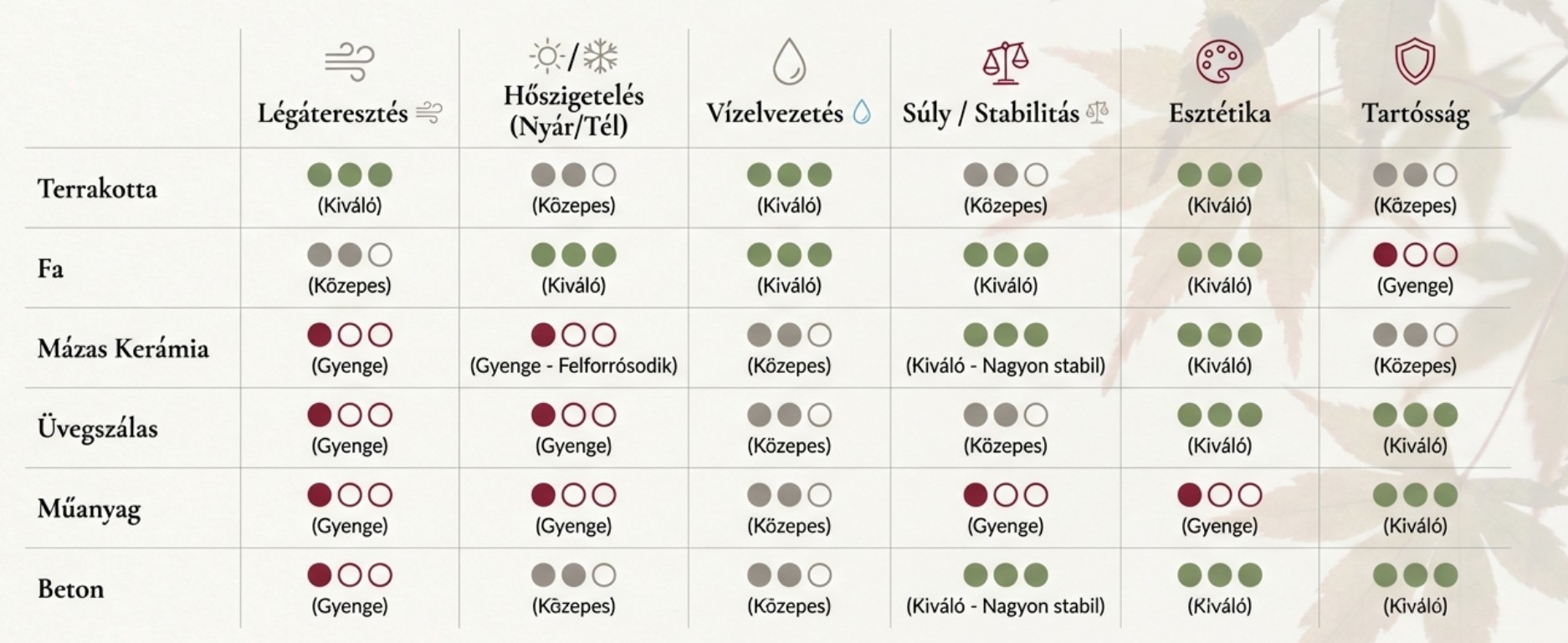
4. Summary Table
Related articles:
- The secret to watering Japanese maple - The relationship between pot material and watering