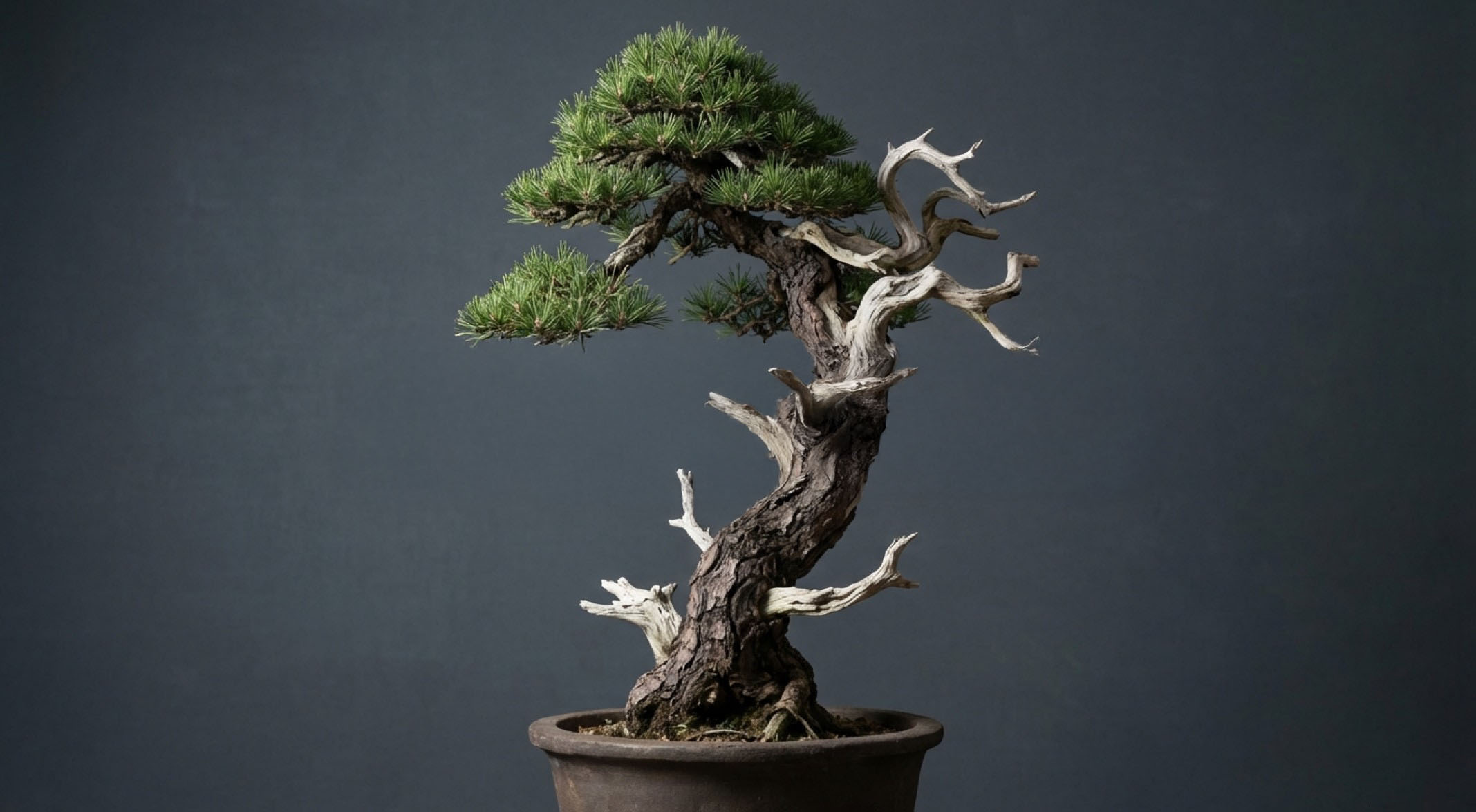
Six Principles That Define a Bonsai's Character
The Principles of Aesthetics from Root to Crown
Bonsai is not simply a tree in a small pot, but a centuries-old aesthetic philosophy that distills the essence of nature into a single composition. To truly understand what makes a tree beautiful, we must familiarise ourselves with the principles that have guided the art of bonsai for centuries. These principles are not rigid rules, but guidelines that help us understand what our eye perceives as beautiful, and how we can communicate through the formal language of the tree.
Let us look at the two main categories of aesthetics:
Signs of Maturity
The marks of age and struggle that tell the story of the tree's past and lived experience.
Character and Form
The fundamental nature and structure of the tree, which defines its overall appearance and feeling.
1. Signs of Maturity – The Stories of a Tree’s Past
Nebari (Root Base)
The strong surface roots that radiate outward from the base of the tree and anchor it into the soil. A well-developed nebari conveys a sense of stability and age — as though the tree has stood in the same spot for decades, with an undeniable presence. The nebari is one of the most important aesthetic elements of bonsai, because it immediately reveals the foundations upon which the tree stands.
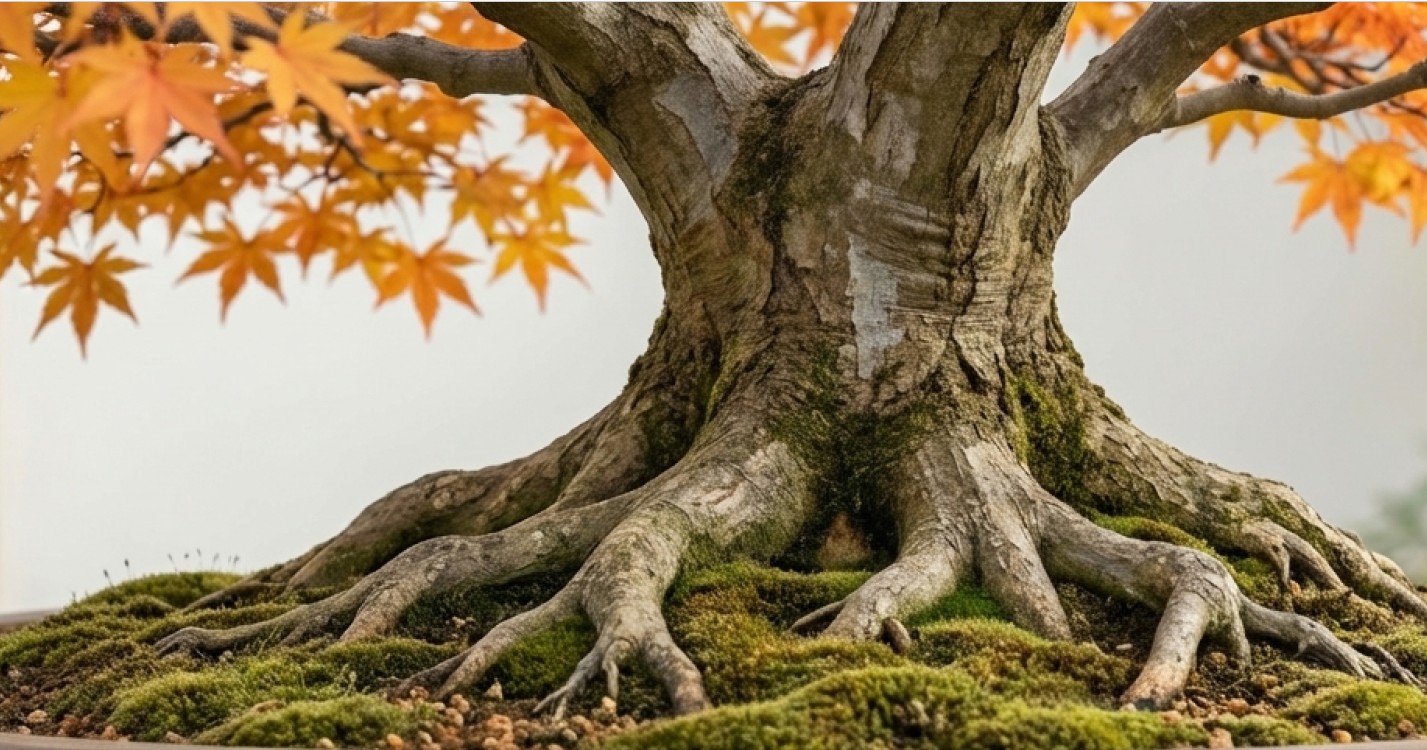
Strong nebari – the radiating roots of the root base
Taper – the gradual narrowing of the trunk
Taper
The gradual narrowing of the trunk from its base to the apex, and of the branches toward their tips. This is one of the most important signs that a tree has grown naturally and has not been artificially shaped. Good taper suggests maturity and harmony — as if the tree had slowly, over decades, arrived at its current form. A tree without taper often gives a "pole-like" or "juvenile" impression.
Deadwood (Jin & Shari)
Bleached, bark-stripped branches (jin) and trunk sections (shari) that allude to a past trauma — a lightning strike, broken branches, or extreme weather conditions. These elements create dramatic visual contrast and tell the story of the tree's struggle and survival. Deadwood is most commonly seen on conifers, particularly pines, where the tree naturally preserves these structures.
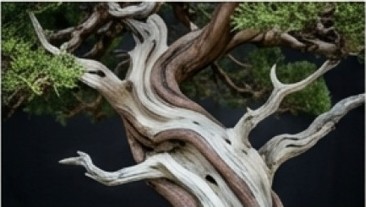
Deadwood – jin and shari elements
2. Character and Form – The Essence of the Tree
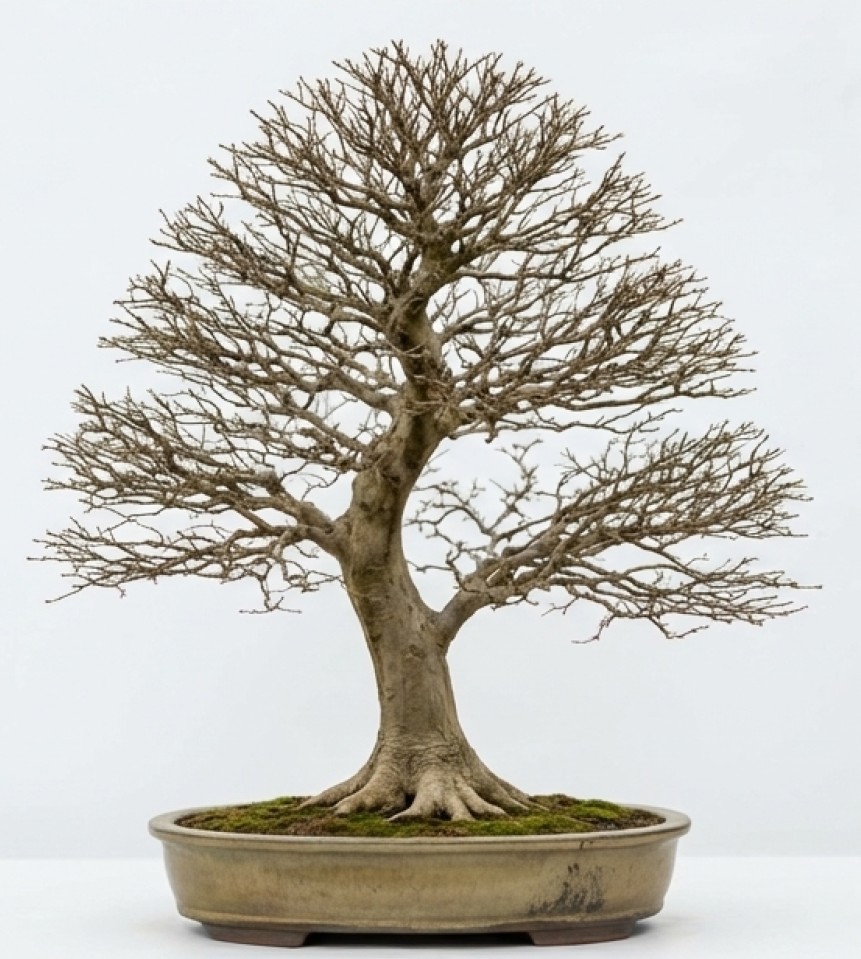
Ramification – delicate branching in winter
Ramification
The fine, dense structure of secondary and tertiary branches that creates a refined canopy and an elegant winter silhouette. Good ramification reveals a tree's "refinement" — as if it had been carefully shaped over decades. It is especially important in trees such as the Japanese maple, where the winter appearance is just as significant as the foliage.
Masculine Characteristics
Traits associated with strength and power. These include massive, tapering trunks, rough bark, deadwood elements, and a dense crown. Often seen on conifers such as pines. These trees typically lend a dynamic, dramatic presence to the composition.
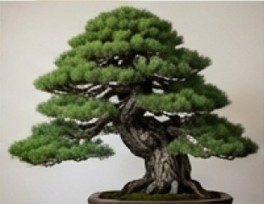
Masculine traits – strength and presence
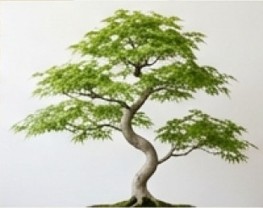
Feminine traits – lightness and elegance
Feminine Characteristics
Qualities associated with elegance and grace. These are characterised by slender, curved trunks, smooth bark, delicate and airy foliage, and a light branch structure. Typically seen in deciduous trees such as the Japanese maple. These trees evoke a refined, harmonious, and serene feeling.
Why Do These Principles Matter?
These principles help us understand why a bonsai affects us the way it does. When we look at a tree, we are not merely seeing a form, but a story — the struggle of life, the passage of time, and the power of nature. The nebari shows that the tree stands on solid foundations. The taper tells us that the tree grew and developed organically. The deadwood speaks of hardship and survival. The ramification reflects refinement and the ripening that only time can bring.
“A good bonsai is not simply a small tree — it is an entire lifetime, compressed into a single glance.”
All of these principles are not rigid rules, but tools that help communicate the character of the tree. A masculine-style pine conveys strength and steadfastness, while a feminine Japanese maple expresses elegance and lightness. When we understand these principles and apply them with intention, we are not merely shaping a tree — we are telling a story, in the language of nature.
Summary
A knowledge of aesthetic principles is indispensable for any bonsai artist who wishes to move beyond mere “plant care.” These principles — nebari, taper, deadwood, ramification, and the definition of character — help us understand what our eye perceives as beautiful, and how we can communicate through the formal language of a tree. Over time, as we study and shape more trees, these principles become second nature, and we will instinctively begin to see where a given composition is strong, and where there is still room to grow.
Related articles:
- The 8 Most Common Bonsai Styles – The practical application of aesthetic principles across different styles