Everything Worth Knowing About Japanese Maple Root Systems
The Hidden World of the Japanese Maple
The Japanese maple is one of the most celebrated and valued ornamental trees. Yet the attention of gardeners and collectors is almost always drawn to the beauty of the canopy: the finely divided leaves, the colors that shift with the seasons, and the tree’s elegant structure. The true health of the plant, however, is not decided before our eyes, but beneath the soil surface.
The vitality, growth vigor, stress tolerance, and longevity of the Japanese maple depend fundamentally on the condition of its root system. The root system is not simply an anchoring structure that holds the tree in the ground. It is far more a complex biological system in constant interaction with the physical and chemical environment of the soil. The roots sense moisture, temperature, oxygen levels, and nutrient availability, and regulate the plant’s metabolism accordingly.
There is a continuous exchange between the above-ground and below-ground parts. Water and minerals absorbed by the roots travel up to the canopy through the xylem, while carbohydrates produced in the leaves return to the roots via the phloem. This flow of energy enables the plant’s growth, regeneration, and survival.
Understanding the care of the Japanese maple therefore requires that we also understand how its root system works.
The Role of the Root System in the Plant’s Life
The root system of the Japanese maple serves three fundamental functions: it anchors the plant in the soil, regulates its metabolism, and acts as an energy reserve.
The anchoring role is especially important for this species. The Japanese maple’s root system is relatively shallow. Most roots are found in the upper layers of the soil, where the most oxygen and organic matter are available. This is advantageous for nutrient uptake, but it also makes the tree more vulnerable to mechanical forces such as strong winds.
The second important function of the roots is the uptake of water and minerals. Nutrients dissolved in the soil can only enter the plant in the form of water. This process directly determines the rate of photosynthesis and the water balance of the cells.
But the roots play an even more active role than that. An important part of the plant’s nitrogen metabolism also takes place here. Nitrates and ammonium compounds taken up from the soil are converted in the root into organic forms that the plant can actually use.
In addition, the roots function as an energy store. A portion of the sugars produced during photosynthesis accumulates in the root cells in the form of starch. This energy reserve allows the plant to survive the winter dormancy period and then launch into vigorous growth again in spring.
The Structure of the Japanese Maple Root System
The root system of the Japanese maple is not a uniform structure. It is composed of different types of roots, each serving different functions.
The foundation of the system is made up of structural woody roots. These are thick, lignin-reinforced roots that are long-lived and form the framework of the root system. Their role is to anchor the plant and transport water and nutrients between the fine roots and the trunk.
The actual uptake of water, however, does not occur in these. That task belongs to the fine absorbing roots. These are extremely thin roots, often less than 0.2 millimeters in diameter, capable of penetrating even the tiny pores between soil particles. Their surface carries root hairs, which significantly increase the absorbing area.
These fine roots have a relatively short lifespan. They often die within a single growing season and are replaced by new ones. This continuous renewal ensures the efficient functioning of the root system.
The third important element of the system is what are known as sinker roots. These are branches growing downward from the structural roots, penetrating deeper layers of the soil. Their primary purpose is to increase stability and reach deeper water reserves.
Under certain conditions, adventitious roots may also develop. These roots do not originate from the typical root zone, but emerge from the trunk or from damaged tissue. They often appear when oxygen availability is more favorable in the upper layers of the soil.
Soil and Growing Medium: The Root’s Habitat
The root system of the Japanese maple is extremely sensitive to the physical properties of the soil. In its natural habitat, the species develops in forest understory, where the soil is loose in structure, rich in humus, and well-aerated.
One of the most critical factors for the roots is oxygen availability. Root cells respire continuously, consuming oxygen and releasing carbon dioxide. If the soil is too compacted or waterlogged, gas exchange slows down and root cells become oxygen-deprived.
This condition can easily lead to root rot. Anaerobic processes then begin in the soil, during which substances harmful to the plant can accumulate.
For Japanese maples, a slightly acidic soil is most favorable. The optimal pH range is between 5.5 and 6.5. In this environment, iron, manganese, and other micronutrients are present in readily available forms. In alkaline soils, these elements form insoluble compounds, leading to nutrient deficiency. One of the most common symptoms of this is leaf yellowing, known as chlorosis.
In terms of soil texture, sandy loam is ideal. These soils provide adequate drainage while retaining sufficient moisture.
For container growing, the right medium is even more important. An excellent mix for Japanese maples might combine pine bark, peat, and mineral structure improvers such as perlite or pumice. For bonsai cultivation, the classic Japanese mix is a combination of akadama, pumice, and lava rock.
Regarding growing media, you can find a comprehensive comparison table of the various options here.
The Role of Root Pruning in Container Growing
When growing a Japanese maple in a pot or bonsai tray, root pruning becomes unavoidable.
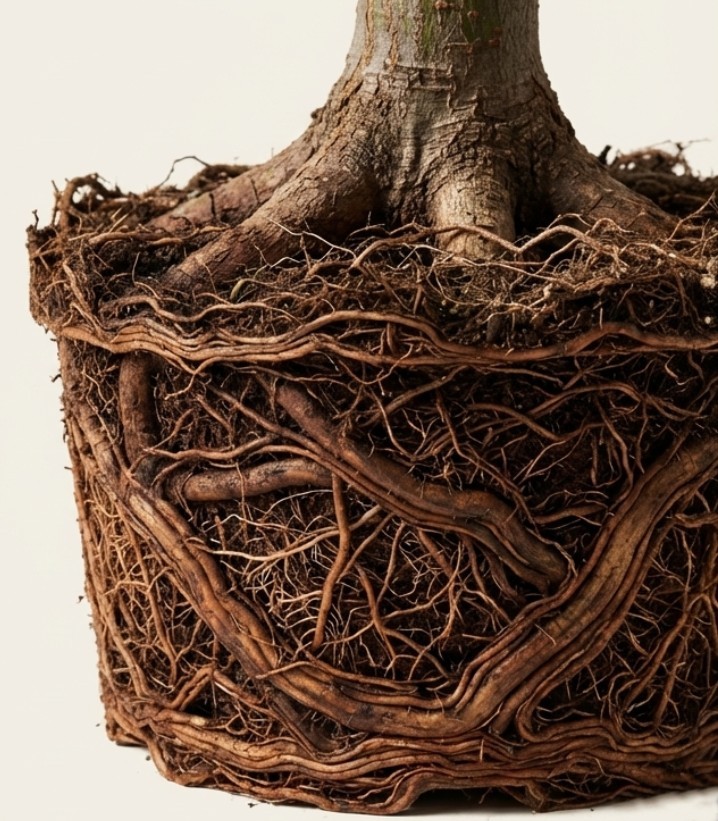
The wall of the container presents a physical barrier to the roots. Growing roots that reach the pot wall cannot continue forward, so they begin to grow in circles. Over time, a dense mass of roots forms, which displaces the growing medium and the air.
This condition leads to the aging of the root system and the weakening of the plant.
The purpose of root pruning is therefore the rejuvenation of the root system. By cutting back thick, aging roots, we encourage the plant to produce new fine roots. These fresh roots take up water and nutrients far more efficiently.
The best time for the operation is late winter or early spring, just before bud break. During this period the plant’s energy reserves are still held in the roots, so regeneration begins quickly. Once the sap begins to flow, the sugars stored in the roots are mobilized. If we prune at this point, the tree immediately begins sealing the wounds and regenerating before it has spent all its energy on pushing out leaves. If the same were done in summer, when most of the energy is in the foliage, the plant would genuinely go into shock and would likely not survive.
There is a strict balance between the plant’s below-ground and above-ground parts. When we radically prune the roots, the plant perceives this and, come spring, redirects its growth energy to prioritize restoring the root system. As a result, the foliage may grow more slowly in the first year after repotting, but because of the root rejuvenation, the tree will be far more vital in the second year than it would have been without the pruning.
During pruning, it is important to develop a radial arrangement of the roots. Downward-growing or overly thick roots should be removed. However, never remove more than two-thirds of the root mass at one time. The remaining one-third — especially the portions close to the root collar — is exceptionally rich in amyloplasts (energy-storing organelles). (*I write about the risks of pruning at the very end of this post.)
How Often Is Root Pruning Necessary?
For Japanese maples, the frequency of root pruning and the associated repotting depends on several factors. The age of the plant, the size of the container, and the available root space all influence how quickly the root zone becomes saturated.
As a general guideline, the following intervals are worth considering:
For young Japanese maples, growth is generally faster, so the root system quickly fills the container. For these specimens, root pruning and repotting are typically needed every 2–3 years.
Older, more mature trees grow more slowly, so the root system also thickens more gradually. In these cases, the repotting cycle can be extended considerably, and it is often sufficient to renew the root system every 5–10 years.
For Japanese maples grown in bonsai trays, the root space is extremely limited, so roots quickly fill the available area. For this reason, bonsai maples should generally be repotted and root-pruned every two years. For the smallest, so-called “mame” bonsai — where the tray volume is extremely small — annual repotting may be necessary to maintain the plant’s vitality.
For container or pot growing, the size of the vessel plays a key role. In smaller containers of roughly 11 liters or less, root pruning is generally needed every 3 years, while in larger containers the root system can remain healthy for up to 7–8 years without intervention.
How Can You Tell It’s Time?
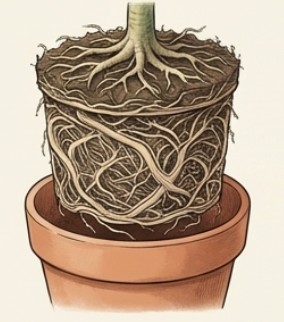
Physical Overcrowding
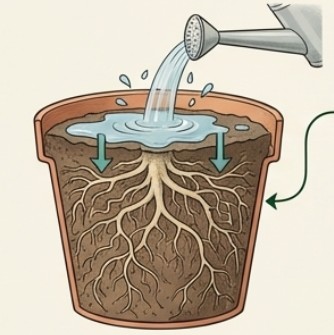
Water Management Disruption
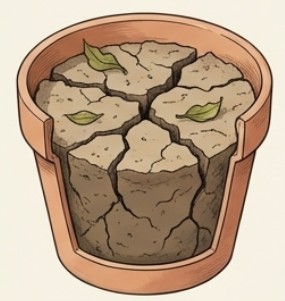
Extremely Rapid Drying Out
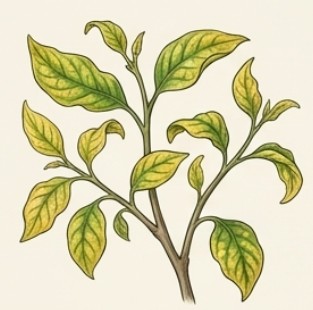
Foliage Decline
The need for root pruning is signaled not only by time, but also by the condition of the plant. The attentive gardener can recognize several signs that the root system has become overcrowded.
One of the clearest signs is the physical state of the root system. When we lift the plant out of the pot, we can often see that the roots form a dense, almost impenetrable mass, running in circles along the wall of the container. In more severe cases, the root mass has become so dense that it slowly begins to push the plant out of the pot.
The condition of the soil or growing medium can also be telling. If the roots have completely permeated the medium, irrigation water percolates through it with more difficulty. The compacted root zone displaces air, leading to oxygen deficiency and impairing root function.
The plant’s foliage also signals the problem. In such cases, the Japanese maple often loses its vitality: leaves become smaller, shoot growth slows or stops entirely. Leaf yellowing (chlorosis) is also a frequent symptom, indicating that the aging roots are no longer able to take up nutrients efficiently.
Another common sign is rapid drying out. When there is barely any free growing medium left in the pot — the so-called root-bound condition — water retention capacity decreases significantly. The plant then dries out much more quickly than before and requires watering more often. These signs clearly indicate that the root system can no longer function optimally, and the time has come for the plant to be repotted and root-pruned.
Mycorrhiza and the Microbiology of the Root Zone
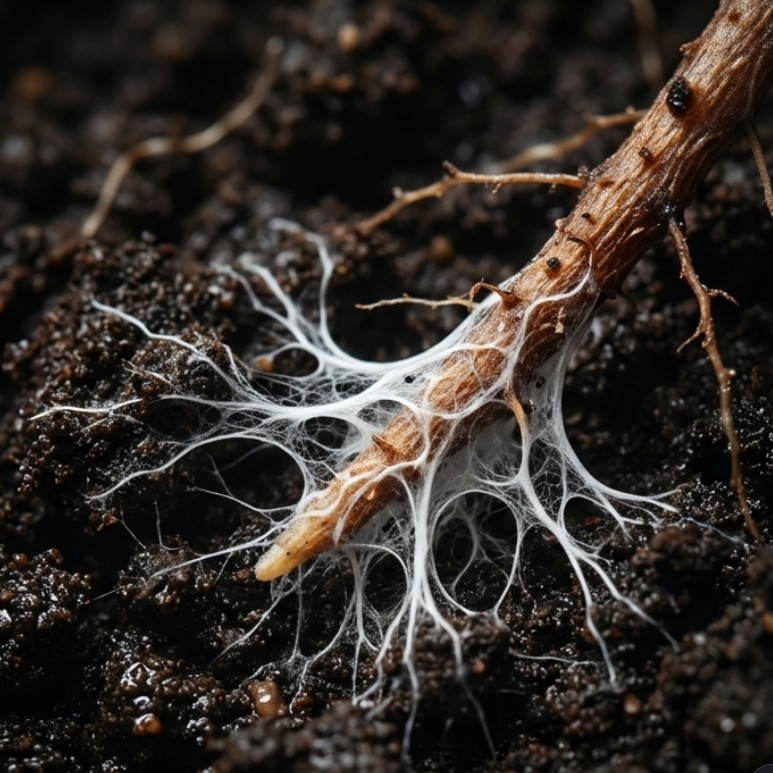
The roots of the Japanese maple are never alone in the soil. Around the roots lives an extraordinarily rich microbial community, which the scientific literature calls the rhizosphere. One of its most important elements is mycorrhizal fungi. These microscopic fungi form a symbiotic relationship with the roots. The fungal hyphae weave through the soil and penetrate pores that are already inaccessible to the roots themselves. As a result, the plant accesses water and nutrients — particularly phosphorus — more efficiently. In return, the fungi use the sugars produced by the plant as an energy source. In modern horticulture, the use of mycorrhizal preparations at repotting time is therefore becoming increasingly common.
Protecting the Roots in Winter
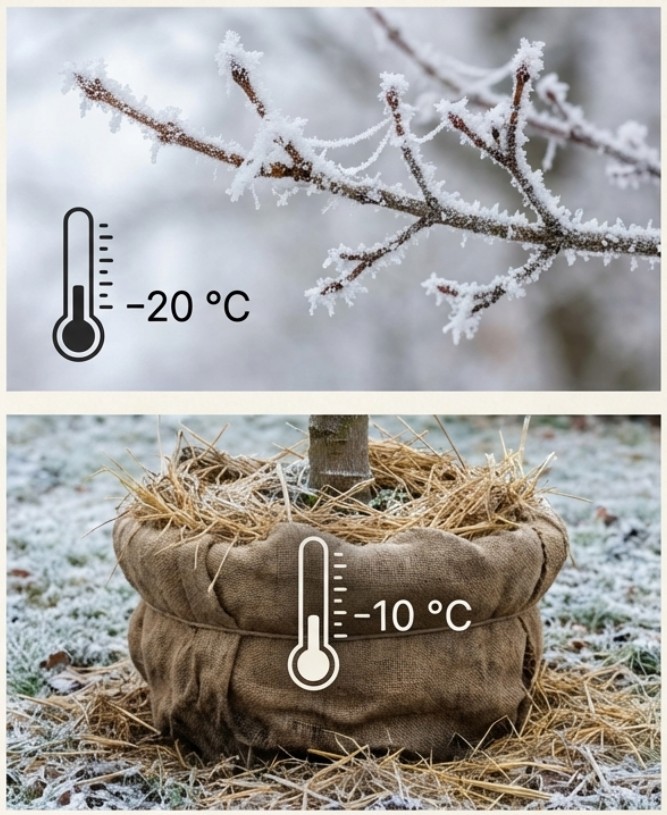
The foliage and branch structure of the Japanese maple tolerates cold reasonably well. Many cultivars can withstand temperatures down to −20 °C. The roots, however, are far more sensitive. Damage to root cells can begin at a soil temperature of around −10 °C. In the ground, the soil's natural insulating properties generally provide sufficient protection. A thick mulch layer of 5–10 centimeters improves this protection further. In a container, however, the situation is far more precarious. The walls of the pot cool down quickly, and the roots are directly exposed to frost. In such cases it is advisable to wrap the pot in insulating material, or even to sink it into the ground for the winter. In cases of extreme cold, potted plants can also be overwintered in a frost-free but cool location.
Summer Heat and Root Stress
The other serious enemy of the Japanese maple’s roots is summer heat.
Because the root system is located in the upper layers of the soil, the soil can heat up rapidly. When soil temperature rises too high, the metabolism of root cells slows and water uptake becomes impaired. This is thermal stress. Root metabolism shuts down at soil temperatures above 35 °C as the enzyme system (e.g. Rubisco) and ATP synthesis are inhibited; physiological drought then sets in — the tree is surrounded by water yet is unable to absorb it.
The best defense is mulching. Organic material covering the soil surface reduces evaporation and significantly moderates soil warming. In container growing, using a light-colored pot or shading the root zone also helps.
Summary
The key to successfully growing the Japanese maple lies not in the canopy, but in the root zone. The right soil structure, adequate oxygen, stable moisture, and a slightly acidic pH are all fundamental conditions for root health.
When these conditions are met, the Japanese maple becomes a long-lived and exceptionally stable plant. Specimens grown in the garden can develop for decades, potentially outlasting several generations.
Caring for the root system is therefore not merely a technical task. This is where the plant’s true life processes unfold, and where the gardener’s work has the greatest impact on the tree’s future.
* On the Risks of Pruning — At Your Own Risk
Why Is There Risk in Root Pruning Even When Sterilized Tools Are Used?
Although sterilizing tools (with 3% hydrogen peroxide or alcohol) is essential to prevent the transfer of pathogens such as Verticillium, the risk does not disappear entirely.
- Environmental pathogens: Pruning creates open wounds through which bacteria and fungi already present in the soil or arriving with water (e.g. Pseudomonas syringae, Phytophthora) can enter the plant’s vascular tissue.
- Crushed tissue: If the tool is not sharp enough, the cut will crush the tissue rather than slice it cleanly, resulting in much slower healing and providing an easier path for infection.
- Compromised protection: The inner tissue of thicker roots is unprotected against pathogens until the tree forms a callus layer to seal the wound.
How Can the Risk Be Minimized?
To ensure that root pruning is not fatal, the following precautions are worth following:
- Wound treatment: The cut surfaces of thicker, woody roots should always be sealed with a wound-sealing paste or a product containing fungicide.
- Hydrogen peroxide disinfection: It is worth spraying the root ball with a diluted (prepared from 3%) hydrogen peroxide solution, which destroys surface spores and refreshes the wounds with oxygen.
- Biological protection: Applying mycorrhizal fungi at repotting time helps to displace harmful fungi and strengthens the immune system of the root system.
Can Pruning Kill the Tree?
Yes, improper pruning — for example, with incorrect timing or extent — can cause a shock severe enough to kill the plant. However, it is important to clarify: for maples grown in containers, root pruning is not optional — it is a condition of survival. If the roots completely fill the pot (root-bound condition), the plant is unable to take up nutrients, loses its vitality, and will eventually die.
Safety rules:
- Perform pruning exclusively during the dormant period (in late winter or early spring, before bud break).
- Never remove more than two-thirds of the root mass at one time.
- After pruning, immediately pot the tree in fresh medium, water thoroughly, and protect it from direct sun and frost until it has re-established.
- Only apply root pruning when it is necessary and unavoidable — when the plant’s life would be at risk without it.
Maple Tree Root Systems: A Homeowner’s Guide - Nature Hills Nursery
Guide to Japanese Maple Bonsai Care
The Ecology of Tree Roots and the Practical Significance Thereof
Root Systems of Trees-Facts and Fallacies Arboriculture & Urban Forestry
Keeping Your Bonsai Healthy With Root Pruning - Bonsai Outlet
Acer rubrum L - Southern Research Station - USDA
How to Plant and Care for Japanese Maple - Wayside Gardens
Choosing the Right Potting Soil for Japanese Maple Trees - YouTube
The Best Type Of Soil For Growing Japanese Maples - Bright Lane Gardens
How To Plant a Japanese Maple Tree in the Ground - Wilson Bros Gardens
Japanese Maple Care - Millcreek Gardens
What Soil Should I Use For My Japanese Maple?
Care of Japanese Maples - MrMaple
Advice - The store MAILLOT-ERABLE - The Japanese Maple specialist
Pruning Bonsai Maple Trees - Bonsaiplace
Understanding How Mycorrhizal Works and 10 Ways Your Garden Can Benefit from These
Mycorrhiza - Pacific Northwest Pest Management Handbooks
How to Use Hydrogen Peroxide for Root Rot - Backyard Boss
How to Use Hydrogen Peroxide to Prevent and Kill Root Rot - Aero-Gro
Hydrogen peroxide - DIY Do It Yourself - Growers Network Forum
Approach Grafting Roots for Better Bonsai Nebari Using A Japanese Maple - Bonsai4Me
Use seedlings to add new roots - Shibui Bonsai
Root Graft Species - Horticulture - Mirai Forum
Root Grafting on Developed Tree to Improve Nebari - Reddit r/Bonsai
Winter Care for Japanese Maples
How to protect Japanese maple trees in winter: expert advice Homes and Gardens
Protecting Your Japanese Maple During A Cold Snap — Mr Maple
Summer Heat Stress on Japanese Maples - Grangetto’s Farm & Garden Supply
Managing Heat Stress in Nursery and Landscape Plants - Plant & Pest Advisory
Too Hot for Japanese Maples? Watering Tips for Acers - Wayside Gardens
How to Identify and Manage Common Japanese Maple Diseases - Gardener’s Path
Phytophthora Root Rot: Prevention Guide RHS Advice
Japanese Maple Diseases - Plant Addicts
Best Fertilizer, disease control and insecticide for Japanese maples