The 8 Most Common Bonsai Styles for Japanese Maples
Nature's Miniature Masterpieces
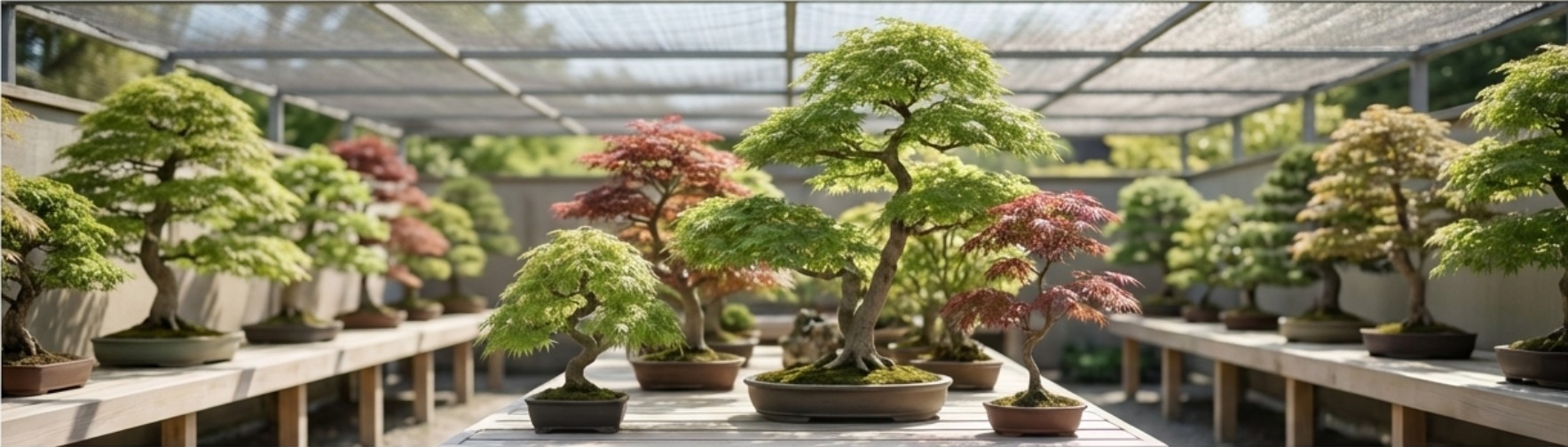
The Japanese maple is one of the most iconic subjects in bonsai culture. Its popularity stems from its remarkable versatility, its beautifully changing foliage color, and its delicate branch structure. To transform a maple into a true bonsai, it is important to understand the classic styles through which we can capture the wild beauty of nature within a pot.
Here are the 8 most common styles that suit Japanese maples particularly well:
1. Formal Upright (Chokkan)
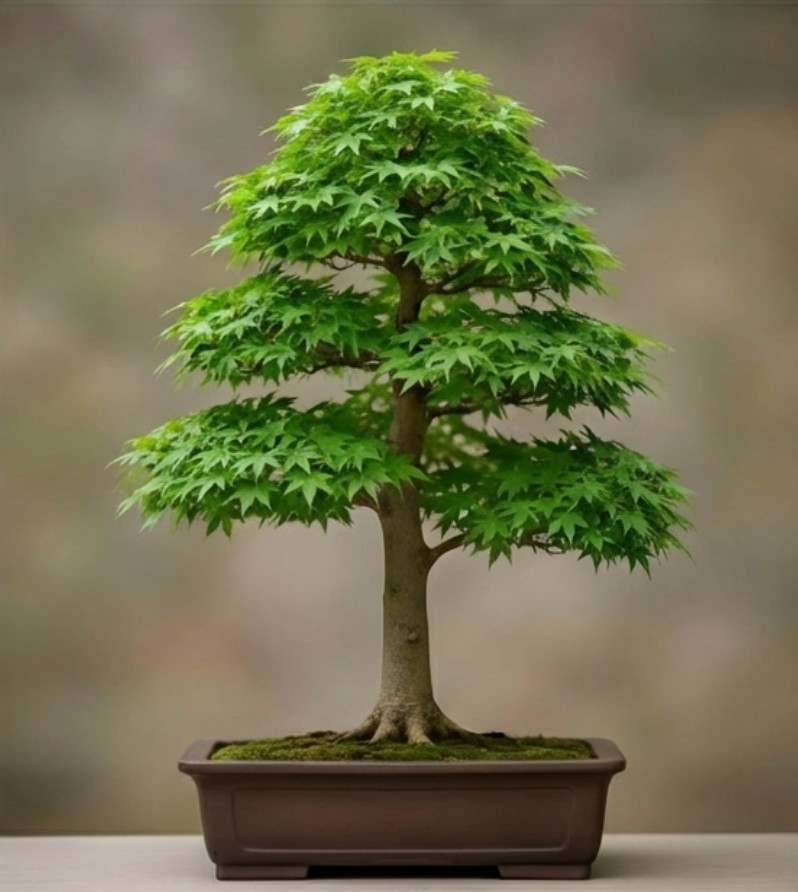
This style is the foundation of bonsai art, featuring a straight, vertically aspiring trunk that tapers evenly from base to apex. Although the natural habit of maples is often more irregular, a well-developed Chokkan maple evokes a sense of calm and stability. The branches should point in all directions, forming a regular triangle shape when viewed from the front.
Formal Upright (Chokkan)
Informal Upright (Moyogi)
2. Informal Upright (Moyogi)
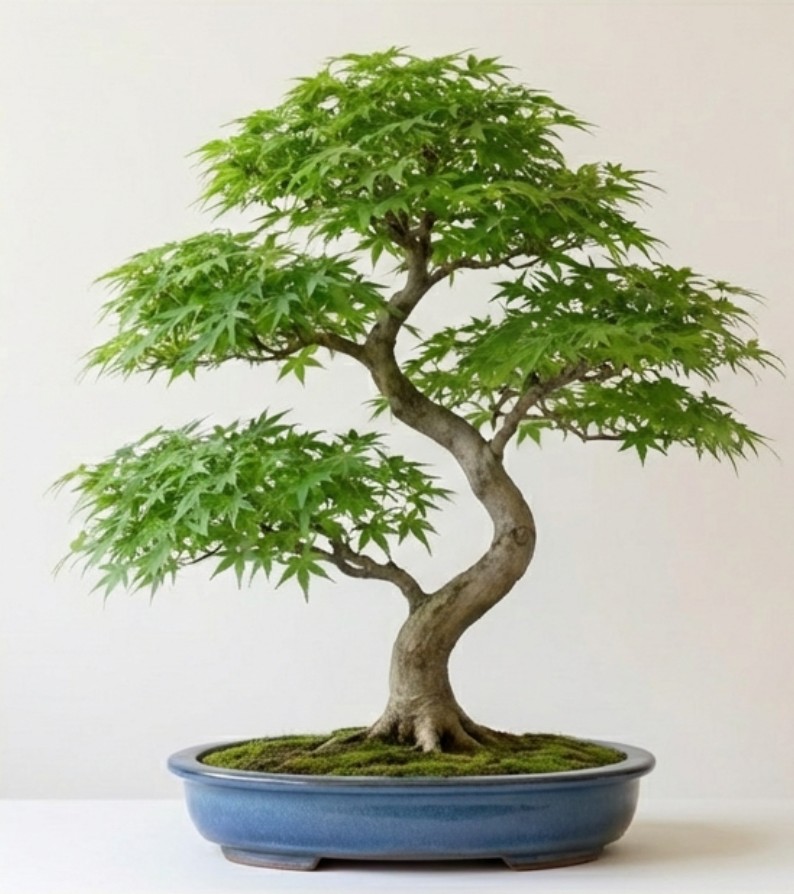
Moyogi is the most popular and most natural style among Japanese maples. The trunk describes gentle "S"-shaped curves, yet the apex of the tree ultimately sits above the center of the nebari. This style evokes trees that have grown in nature, leaning toward the light and defying the wind.
3. Slanting (Shakan)
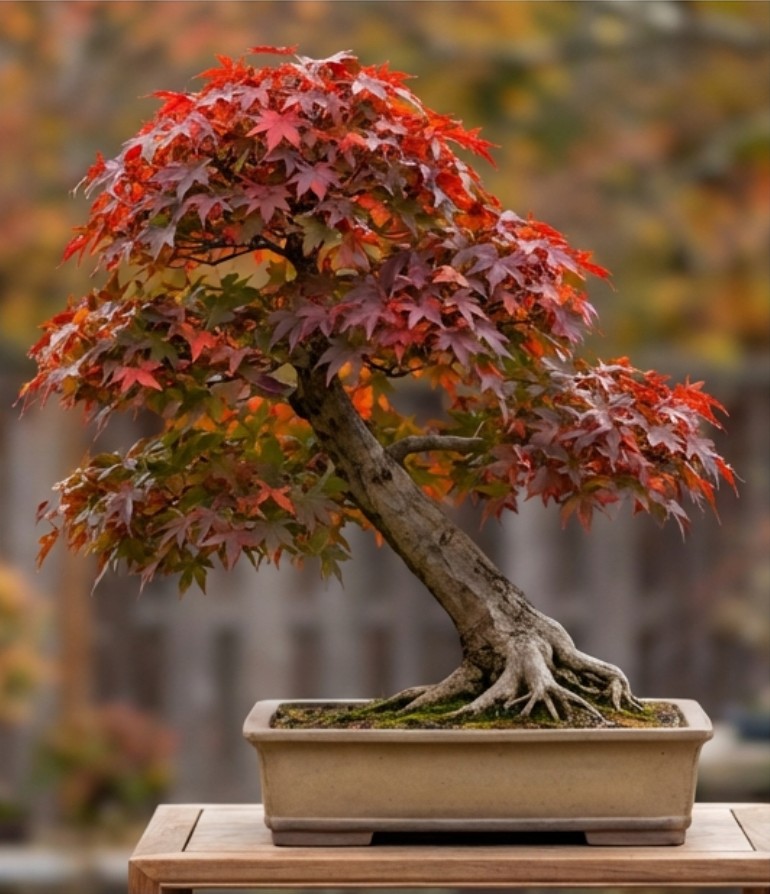
In this style, the trunk leans decisively to one side at an angle of 60–80 degrees. Shakan-style maples symbolize resilience and dynamism, as though wind or gravity had forced the tree into this growth form. To maintain balance, the roots on the side opposite the lean must be prominent.
Slanting (Shakan)
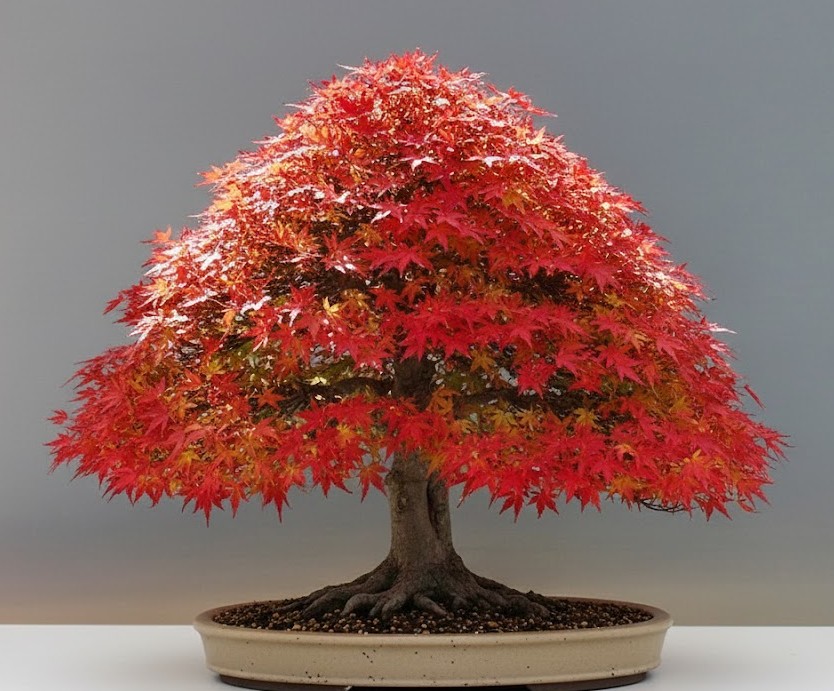
Broom (Hokidachi)
4. Broom (Hokidachi)
The Hokidachi style is a perfect match for the delicate ramification of Japanese maples. From a straight trunk, branches radiate outward in all directions from the upper portion of the tree, forming a dense canopy reminiscent of an inverted broom or umbrella. This form showcases the deciduous beauty of maples just as impressively in winter, with bare branches on full display.
5. Cascade (Kengai)
This dramatic style emulates trees growing on cliff edges or steep mountain slopes, where the trunk cascades downward, defying gravity, falling beyond the rim of the pot and extending below its base. In the case of Japanese maples, this requires considerable expertise, as the species' strong apical dominance — the energy directed toward the apex — makes it difficult to keep downward-hanging branches alive. For this reason, it is very rarely seen in this style. The weeping Japanese maple Ryusen, with its natural tendency to grow downward, lends itself well to both cascade and semi-cascade styles.
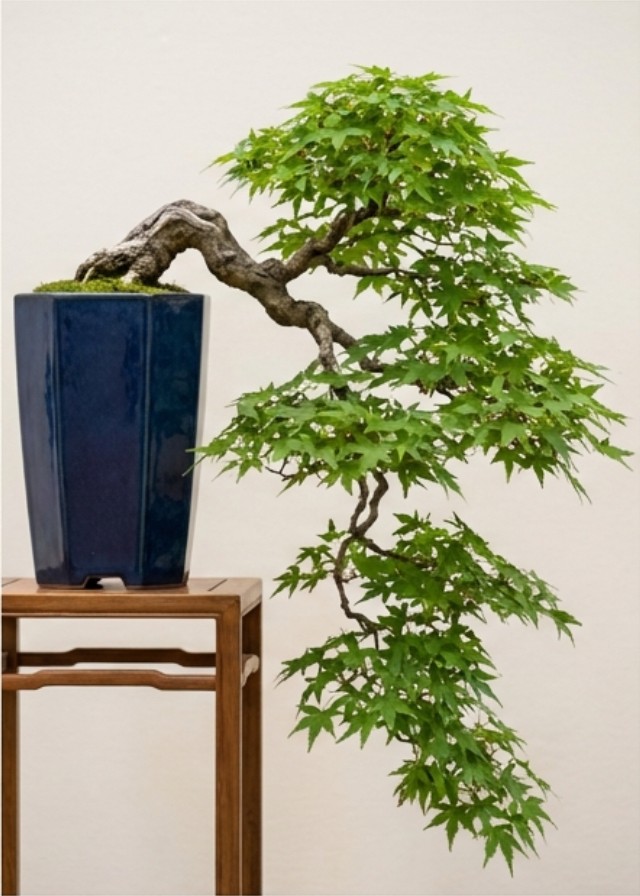
Cascade (Kengai)
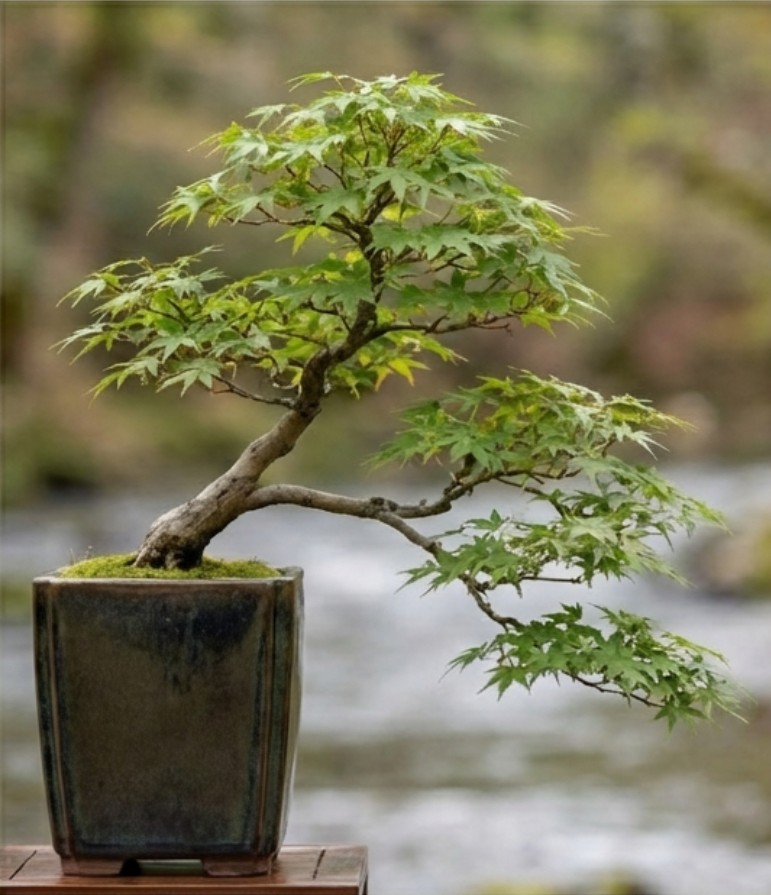
Semi-cascade (Han-kengai)
6. Semi-cascade (Han-kengai)
Han-kengai is less extreme than a full cascade: the trunk extends horizontally or gently downward, but never drops below the level of the pot's base. It evokes trees leaning out over riverbanks. This style is easier to maintain with maples, as the flow of sap is less impeded in the downward-angling branches.
7. Forest (Yose-ue)
In the Yose-ue style, multiple trees — typically an odd number — are planted together in a single shallow tray to create the illusion of a miniature forest or grove. Thanks to the varying sizes and diverse autumn colors of Japanese maples, this is one of the most spectacular ways to present maple bonsai, radiating a sense of peace and harmony with nature.
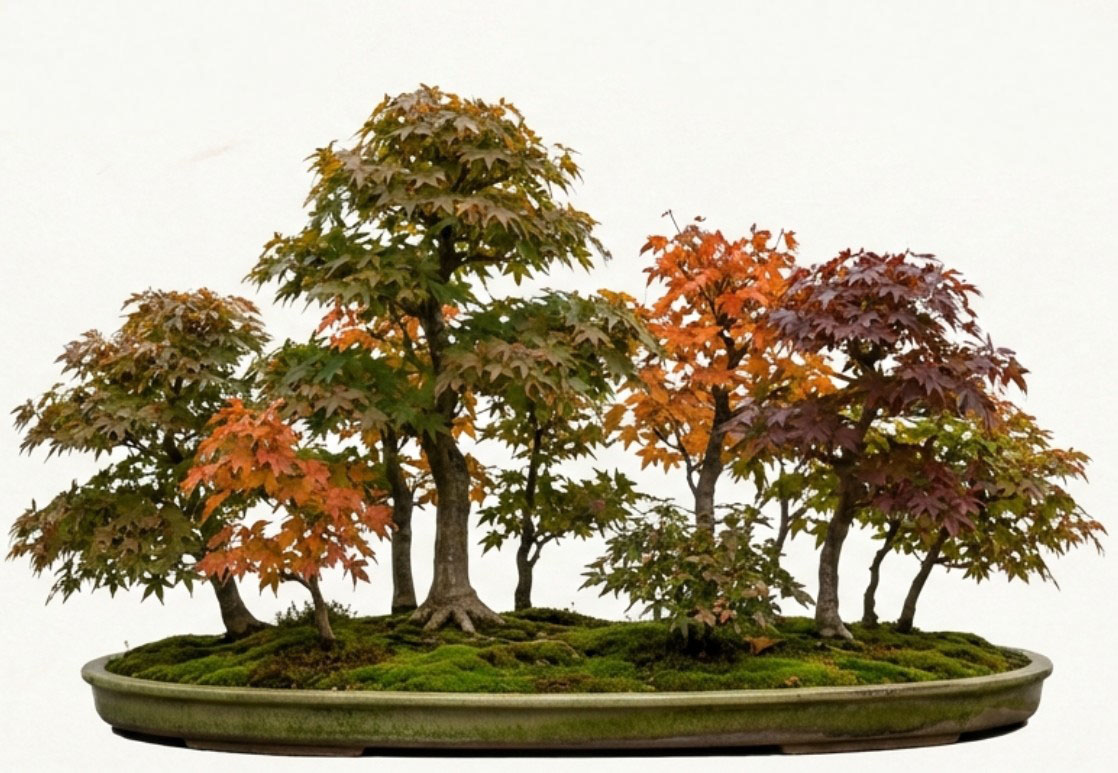
Forest (Yose-ue)
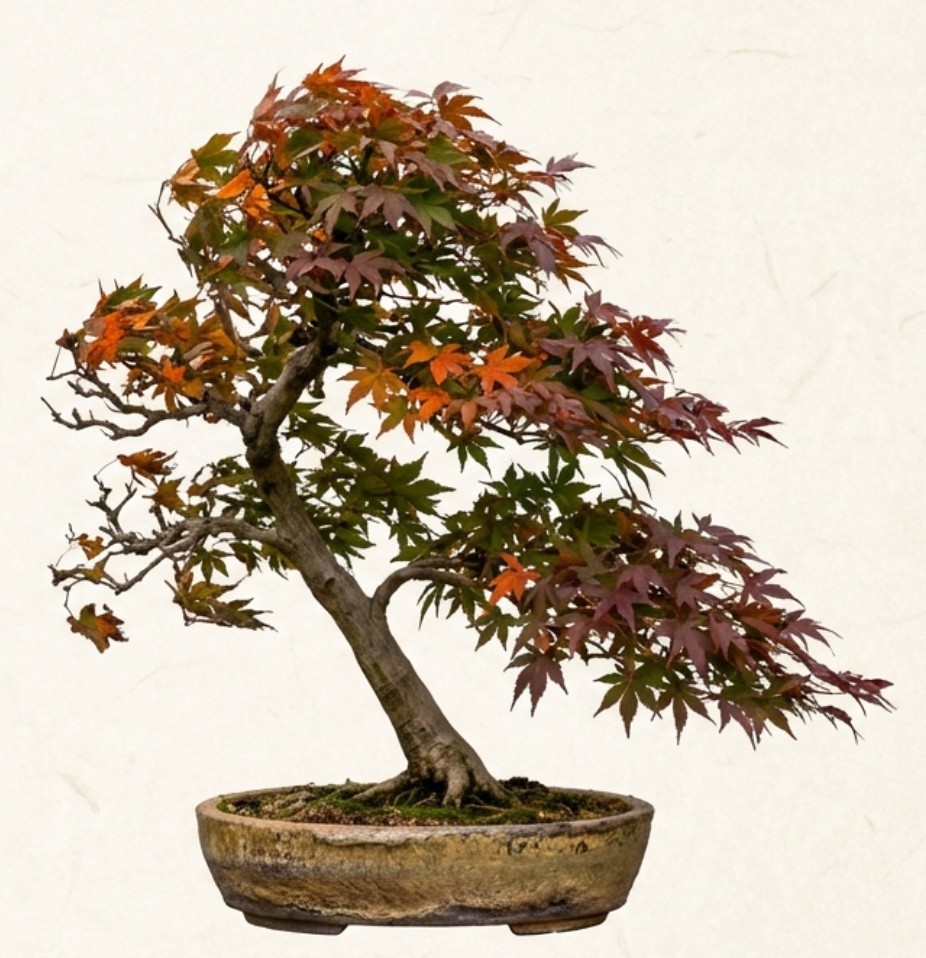
Windswept (Fukinagashi)
8. Windswept (Fukinagashi)
This style captures a dramatic moment: the state of a tree subjected to a continuous, powerful, unidirectional wind. The trunk and all branches lean in one direction, as though a storm were tearing at the foliage at that very instant. In Japanese maples, this form lends the composition a remarkable sense of tension and aesthetic depth.