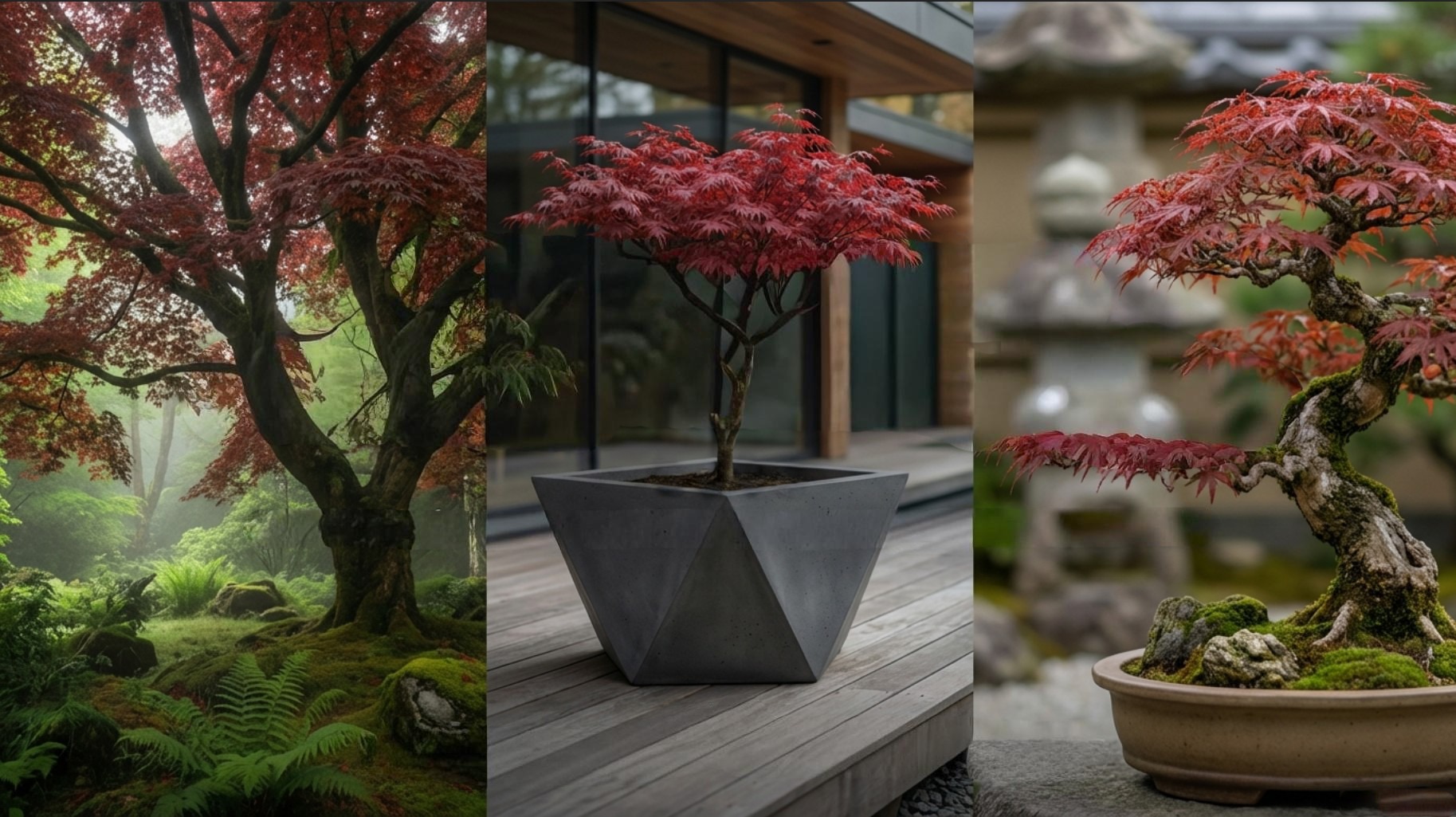
Three Paths, Three Philosophies: Ground, Container, and Bonsai
Different approaches to growing Japanese maple and what they represent
Introduction
Gardening is more than a mere hobby — it is a philosophy of life, in which our relationship with plants reflects the way we relate to the world. When we plant a tree or a shrub, we consciously or instinctively choose between different approaches, and those choices reveal a great deal about our goals, our values, and how we wish to shape our surroundings.
Ground Planting: The Way of Nature
Goal: A Long-Term Garden Feature
Planting in the ground is the oldest and most straightforward way to grow a tree. When we plant a tree directly in the earth, we are essentially returning it to its original element, where it can develop according to the laws of nature.
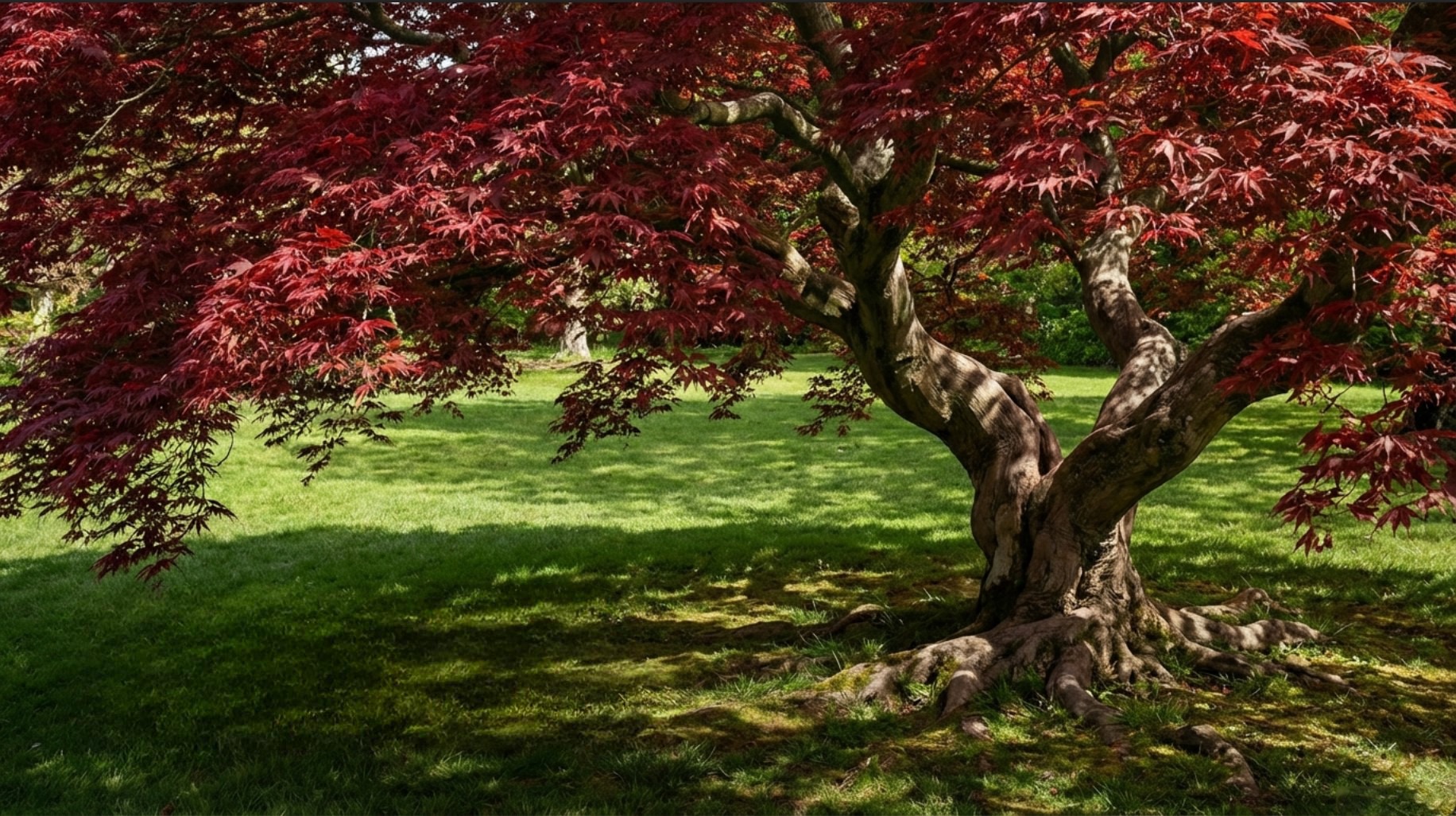
The Philosophy of Ground Planting
Soil: The greatest gift we can give a tree at planting time is improving the growing medium. When we amend the soil by 50% with compost, peat, or other organic matter, we are not only helping the tree but the entire ecosystem. The soil continues to improve over time, mycorrhizal fungi appear and form a symbiotic relationship with the tree’s roots (each supporting the other’s development). The roots penetrate deeper, and the tree becomes woven into the natural cycle of the garden.
Commitment: Anyone who plants in the ground is thinking long term. This is not a one- or two-year project, but an investment in the future. The tree will outlive us, cast shade for our grandchildren, and become part of the garden’s legacy.
Container Growing: The Freedom of Mobility
Goal: Mobility, a Controlled Environment
Growing in containers is one of the most practical solutions in modern gardening. It allows us to place trees and plants where open ground is not an option: on terraces, balconies, and beside entranceways.
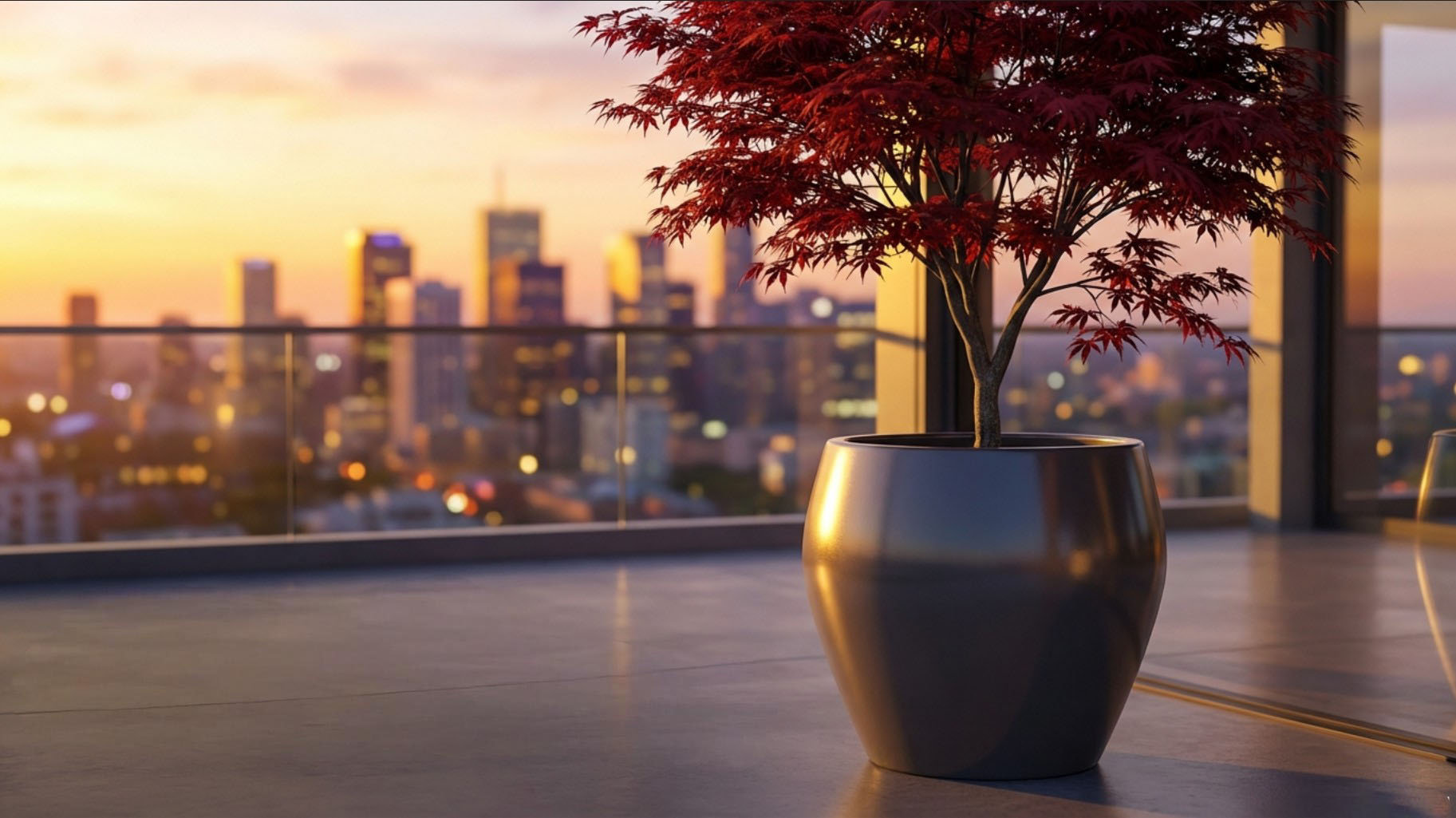
The Philosophy of Container Growing
Soil: In container growing, soil quality is critical. Because the roots are confined to a limited space, every centimetre counts. Airy, pine bark-based mixes ensure good drainage and aeration, which are essential to root health.
Key point: The drainage layer and the outward-tapering pot are perhaps the first things we learn in container cultivation. A well-designed drainage layer protects the roots from rot, while the tapered form makes repotting straightforward.
You can read more about the relationship between pot materials and watering here.
Flexibility: The true strength of a container lies in its mobility. In winter we can bring frost-sensitive plants indoors; in summer we can move them into shade away from excessive sun; and we can rearrange the composition as our needs or the seasons change. It is well worth growing and grouping several different Japanese maples together to achieve a breathtaking display of autumn colour.
Japanese Maple Bonsai
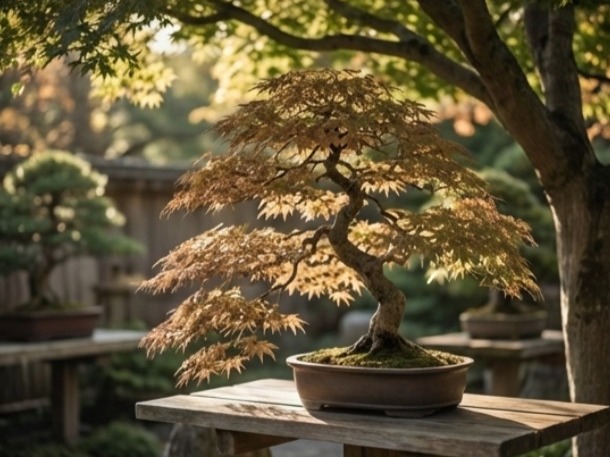
Goal: The Living Work of Art
Bonsai is not simply a small tree — it is a way of life, a meditative practice in which the grower and the tree become one. The aim of the bonsai art is not to tame the tree, but to create an idealized, distilled image of nature.
The Philosophy of Bonsai
Soil: Bonsai soil is the most structured and precisely composed medium of the three. A carefully measured blend of Akadama, kiryu, pumice, and other inorganic components creates an environment in which every root hair receives exactly the water and air it needs.
Key point: Root pruning and wiring are master-level techniques. When we repot a bonsai, we are not merely changing the soil — we are shaping the root system, removing superfluous parts, and building a structure that supports the artistic vision for the tree.
Philosophy: Bonsai is the only one of the three methods in which the tree’s development depends entirely on the grower’s vision. It is a lifelong dialogue with nature, where every cut, every wire-guided bend, is a question and answer exchanged with the laws of the natural world.
Which Path Should We Choose?
There is no right or wrong answer. Each of the three approaches has its own beauty and purpose:
- Choose ground planting if you have a garden and wish to enjoy the beauty of these trees with relatively little hands-on care. Planting a tree is in itself a noble act.
- Choose containers if you are looking for mobility and flexibility, have limited space, or want to create a spectacular combined effect with several different Japanese maples.
- Choose bonsai if you wish to find harmony between nature and art, and have the patience for a lifelong journey — a tree that may even outlive you, enduring for centuries.
The most wonderful thing of all is that you need not choose. Many gardeners practise all three methods, and each one offers its own distinct joys and lessons.
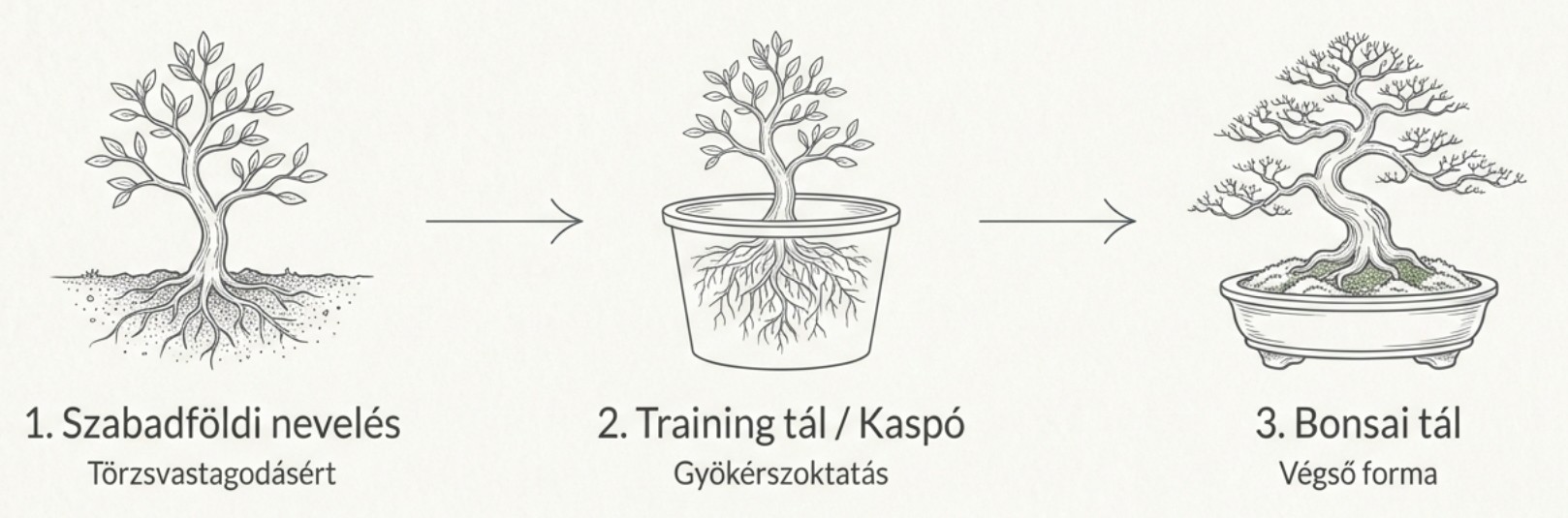
Indeed, a bonsai specimen actually begins its life in the ground, later moves into a training pot or container, and only decades later finds its home in a quality bonsai pot.
Closing Thoughts
As the image shows, all three methods begin with the same thing: a tree and the decision about how we wish to live alongside it. The ground is the way of nature, the container the way of flexibility, and bonsai the way of patience and art. Each deserves our respect and attention, and each has the power to enrich our lives.