
The Secret to Watering Japanese Maples for Lush and Healthy Foliage
A detailed guide to watering Japanese maples in the ground, in containers, and as bonsai
Watering a Japanese maple may seem straightforward at first, but it is really about a constantly shifting balance. We don’t water by the clock — we always water based on the current moisture level of the soil. The Japanese maple does not tolerate extremes: drying out is just as harmful as waterlogged conditions. Its health depends on the oxygen supply to the roots and the proper movement of water through the medium.
Soil structure is a key issue. The right soil — a well-draining, slightly acidic, granular medium — quickly sheds excess water while still retaining the necessary moisture. Although such soil requires more frequent watering, the risk of root suffocation is far lower. Dense, clay-heavy soil, by contrast, causes long-term oxygen deprivation, even when it “never dries out.”
Water requirements vary by cultivar. The more robust, thick-leaved varieties tolerate sun and brief dry spells better, while the delicate leaves of dissected or variegated cultivars respond quickly to even the slightest water deficit. Environmental factors — heat, wind, low humidity — often play a greater role than the soil itself. It can happen that the soil is moist and yet the leaves are scorching: in that case, we are not dealing with water deficiency but with excessive transpiration.
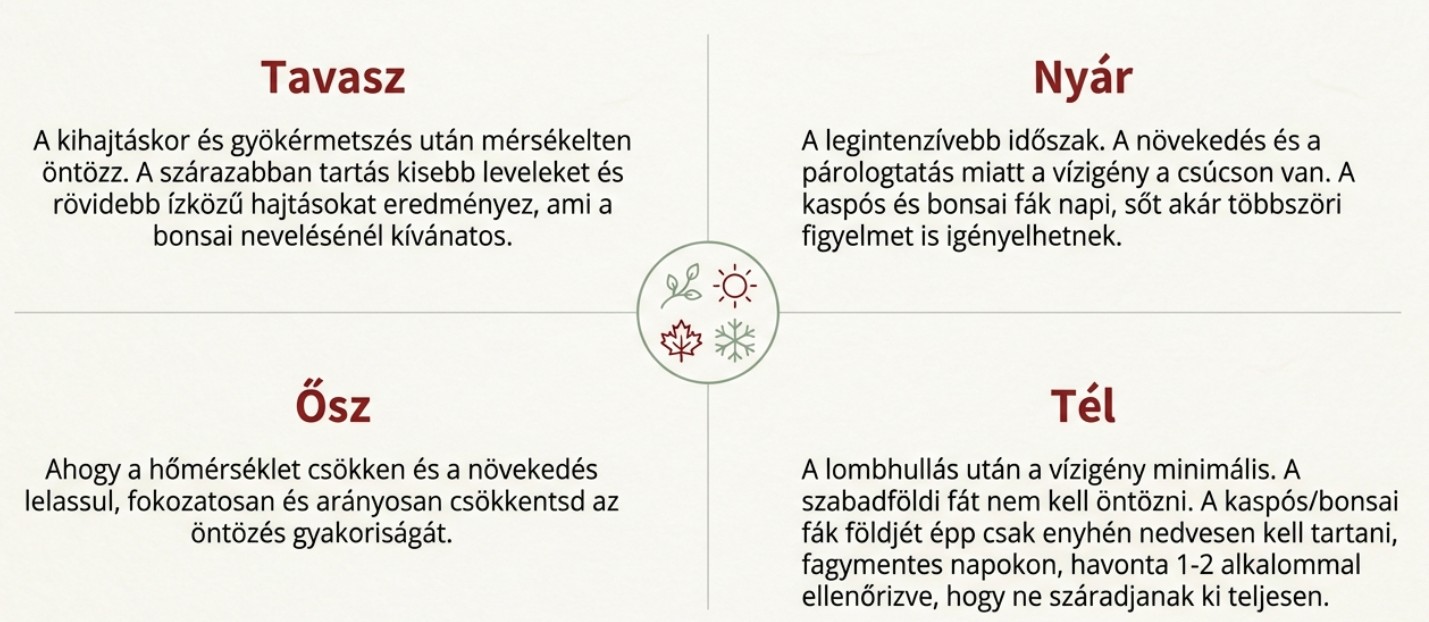
A young, recently planted Japanese maple needs water more frequently, while an established, older tree should be watered less often but more thoroughly. The size and material of the pot, the volume of foliage, and the rhythm of the seasons all influence its needs. In summer, early morning watering helps with cooling; in autumn, gradually reducing water supports the tree’s preparation for dormancy; and in winter, even during frost-free periods, it should not be forgotten entirely.
The Principles of Watering: Balance and Cooling
Water’s primary role is to carry heat away through the leaves (transpiration), allowing the tree’s tissues to remain undamaged even in summer heat. In bonsai cultivation, the most important principle is the balance of water and oxygen in the root zone — because roots need to “breathe” as well.
Fundamental rules:
- Rhythm and consistency – The Japanese maple does not like extremes. The goal is balanced consistency: don’t let it dry out completely, but don’t let it sit in standing water either.
- Timing – Early morning is ideal, when the sun is not yet strong.
- Midday prohibition – Never water onto the leaves in direct, blazing sun, as water droplets can act as magnifying lenses and burn the foliage.
Japanese Maples in the Ground: Depth and Protection
The first two years after planting require special attention. The most important priorities are keeping the roots cool and watering deeply.
Watering strategy:
- Deep watering – Water less frequently but generously, so that moisture penetrates the deeper layers. Using the finger test: if the top 4–5 cm of soil is dry, it’s time to water.
- Mulching – Spread a 5–8 cm layer of pine bark around the tree. This protects the shallowly positioned roots from drying out and overheating, keeps the roots cool, and suppresses weeds. Important: never pile the mulch directly against the trunk — always leave the trunk clear to prevent rot.
- Established trees – Well-rooted, mature trees are far more resilient to drought, but during prolonged hot, dry spells they appreciate supplemental watering.
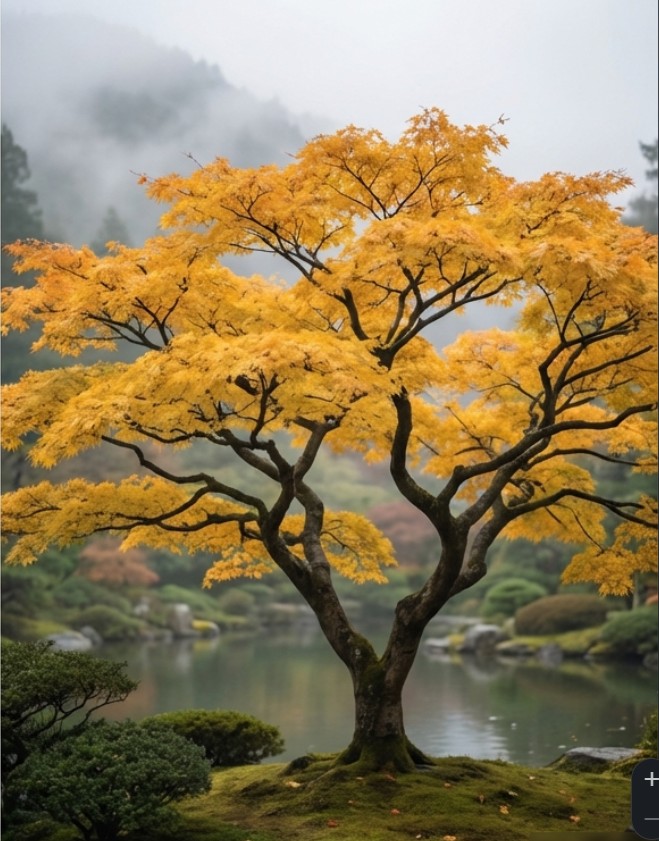
Container Growing: The Controlled Environment
In a container, the plant dries out much faster than in the ground. During summer heat, daily checking — and often daily watering — may be necessary.
Practical tips:
- Correct technique – Water until it appears from the drainage holes at the bottom of the pot. This also flushes out harmful mineral deposits and salts that accumulate in the soil.
- Heat protection – Dark-coloured containers can "cook" the roots in direct sun, so during heat waves, shade the pot itself.
- Tray use – For Japanese maples grown on a terrace, a tray filled with water and gravel can be used to raise humidity, but the bottom of the pot should never sit directly in the water.
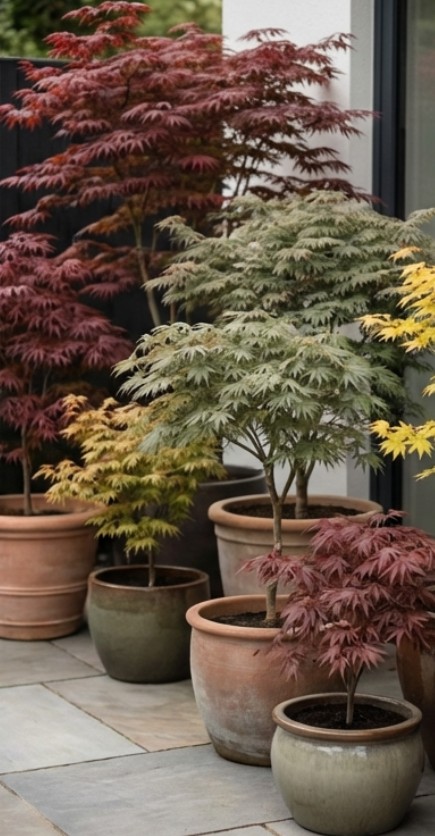
In a Bonsai Pot: The Art of Precision
Because a bonsai pot holds a minimal volume of water-retaining medium, even the smallest mistake can be fatal here. Bonsai soil mixes (e.g. Akadama, pumice, lava rock) drain excellently but retain very little water. For this reason, frequent and thorough watering is critical.
Specialist techniques:
- Akadama as indicator – The colour of Akadama shows exactly when water is needed: dark brown means hydrated, while light brown or yellowish signals a thirsty plant.
- Immersion method – If the soil has dried out completely, the pot can be placed in water up to its rim for a few minutes, allowing the medium to fully absorb water and moisture to penetrate the deeper layers.
- Foliar misting – Helps raise humidity, but should be avoided in the evening as it dries more slowly and can encourage fungal issues.
Seasonal and Water Quality Considerations
Water quality: The Japanese maple is sensitive to hard (limey) water, which can cause yellowing of the leaves (chlorosis). Rainwater is the most suitable, or tap water that has been left to stand for 24 hours. Spring attention: Around bud break, be sparing with water; too much at this stage results in elongated shoots and oversized leaves. Winter watering: The soil must still be checked during the dormant period. On frost-free days, if the surface of the soil begins to dry out, give it a small amount of water, as frozen roots cannot compensate for moisture lost through transpiration. In winter, watering is needed approximately every 3–4 weeks, but always check first before watering.
Summary
The secret to successful watering lies not in following a single rule, but in continuously observing the plant. Every Japanese maple is unique: its environment differs, its growing form differs, its age differs. Experience and attentiveness are what lead to the right balance — where the Japanese maple stays healthy and vigorous, and offers a beautiful sight in every season.
Related articles:
- The advantages and disadvantages of five bonsai watering methods - A detailed comparison of watering techniques