Pros and Cons of Five Bonsai Watering Methods
Practical considerations for beginners and advanced growers
Watering is the most critical aspect of bonsai cultivation — more trees are lost to drying out than to overwatering. There is no single rule that applies to every situation; water requirements depend on the species, the season, the size of the pot, and the type of growing medium. The goal in every case is for water to thoroughly penetrate the soil and for the excess to drain away through the drainage holes.
Principles that apply before any watering method:

Know the needs of your Japanese maple
Japanese maple has its own unique requirements. It prefers acidic soil, which means it tolerates calcareous tap water poorly; rainwater or water from an algae-rich garden pond is ideal for it.

Check the soil
The 'finger test' is the most reliable method. Only water when the soil feels dry a few centimetres deep. The lighter colour of Akadama also indicates when watering is needed.

Pay attention to water quality
Rainwater is best. If using tap water, let it stand for 2–3 days so the chlorine can dissipate.

Adapt to your environment
Watering frequency is influenced by the season, climate, pot size, and growing medium.
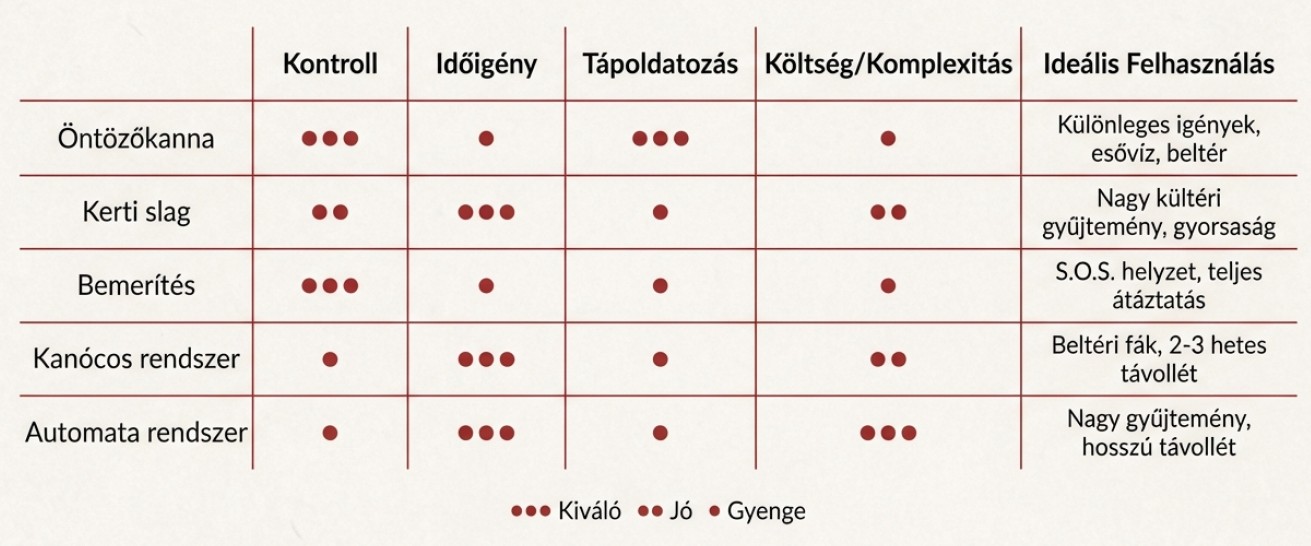
Here is a detailed comparison of the five most common watering methods:
1. Watering can
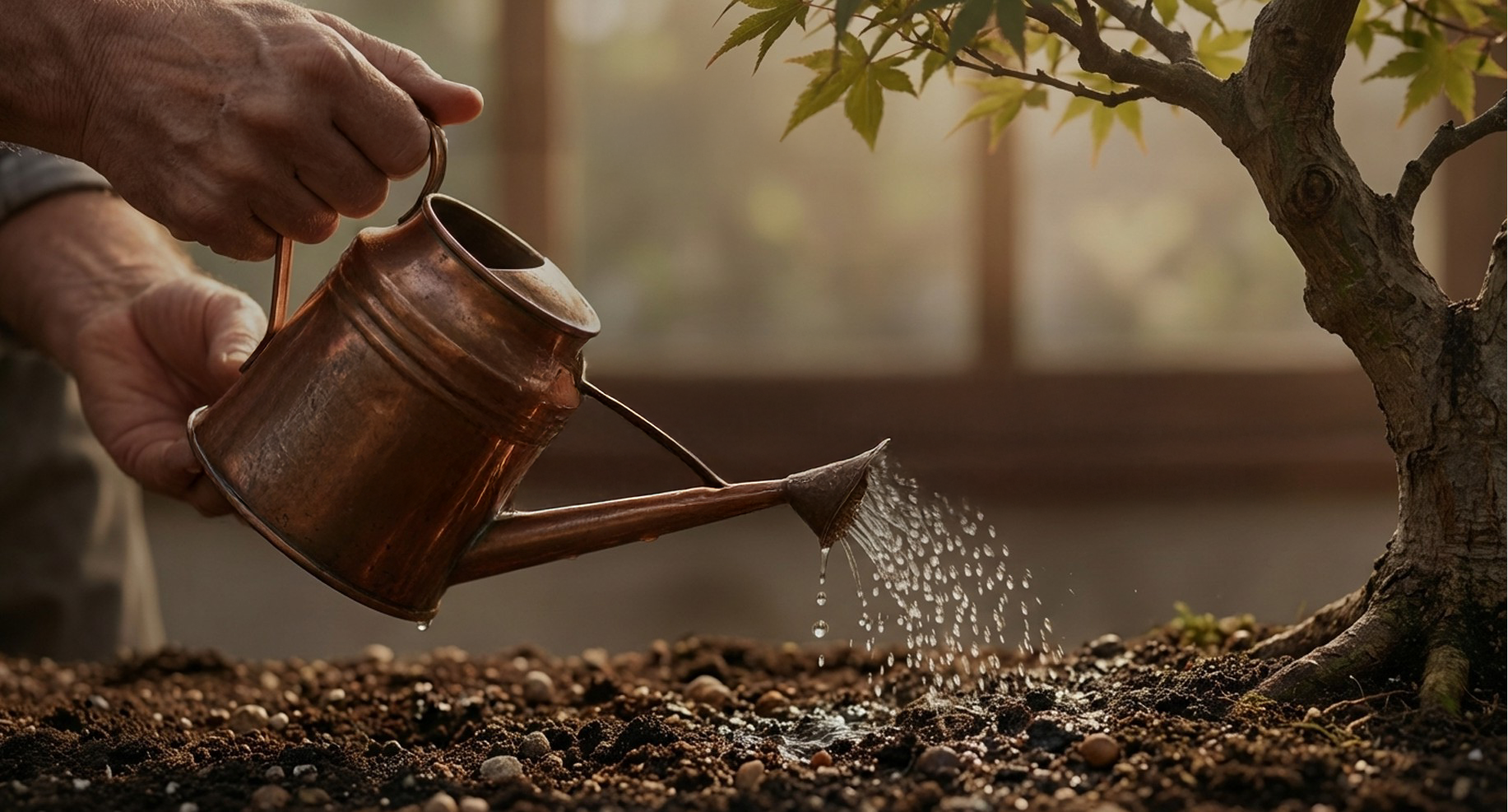
A small bonsai watering can (around 2 litres) fitted with a fine rose head is one of the most popular tools for granular growing media.
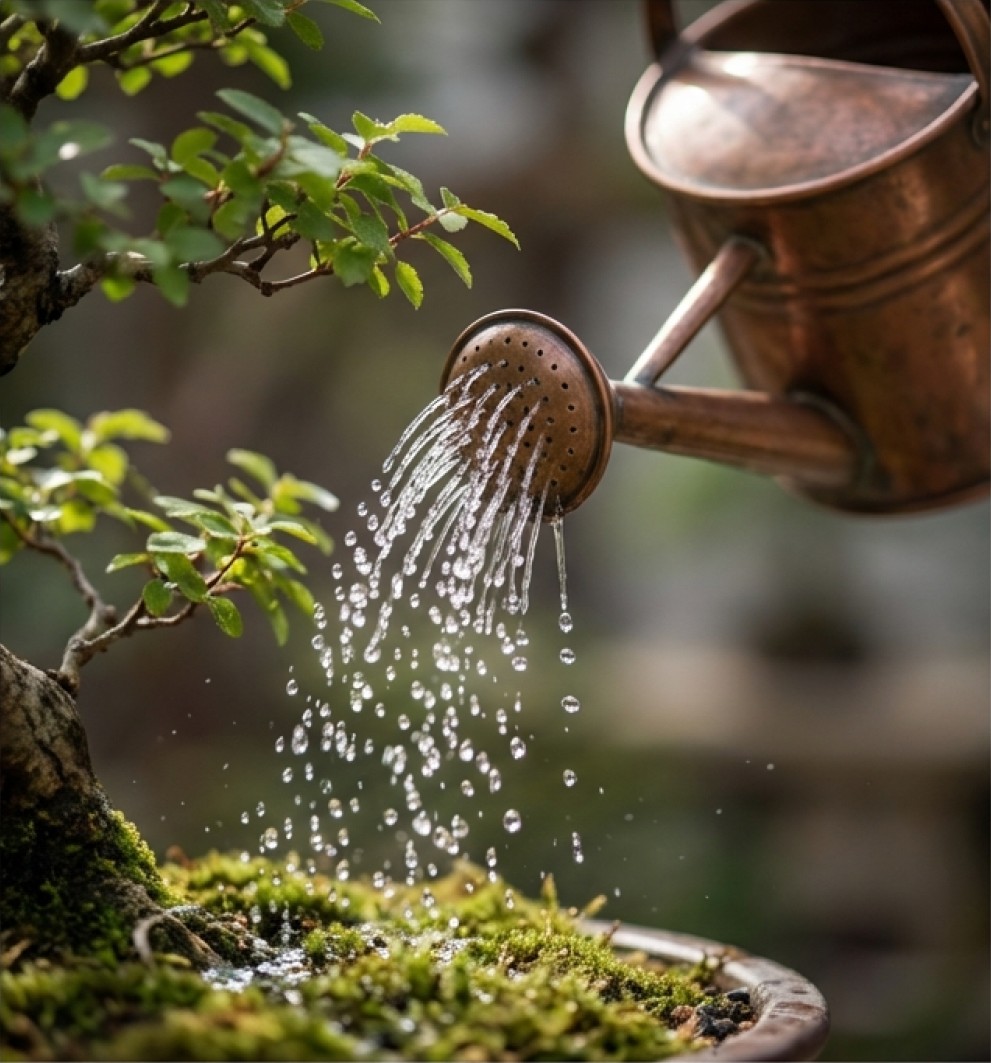
Fine misting with a watering can
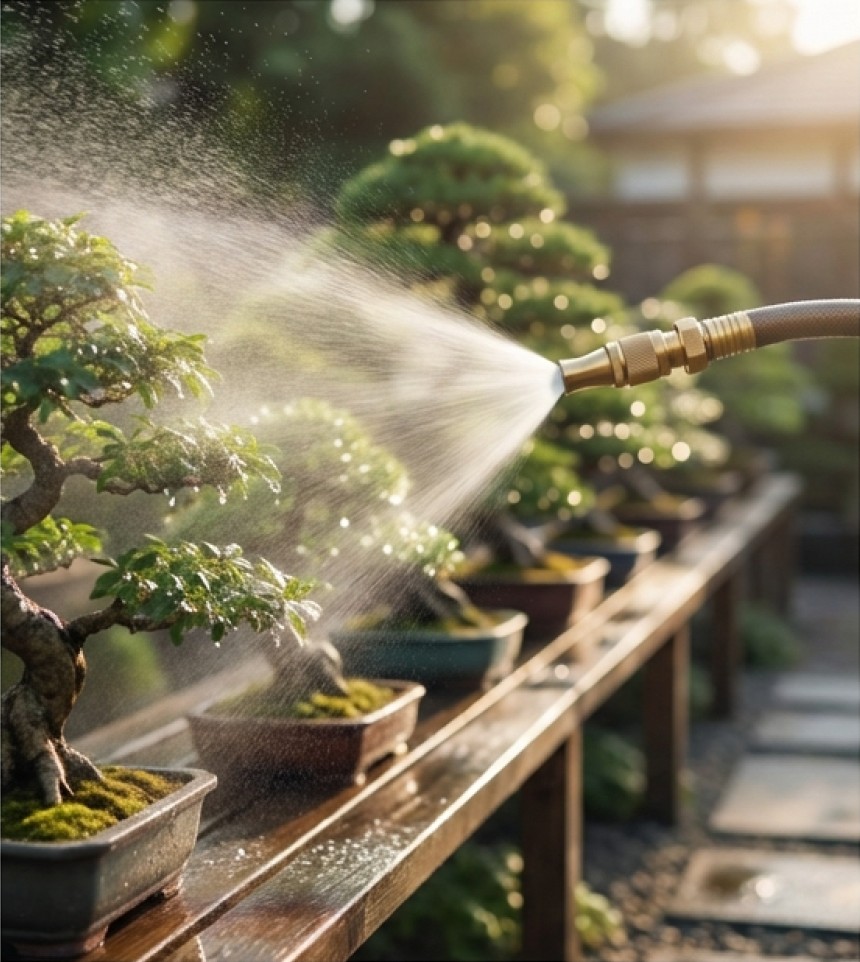
Fine misting with a garden hose
2. Garden hose with a fine spray head
3. Immersion watering
With this method, the entire bonsai pot is submerged in water until the soil surface is covered; it should be kept submerged until bubbling stops — noticeably until the pot is fully saturated — and then the excess water is allowed to drain freely.
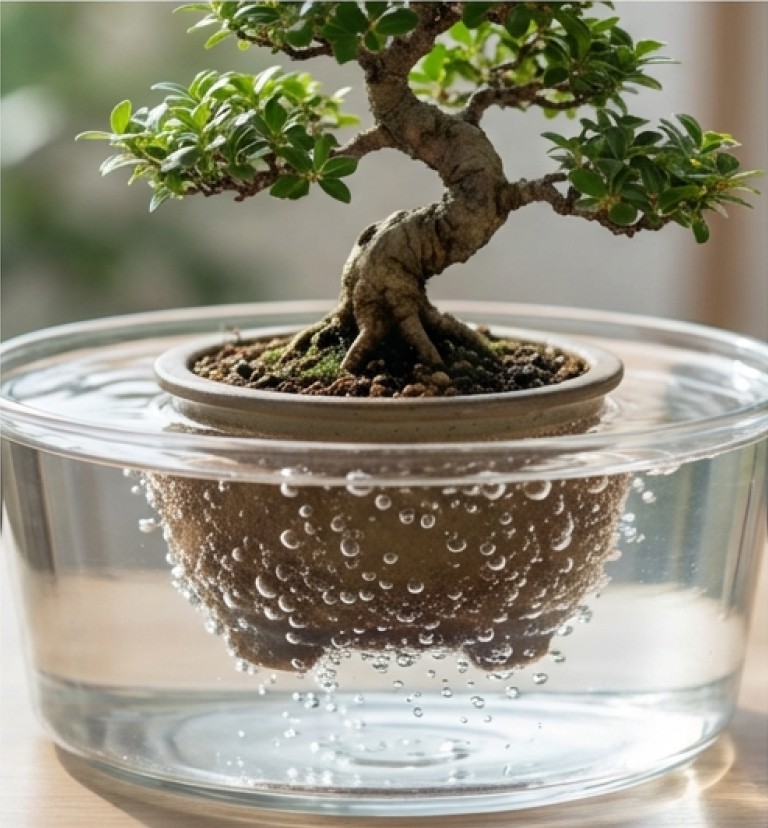
Immersion technique
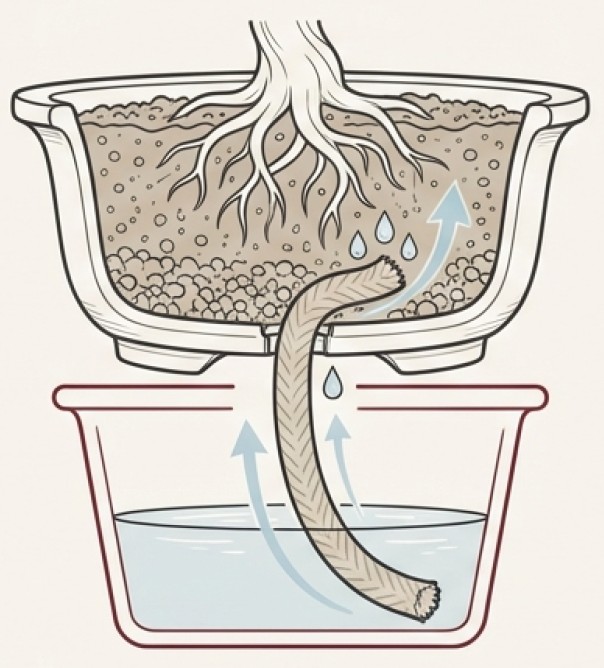
Hydro bonsai
4. Wick watering (Hydro Bonsai)
This technique uses textile wicks to draw water up by capillary action from a reservoir placed below the pot.
Automatic irrigation systems
Digitally programmable systems operate reliably even in extreme heat or during extended absences.
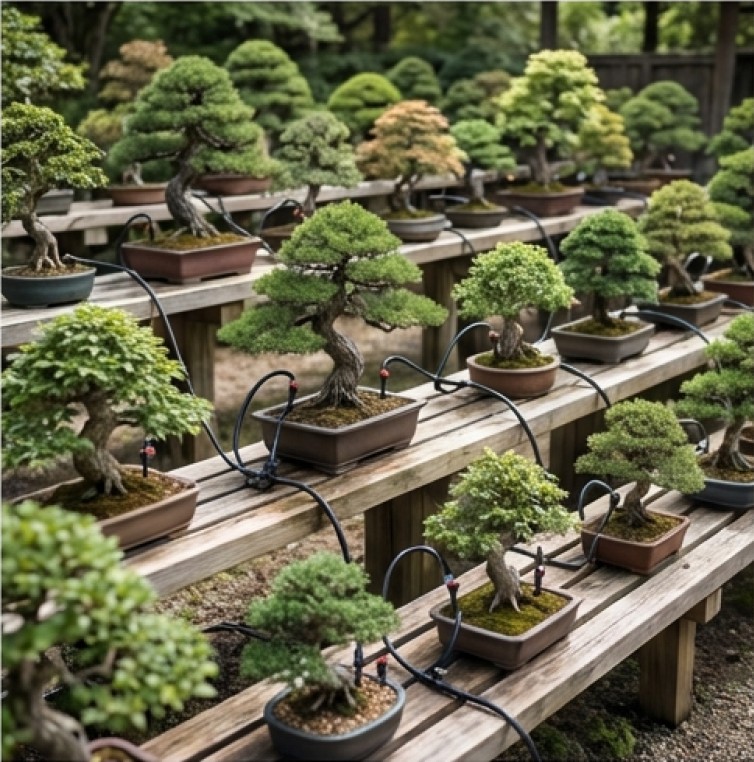
Automatically controlled system
Summary
There is no single universal solution. The best results come from mindfully combining methods: use the watering can for trees with special needs, the hose for quickly watering a large collection, and the wick or automatic system during holidays. Remember: if you are unsure, touch the soil — if it doesn’t feel moist, water thoroughly!
Related articles:
- The secret to watering Japanese maple - Principles and a detailed guide to watering