Tiny Pests, Big Trouble
The hidden battle between aphids and the Japanese maple
There is something truly special about the delicate, almost fragile beauty of the Japanese maple. Its leaves unfurling in spring are like a carefully painted watercolour coming to life in the garden. And perhaps it is precisely this delicacy that explains why not only we are captivated by them… but aphids are too.
The tiny enemy
These insects, barely a few millimetres in size, appear insignificant at first glance. Their colour varies — green, black, red, or brown — and they settle on the undersides of leaves almost unnoticed, particularly on fresh shoots where the plant is most vulnerable. With aphids, females clone themselves continuously without males (parthenogenesis), and the larvae begin feeding immediately. This leads to extremely rapid population growth, which can burden and weaken the host plant within weeks.
Spring explosion – a laid table for pests
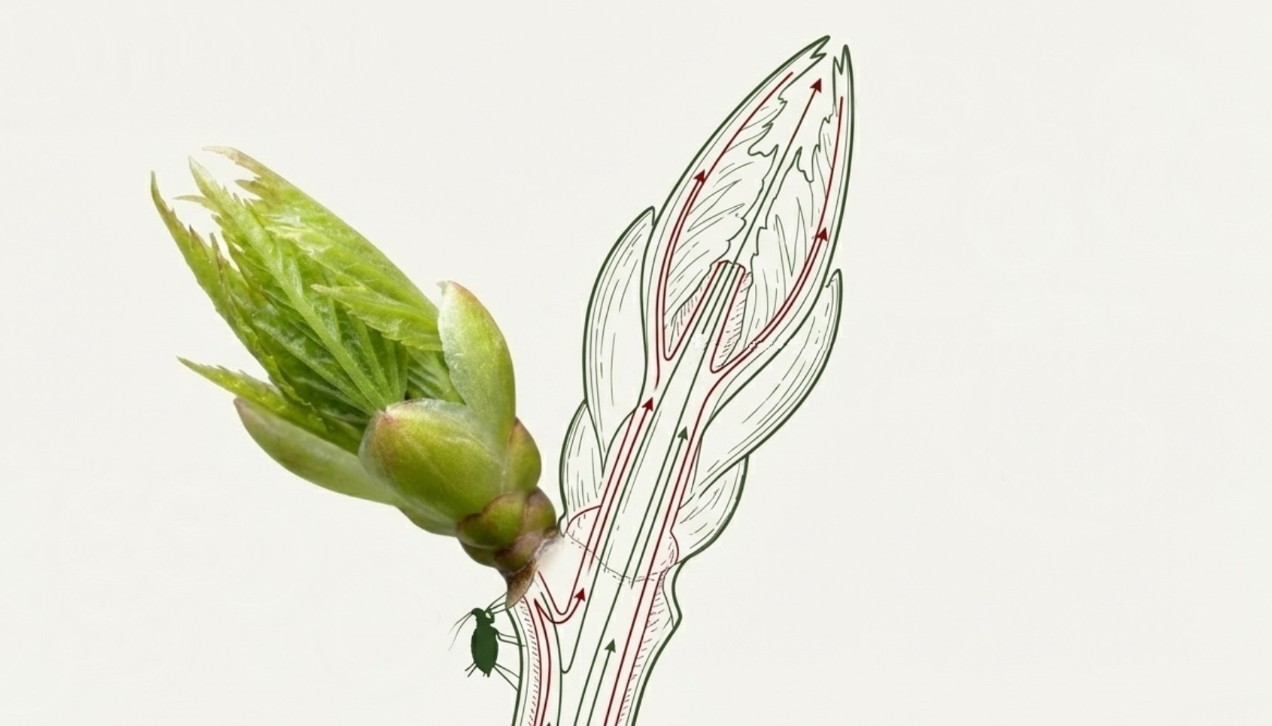
The story truly begins in spring. The maple enters a period of explosive growth: buds open, tender shoots appear, everything is full of life and sap. This is the time when the plant becomes, quite literally, a laid table for aphids. Using their piercing-sucking mouthparts, they draw sap from the vascular tissue, making particular use of the nitrogen-rich portions. The excess sugar is then excreted in the form of a sticky secretion called honeydew.
Honeydew, ants, and sooty mould – the perfect ecological symbiosis
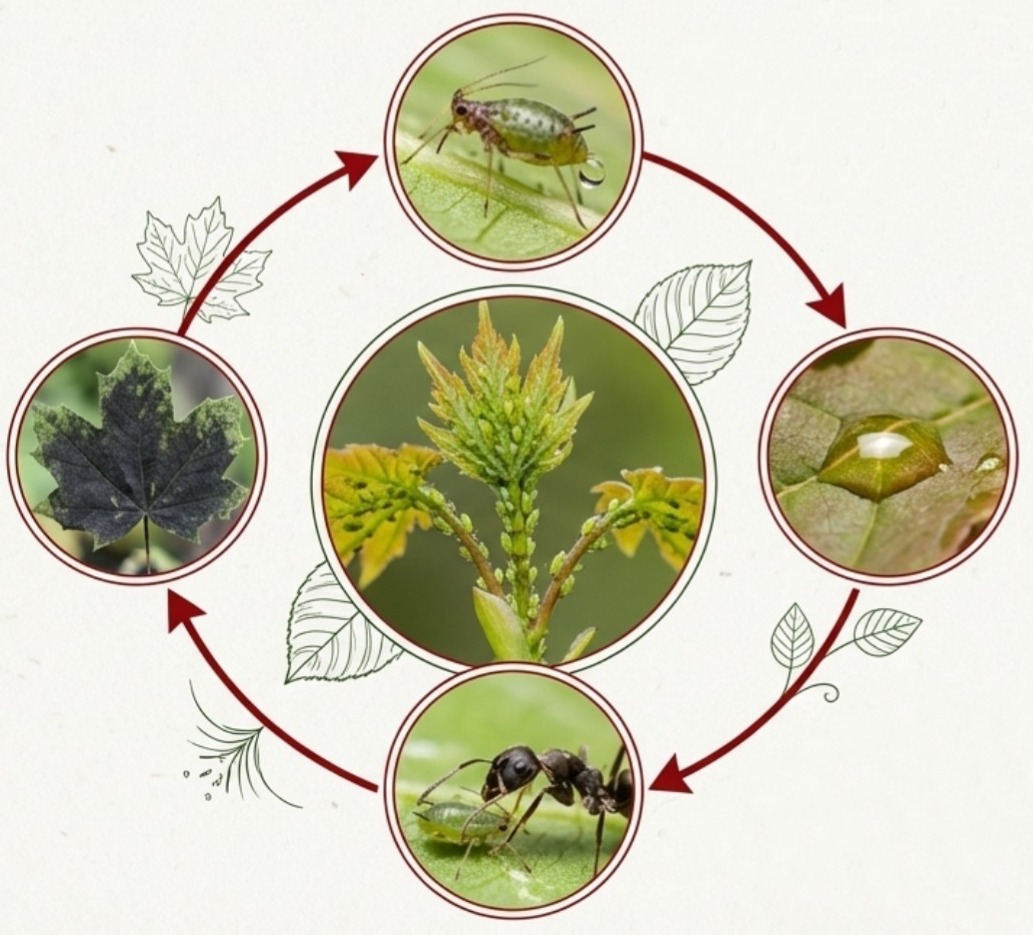
But this honeydew is no simple by-product. It is, in fact, the foundation of an entire small ecosystem. The aphid continuously taps the plant’s vascular flow, producing honeydew. This sticky coating attracts ants, which use the sugary secretion as a primary energy source and therefore literally “farm” the aphids. They protect them from their natural enemies and will often move them to new shoots to ensure a continuous supply. The unconsumed honeydew serves as a growth medium for fungal spores, including sooty mould, which coats the leaves in a black layer, blocking light and weakening photosynthesis.
The visible signs of damage
By the time we notice, the signs of damage are already visible on the plant. The loss of sap causes the leaves to distort and curl, losing their characteristic shape. Fresh shoots lag behind in development, the maple seems to lose its vigour, and its growth slows. And while the direct damage caused by aphids is significant, equally dangerous is what they do “unnoticed” in the meantime: they can introduce various pathogens into the plant.
When we prepare the ground ourselves
Interestingly, we often prepare the ground for them ourselves. Excessive spring fertilisation, particularly the use of nitrogen-rich fertilisers, produces soft, water-rich shoots. These are precisely the parts that aphids favour most. Warm, humid weather only accelerates their reproduction further.
Control: from prevention to intervention
Pest control is therefore not a single step, but rather a kind of attentive presence. Much can be decided as early as late winter: an oil-based dormant spray can help eliminate overwintering eggs before they hatch. In spring and summer, regular monitoring becomes key. For a milder infestation, a strong jet of water or a soapy wash* is sometimes enough to physically remove the pests.
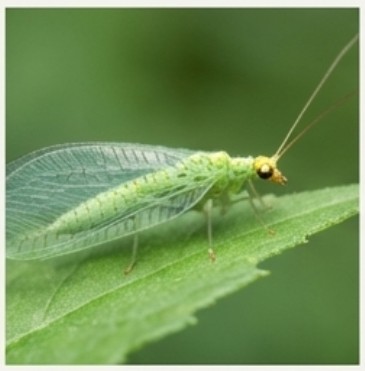
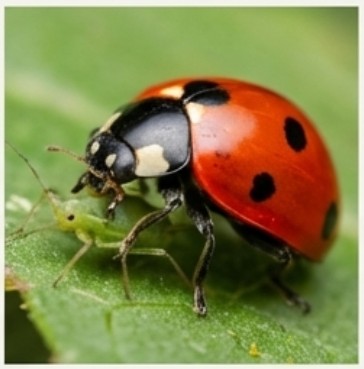
Nature often comes to our aid, if we let it. Ladybirds and lacewings feed specifically on aphids. Lacewing larvae are extremely aggressive, voracious aphid destroyers. Ladybirds are highly effective predators that feed specifically on aphids. But their presence requires balance.
When ants continuously protect the aphids, this balance breaks down. Ants use their antennae to massage the aphids’ abdomens, stimulating more intense honeydew secretion. With formic acid and aggressive attacks, they drive away the aphids’ natural enemies (ladybirds, parasitic wasps). They frequently physically transfer aphids to fresh, untouched shoots, accelerating the complete infestation of the tree. This is why many gardeners use a simple yet effective method: preventing ants from climbing up the trunk to protect the aphids, thereby giving predators free access.
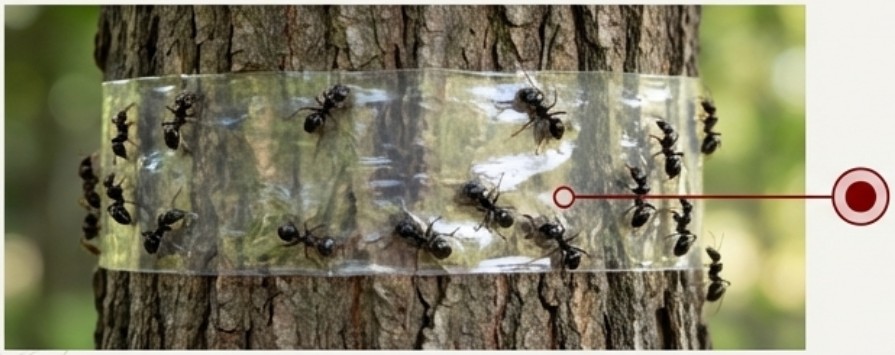
When the infestation has progressed beyond what can be managed by hand or natural methods, stronger intervention may be necessary. In such cases, targeted pesticides** can provide a quick solution, but their use should always be considered carefully and treated as a last resort.
End of season: back to basics
At the end of the season, we return once again to basics: removing fallen leaves is not merely an aesthetic matter. These leaves can harbour pathogens that may restart the problem the following year.
The story of the Japanese maple and aphids is not, in fact, a simple pest–plant relationship. It is more a finely balanced system in which every small decision matters: how much nutrition we provide, how attentively we observe, when we intervene. If this balance can be found, the maple does not merely survive by some stroke of luck.
Summary of control measures
LATE WINTER
Prevention: oil-based dormant spray. The goal is to destroy overwintering eggs before they hatch.
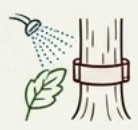
SPRING
Physical intervention: regular inspection of fresh shoots. For mild infestations, a strong jet of water or soapy wash to physically remove aphids. Excluding ants from the trunk.
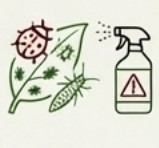
SUMMER
Biological and chemical defence: supporting natural enemies (lacewings, ladybirds). Stronger intervention (targeted pesticide) only as an absolute last resort, applied with care.
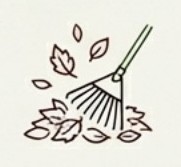
AUTUMN
Sanitation: cleaning the garden and removing fallen leaves. The aim is to eliminate the overwintering refuge of the following year's pathogens and pests.
“The goal is not the complete eradication of pests, but the maintenance of a finely balanced system.”
* More on soapy water
A simple home recipe for soapy water calls for mixing 1 teaspoon of liquid soap into 2 litres of water. This diluted mixture is effective because it blocks the breathing pores of aphids, leading to their death, while causing no harm to the plant.
The following points are worth keeping in mind when applying it: The spray should be directed primarily at young shoots and the undersides of leaves, as this is where aphids congregate in the greatest numbers. Potassium soap alternative: A specialised potassium soap may also be used, typically diluted to a concentration of 1–2.5% (that is, adding 1–2.5 decilitres of soap to 10 litres of water). For maples, a more dilute, 1% concentration is preferable.
Timing: It is advisable to apply the spray in the early morning or evening hours. Intense midday sunshine and high heat can cause the leaves to scorch and burn.
After-treatment: One day after the soapy treatment, rinsing with clean water will remove the dead pests and the soapy residue from the plant’s surface. Soapy spray used long-term or repeatedly can cause phytotoxic symptoms (spots, browning, scorching) in sensitive plants such as the Japanese maple, as it strips the protective wax from the leaves and can dry them out — which is why rinsing again with a clean water spray is necessary.
It is important to note that while soapy water is effective against minor infestations, it may not provide a sufficient solution in more serious cases or against aphids sheltering beneath curled leaves.
** Insecticidal chemicals Systemic insecticides may be used (e.g. Mospilan, Teppeki, Pirimor), which enter the maple’s vascular system. The aphid absorbs the active ingredient during feeding, meaning that individuals hiding on the underside of leaves or living within rolled leaves are also eliminated. Always follow the product instructions strictly regarding application and correct concentration. Use only bee-safe products, as honeydew strongly attracts bees! Rotate active ingredients to prevent the development of resistance.