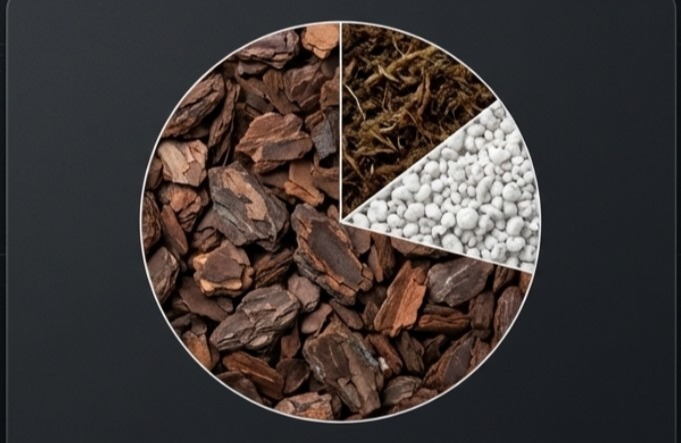
The Secret of Pine Bark
Pine bark-based growing media and the prevention of root rot
Japanese maples (Acer palmatum, Acer japonicum and Acer shirasawanum) represent one of the highest aesthetic values in garden art and dendrology. These woody ornamental plants, with their graceful foliage, dramatic autumn coloration and varied habits, have become central elements of modern landscape design. At the same time, growing Japanese maples in containers presents significant challenges for professionals and hobby gardeners alike, as the root systems of these species are extremely sensitive to environmental stress — particularly to water management irregularities.
Both international and domestic professional circles are placing increasing emphasis on the use of specialized growing media with high pine bark content, a technology that has filtered through from professional nursery production into private gardens. The secret of pine bark lies not in any single component, but in the complex physical-chemical synergy created by the porosity, durability and acidifying effect of the medium working in concert.
The physiological needs of Japanese maples and the limitations of container growing
In their natural habitat — the mountainous, humid climatic zones of East Asia — Japanese maples have adapted to loose, humus-rich soils with excellent drainage. The common characteristic of these habitats is that the soil remains consistently moist, yet water never stagnates in the root zone. In container growing, however, the roots are confined to an enclosed space where the interaction between gravity and the structure of the growing medium frequently creates harmful conditions.
Traditional potting soils, which contain a high proportion of fine-particle peat or garden soil, quickly lose their structural stability in containers. With watering, the fine particles wash down to the bottom of the pot, where a waterlogged, anaerobic zone forms. This phenomenon is known in horticultural physics as a “perched water table,” which in the case of Japanese maples almost invariably leads to root rot and plant death. The application of pine bark becomes critical at precisely this point: its coarse texture and slow decomposition create macropores that ensure gas exchange at the roots even under saturated conditions.
Comparing the physical parameters of pine bark-based media
The ideal growing medium for Japanese maples must fulfil three primary functions: water retention, aeration, and physical stability. The table below compares different medium types against these criteria:
| Medium type | Air pore space (porosity) | Water retention | Structural stability | pH value |
|---|---|---|---|---|
| Traditional potting soil | Low (compacts) | High (often too wet) | Poor (1 season) | 6.0–7.0 |
| Pure peat-based medium | Moderate | Very high | Moderate | 4.0–5.5 |
| Pine bark-based (5-1-1) | High | Optimal | Excellent (2–3 years) | 4.5–5.5 |
| Garden soil (in containers) | Very low | Unpredictable | Very poor | Variable |
The mechanism and “secret” of pine bark-based growing media
The success of using pine bark is explained by the combined effect of several factors. The first and most important is its coarse structure. The fibres and chunks of pine bark do not pack together the way peat or sand does, so oxygen always remains between the particles. The root hairs of Japanese maples have very high oxygen demands; if gas exchange in the medium slows down, the roots begin to die at the cellular level, opening the way for pathogenic fungi.
The second factor is chemical stability. Pine bark — particularly from species of the genus Pinus (such as Scots pine or black pine) — contains large quantities of lignin and resins. These compounds possess natural fungicidal and antibacterial properties in wood, and even as they decompose they shift the pH of the medium in an acidic direction, which is optimal for nutrient uptake by Japanese maples. A mildly acidic environment (pH 5.5–6.5) helps prevent iron chlorosis, which is a common problem in container plants grown in calcareous soil or watered with tap water.
The phenomenon of Nitrogen Drawdown
There is a lesser-known but professionally critical aspect of using pine bark: nitrogen drawdown. The microorganisms responsible for breaking down wood-based materials require nitrogen to decompose carbon. If the pine bark is fresh or not sufficiently aged, the bacteria draw nitrogen away from the roots of the Japanese maple. For this reason, the use of slow-release fertilizers (such as Osmocote) is essential in pine bark mixes, providing a continuous supply of nitrogen for both the bacteria and the plant.
Preparing the growing medium: Professional recipes and ratios
In the international professional literature, two main approaches exist for Japanese maple growing media: bark mixes enriched with inorganic materials, and peat-blended versions.
The MrMaple nursery mix
The renowned American nursery MrMaple, which grows thousands of Japanese maples in containers, recommends an even simpler but highly effective ratio: 80% pine bark fines 15% peat 5% perlite Micronutrients: They add Micro Max trace element mix, as bark is fundamentally low in nutrients.
Hungarian adaptation: The “3-2-1” mix
Adapted to materials available on the Hungarian market, the following recipe is recommended: 3 parts premium potting soil (preferably rhododendron compost or acidic potting mix) 2 parts fine-grade pine bark (larch or Scots pine) 1 part perlite or pumice (lava rock)
DIY production: Should we grind our own pine bark?
The answer is twofold: it is technically feasible and cost-effective, but it carries significant professional risks and labour. If you have a garden chipper (hammer mill or rotary blade shredder), you can further process commercially available coarse mulch. The target particle size is 2–12 mm. Pieces that are too large (over 15 mm) leave too much air space, causing the roots to dry out rapidly, while dust that is too fine (under 2 mm) clogs the drainage holes.
Steps for grinding:
Use only pure, unpainted pine bark as your raw material. Avoid mixed wood chip, as the woody part (sapwood) draws nitrogen far more aggressively than pure bark. When chipping, set the machine so the output is not pulpy. It is worth chipping dry bark, as it breaks into small pieces more easily. Before use, sieve the material. This is the most important step. Pass the chipped material through a 10–12 mm screen; re-grind what remains on top. Then pass it through a 2–3 mm screen: do not use the fine dust that falls through in your mix, as it is responsible for compaction and subsequent root suffocation.

Chipping: Aim for a particle size of 2–12 mm. Avoid painted mulch and excessive woody material (sapwood).
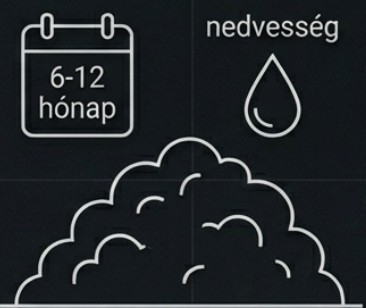
Aging: Fresh pine bark off-gasses. Before planting, it must be aged outdoors in a moist state for 6–12 months to break down toxins.
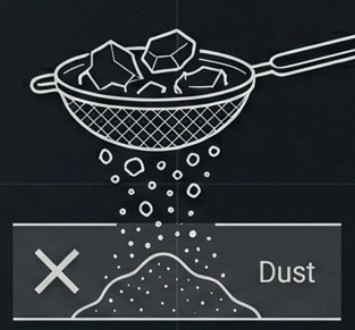
Sieving: Pieces over 12 mm dry out too quickly. Fine dust under 2 mm clogs the container and must be sifted out.
Risks and the necessity of aging
The greatest danger of freshly ground bark is phytotoxicity. The bark of conifers contains terpenes, phenols and resins that off-gas from fresh cut surfaces. These compounds inhibit the development of the fine shoots and root hairs of Japanese maples.
Professional recommendation for aging: Freshly ground bark should not be used for planting immediately. It is best piled into large heaps, thoroughly wetted, and aged outdoors for at least 6–12 months. During aging, bacteria carry out preliminary decomposition and the toxic compounds are leached out or broken down. The aging process can be accelerated by adding a small amount of nitrogen fertilizer (such as urea), which supports microbial activity.
Comparison of pine bark types and availability in Hungary
Not all pine bark is equal. Durability and chemical effect depend on the tree species.
| Tree species | Durability | Characteristics |
|---|---|---|
| Larch | Outstanding | Dark red, heavy, decomposes very slowly, excellent structural conditioner. |
| Scots pine | High | Resinous, good acidifying effect, most common raw material. |
| Norway spruce | Moderate | Lighter, decomposes more quickly, less durable structure. |
| Douglas fir | High | Common in the USA, excellent drainage effect. |
For Japanese maples, the bark of larch (Larix) and Scots pine (Pinus) are the most suitable choices. However, specialist pine bark for this purpose is not available in Hungarian garden centres, so look for chipped pine bark, sieve it, and leave it to stand for six months. As an alternative, a premium quality evergreen compost can be used, which is typically sufficiently moisture-retentive while also having adequate permeability.
Planting technique and container selection
Using a pine bark-based medium requires precise adherence to the planting process. The container should have generous drainage holes — a single hole at the bottom is often insufficient; it is worth drilling additional holes in the sides or placing spacers under the container to improve aeration. Since dry pine bark and peat are hydrophobic (they repel water), thoroughly mix the blend with water in a bucket before planting and leave it to stand until every particle is fully wetted. This initial soaking is essential for getting started, but given the nature of the medium, care must also be taken later not to wait for complete drying out, as this can cause the medium to lose its water-absorbing capacity. For this reason, maintaining a consistent watering routine is especially important with pine bark-based growing media. If transplanting from traditional soil, carefully shake off the old soil and spread the roots over the pine bark heap. This ensures that the new, airy medium immediately comes into contact with the roots. It is strictly prohibited to plant the Japanese maple deeper than it was originally. The junction of the trunk and root system (root flare) must remain at the surface.
Care protocol in pine bark-based media
Japanese maples grown in pine bark-based media exist in a kind of “semi-hydroponic” system, where the medium provides stability and air, while the gardener must supply water and nutrients with precision.
Watering requirements
Due to the high bark content, the medium dries out much faster than ordinary potting soil. During summer heat waves, Japanese maples may require daily watering. The saturation principle: When watering, apply enough water so that a generous amount of excess drains from the bottom of the container. This flushes the pores and draws fresh oxygen into the root zone. Regarding winter watering, it should be noted that maples in containers can dry out in winter too, especially in windy conditions. Check moisture levels once a month on a frost-free day.
Nutrient management
Pine bark contains minimal nutrients. The key to success is the use of Controlled Release Fertilizers (CRF). Spring application: When buds begin to swell, apply Osmocote or a similar 4–6 month slow-release granule to the surface. Composition: Look for balanced formulas (e.g. 14-14-14) or those with a slight potassium surplus. Since the bark mix contains no natural trace elements, seek out fertilizers that also include micronutrients (e.g. Osmocote Exact Standard) — copper, iron, manganese and zinc — to prevent deficiency diseases.
Common problems and solutions
Even with the most perfect pine bark mix, difficulties can arise — most of which can be traced back to environmental factors. Leaf Scorch: This is not always caused by water deficit. In containers, the root zone can overheat, halting water uptake. Solution: shade the container or use a double-walled pot. Chlorosis (Yellowing): If the leaf veins remain green while the blade yellows, this is a sign of iron deficiency or excessively high pH. Apply iron chelate to the plant. Pseudomonas infection: Black spots on branches, especially in spring. Excessive moisture and an anaerobic medium favour the pathogen. The pine bark mix is most effective at preventing precisely this disease.
Summary and professional conclusion
The pine bark-based growing medium used in container cultivation of Japanese maples is not merely an alternative option, but a fundamental prerequisite for long-term success. The secret of pine bark lies in its porosity, which guarantees oxygen supply to the roots even under the most intensive watering regimes, thereby preventing the greatest enemy of Japanese maples: root rot.
DIY grinding is a viable path, provided the gardener is willing to invest time in sieving and aging, thereby avoiding the toxic effects of fresh bark. Professional mixes such as the 5-1-1 mix or the MrMaple recipe provide a stable framework for plant development, on the condition that the gardener ensures a continuous supply of nutrients.
Growing Japanese maples in containers thus becomes the perfect fusion of technology and aesthetics, making it possible to enjoy the incomparable beauty of these trees even in regions with calcareous soil or on urban terraces. By using pine bark, risk can be minimised and plant health ensured for decades to come.
How To Plant A Japanese Maple In A Pot, Planter or Container - Wilson Bros Gardens
Japanese Maple Care Guide — Planting, Watering, Pruning & Fertilizing
What Soil Should I Use For My Japanese Maple? — Mr Maple
Boning Up on Bark - GrowerTalks
Potting Mix Recipe - Plant for Success
Making your own potting mix - Threefold Farm
The Benefits of Bark - GrowerTalks
Fenyőfélék - lucfenyő, erdei fenyő-borovi, vörösfenyő - Alföldfa
Soil Building Systems, Organic Compost, Hardwood Mulch, Dallas, TX
Nitrogen Availability in Fresh and Aged Douglas Fir Bark in - ASHS Journals
Fertilizing Japanese Maples - Japanese Maple Lovers
Untitled - Wood Substrates - NC State University
Nitrogen Availability in Fresh and Aged Douglas Fir Bark - ResearchGate
Container Japanese Maples: Tips & Tricks from a Pro - Sky Nursery