Is the Drainage Layer at the Bottom of a Pot Just an Illusion?
Understanding the Perched Water Table Theory
The debate surrounding drainage layers is one of the most fascinating “scientific battlegrounds” in horticulture, where generational traditions, soil physics models, and the latest experimental data clash head-on. I haven’t brought you an unshakeable golden rule, but rather a fresh research development that sheds light on the fact that behind well-known horticultural “myths” there often lies a physical reality far more complex than expected. Think of this post as a knowledge-awakening curiosity that helps you move beyond intuition and offers new perspectives for a deeper understanding of water management in pots.
What Is the “Perched Water Table” (PWT)?
The “perched water table” (PWT) phenomenon is one of the most important physical factors we need to understand when growing plants in containers. This is especially critical with Japanese maples, which are extremely sensitive to waterlogging and root rot.
The Essence of the Phenomenon
The perched water table is a saturated layer of soil that forms at the bottom of a pot (or above a coarser drainage layer) following irrigation. This water does not escape through the drainage holes, but instead becomes trapped between soil particles, completely filling the pores and displacing the air within them.
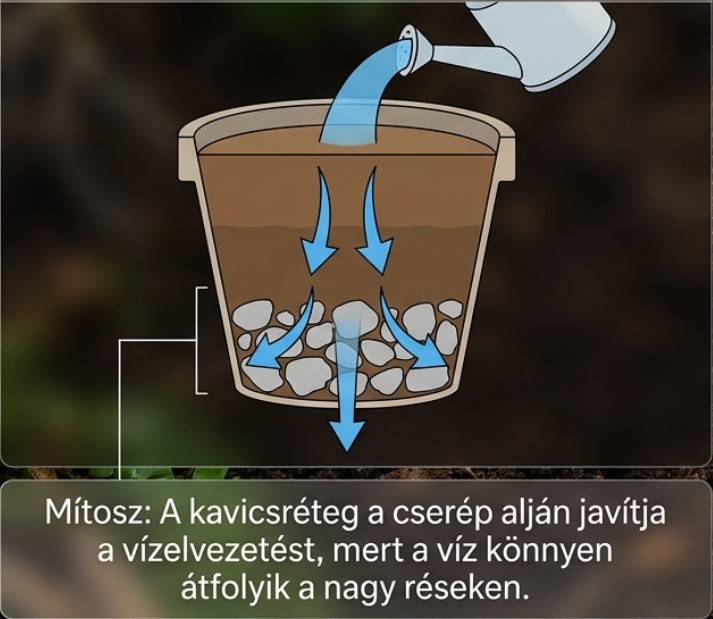
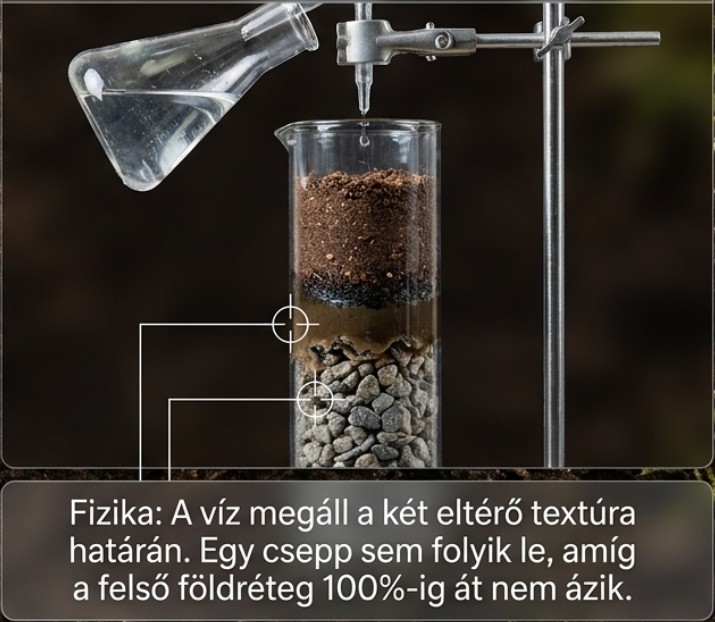
Physical Explanation: A Balance of Forces
The movement of water through soil is governed by two opposing forces:
- Gravity: This force pulls water downward, attempting to drain it out of the pot.
- Capillary force (capillarity): This force is based on the adhesion of water molecules to each other (cohesion) and to soil particles (adhesion)
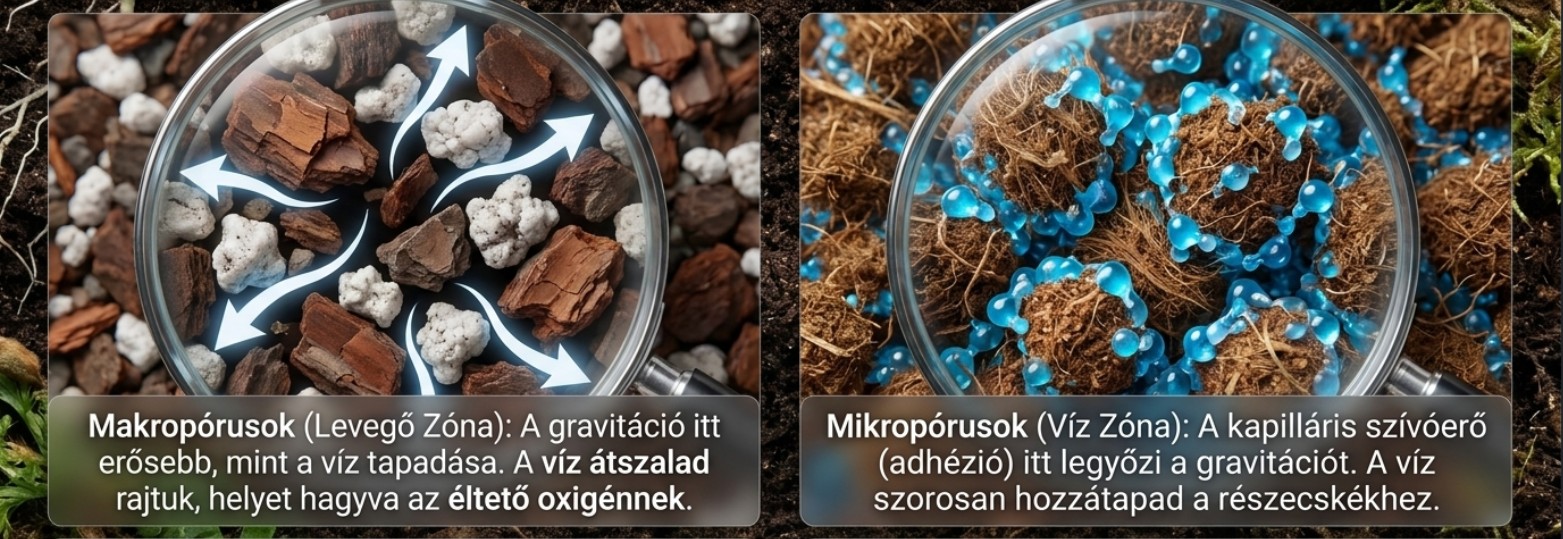
The PWT forms where capillary force and gravitational force reach equilibrium. Since gravitational pull at the bottom of a pot is minimal (there is no additional soil beneath to “pull” the water downward), the soil’s capillary force is able to retain the water, as if it were an invisible sponge.
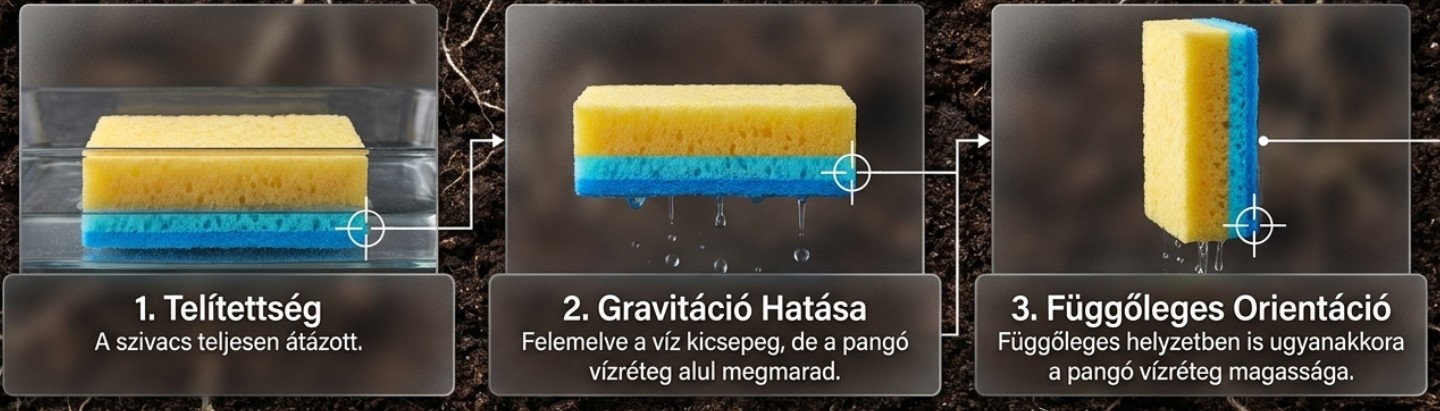
The height of the perched water layer depends solely on the structure of the soil, not on the size of the pot. In a 10-litre pot and a 2-litre pot filled with the same soil, the water layer will be exactly the same height.
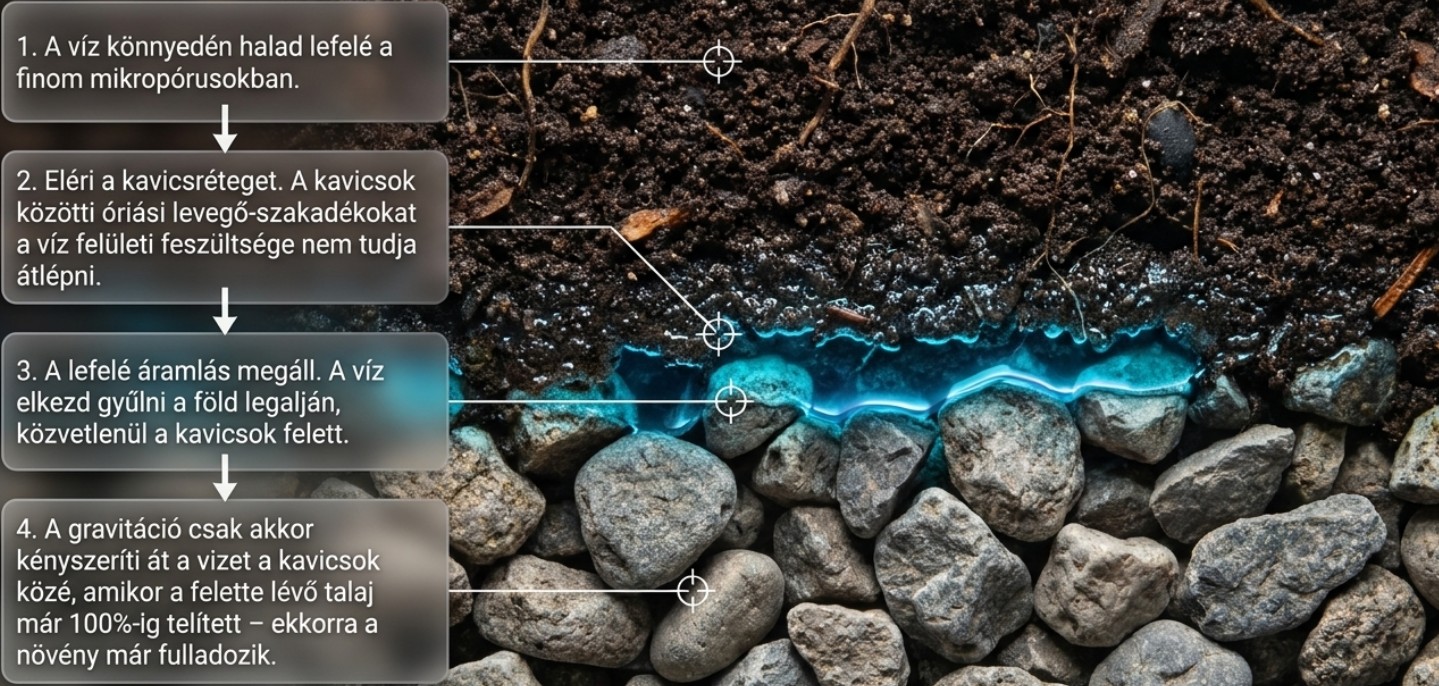
The Role of Pore Size
The smaller the soil particles (such as with peat or fine sand), the smaller the pores, and the stronger the capillary effect. As a result, finer-textured soils will have a higher saturated zone (PWT) than coarser, larger-pored growing media.
How Does This Affect Japanese Maples?
Japanese maples naturally have shallow root systems. This characteristic theoretically makes them well-suited to container growing, but it also makes them vulnerable to the dangers of the PWT:
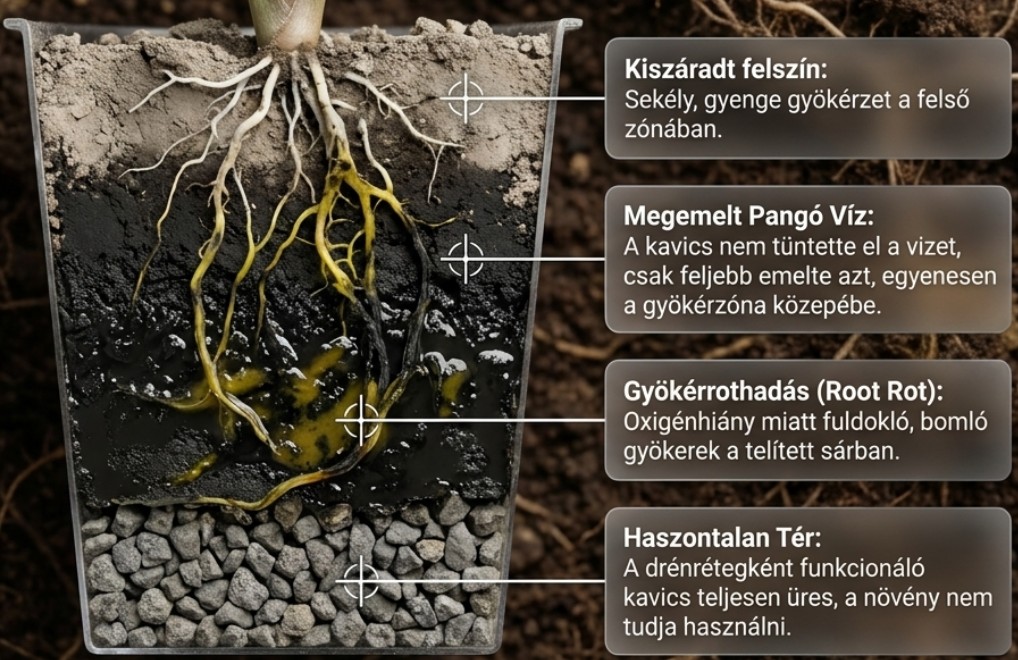
- Risk of root rot: In the PWT zone there is no air, creating an oxygen-deficient environment. This favours fungal diseases (e.g. Phytophthora, Pythium, Fusarium), which can quickly kill the tree.
- Signs of “suffocation”: If the roots of a Japanese maple reach the saturated zone, the plant may begin to wilt, with leaves turning yellow or drying out — ironically displaying symptoms similar to those of drought stress, since the rotting roots are no longer able to take up water.
- Critical drainage: For Japanese maples, the most important factors are good aeration and rapid drainage. The presence of the PWT undermines precisely these two vital conditions in the lower portion of the pot.
Solutions and Common Misconceptions
The drainage layer trap (gravel at the bottom): Conventional wisdom says to place gravel at the bottom of the pot. However, multiple sources warn that this can actually raise the PWT level, because at the interface between finer soil and coarse gravel, water “hesitates” to move into the larger pores — causing the saturated layer to sit higher up in the pot, reducing the useful root zone. (It is worth noting that one recent study suggests a coarse sand layer may help in certain cases, but the risk remains.)
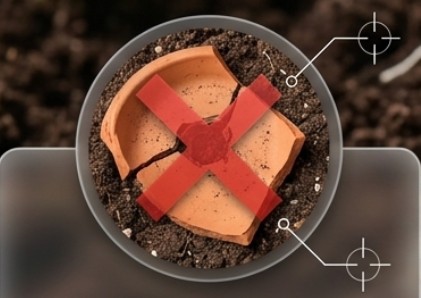
It is a myth that placing a pot shard over the drainage hole improves drainage. It only prevents soil from washing out, while worsening and redirecting water flow. Use a cut-to-size piece of mesh screen over the holes instead.
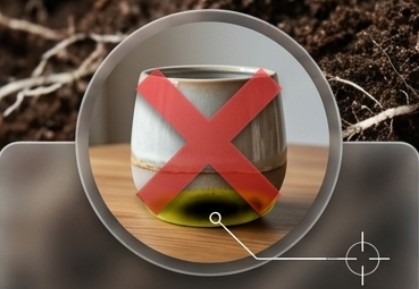
It is a myth that a thick gravel bed at the bottom of the pot protects the plant. In reality, the perched water can never escape, and the water trapped between the stones becomes a perfect breeding ground for pathogens.
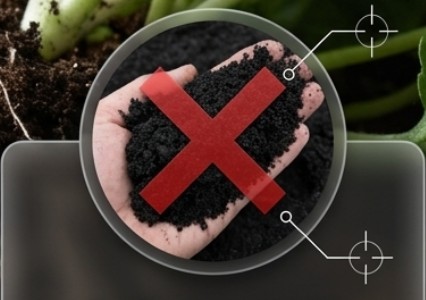
It is a myth that pure, soft, black potting compost on its own is best. In reality, in an enclosed space, fine soil tends to compact fatally due to the absence of gravity's pulling effect through deeper layers. It always needs to be loosened.
- Pot height: Since the PWT height is fixed for a given soil mix, a taller pot retains more oxygen-rich, unsaturated soil in the upper layers, where roots can develop safely.
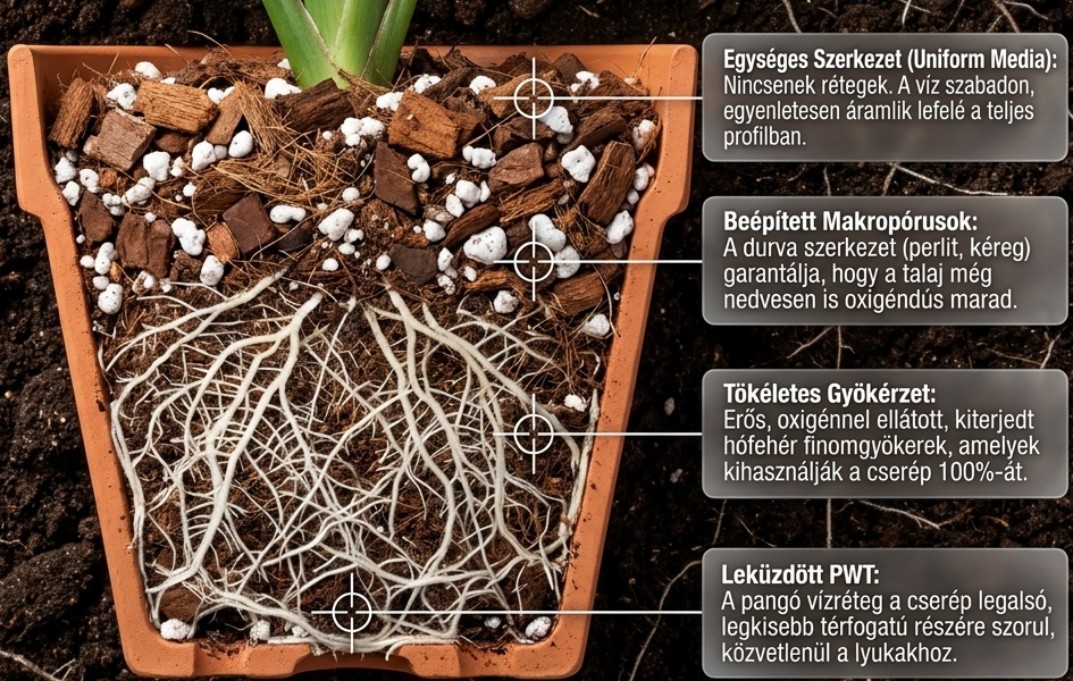
- The right growing medium: For Japanese maples, a coarse, pine bark-based mix is recommended (e.g. 3 parts potting compost, 2 parts pine bark, 1 part perlite), which keeps the PWT level lower thanks to its large pores.
- Ensuring an air gap: It is worth placing the pot on “feet” so that water can freely escape through the holes at the bottom, and no vacuum effect or waterlogging can develop beneath the pot.
- Do not layer — it is not gravel but solely gravity and a network of open pores that drains water.
- In a taller pot, the absolute height of the perched water layer is the same as in a shorter one, but proportionally it leaves far more aerated zone for the roots (admittedly, this conflicts with bonsai principles where shallower trays are used — but there, a uniform growing medium is used, e.g. akadama/lava/pumice mix).
- Mix 20–30% perlite or pumice (pumicite) into the potting compost — these create an internal “network” for oxygen throughout the entire pot.
- The most important “drainage layer” is the air beneath the pot itself. The pot must have holes at the bottom (and optionally on the sides), and must never sit in standing water. (For decorative pots with a saucer underneath, the pot can be raised on gravel for this purpose.)
IMPORTANT: If you would like to better understand the use of pine bark, this article covers the topic in detail. Not just any pine bark will do.
Summary
When growing Japanese maples in containers, the goal is not merely to get water out, but to minimise the PWT zone through a coarse-structured growing medium and an appropriate pot height — thereby ensuring the oxygen that roots cannot do without. In nature, soil layers develop gradually over centuries. Container plants, however, are closed, artificial laboratories where surface tension overrides the rules of open ground. Forget the gravel. Give your plant a pot with drainage holes and a uniform, chunky growing medium. The capillary barrier disappears, water drains freely, and roots can finally breathe.
The myth of the drainage layer is so deeply rooted in our horticultural culture that it has become an almost “unchallengeable dogma” — one we find difficult to abandon even in the face of solid scientific evidence. This practice is a kind of “intuitive trap”: it seems logical that coarse particles help water escape, yet the physical reality is often the exact opposite.
Although the arguments in favour of omitting a drainage layer rest on solid scientific foundations, there is no unanimous consensus within the professional community. The question therefore remains open, and the decision lies with the gardener, who can choose between a safe, uniform growing medium and specific drainage techniques.
Sources and further reading:
Theoretical foundations: According to Linda Chalker-Scott and other researchers, water moves with difficulty from fine-textured soil into coarser material until the upper layer is fully saturated. This theory has been the cornerstone of the argument against drainage layers for decades. – UC Master Gardeners Santa Clara County
Experimental rebuttal: Research by Avery Rowe found that drainage layers (especially thicker ones) reduced or did not affect the overall water retention capacity of the container. – PMC - Perched Water Table Research
Expert caution: Robert Pavlis, founder of Garden Myths, recommends avoiding a drainage layer as a default, and only considering it if root rot persists even after improving watering practices. – Garden Myths - Drainage in Pots
Video: Robert Pavlis’s talk on drainage layers – YouTube
Additional source: Washington State University Puyallup research – WSU Puyallup