Japanese Maple Bonsai Varieties – Part III 'Shishigashira'
Acer palmatum 'Shishigashira'
Among Japanese maple enthusiasts, few varieties are as iconic and immediately recognizable as Acer palmatum ‘Shishigashira’. This remarkable plant is a perfect fusion of mythological heritage and horticultural masterpiece.
What Does the Name Mean?
The name ‘Shishigashira’ refers to the mythical lioness figure of Japanese theater. The tree’s extremely compact form and its densely packed, crinkled leaves evoke this image.
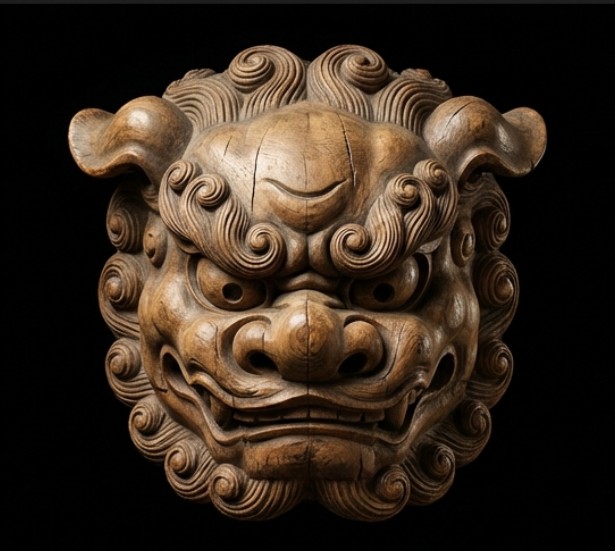
Interestingly, Japanese horticultural literature distinguishes between two separate types:
- ‘Mejishi’ – literally “lioness”; the more commercially widespread and widely known form
- ‘O-jishi’ – “male lion”; even more compact in growth, with slightly larger leaves
Morphology: What Makes It Truly Special
One of the most important distinguishing features of this dwarf cultivar of Acer palmatum is that its leaves are placed at extremely short internodes along the brief shoots. This seemingly minor characteristic is what sets ‘Shishigashira’ apart from virtually every other Japanese maple variety, and what produces its dense, refined branch structure.
Leaf Details
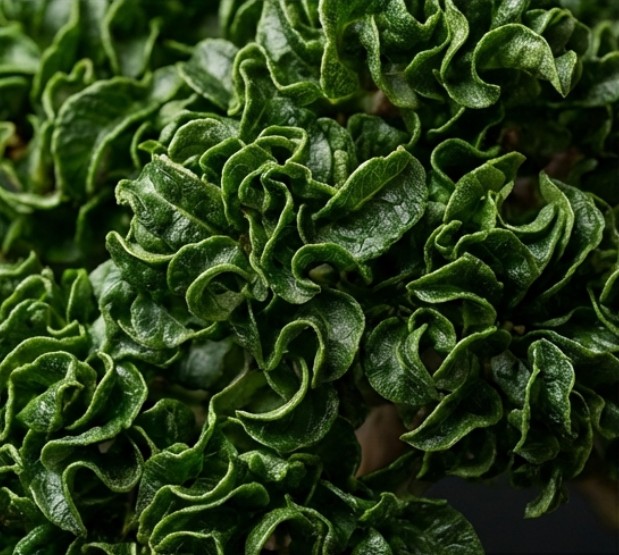
The small leaves consist of five or seven lobes; the two lower lobes closest to the petiole are shorter than the rest. The lobes are deeply divided, ovate in shape, and taper toward the tip. The leaves characteristically curve upward, often curling slightly inward — sometimes forming a V-shaped depression along the leaf’s midline. The leaf margins are irregularly serrated, with waviness also visible along the lobes. Due to their crinkled form, the leaves often appear rough in texture, though smooth leaves can also occur.
Color and Light Requirements
In spring the foliage is a bright green, which deepens in tone by summer and retains this color throughout the entire growing season — even in strong sunlight. Some mild summer leaf scorch may occur, but the cultivar generally tolerates sunny positions well.
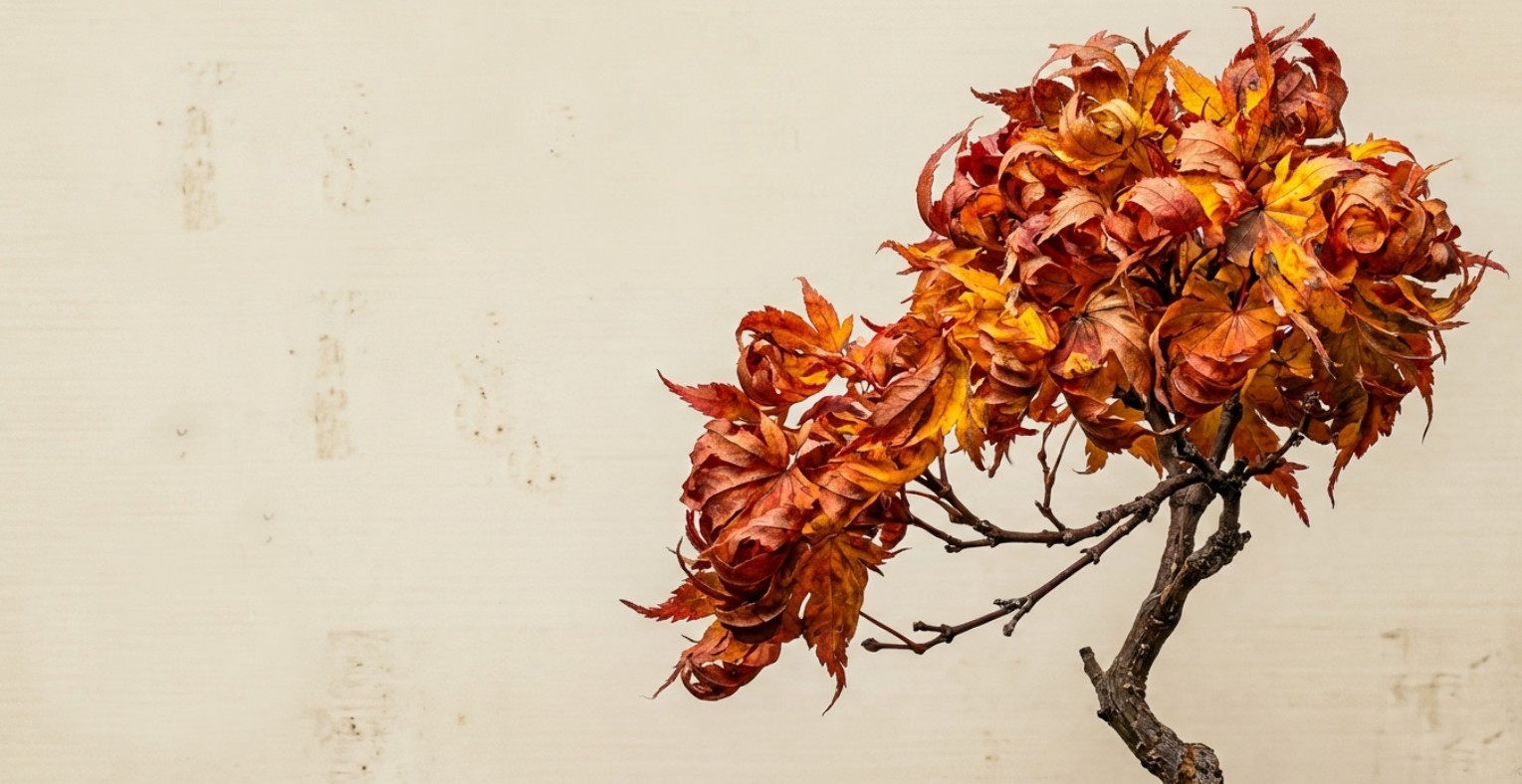
The autumn foliage color is among the most beautiful of all Japanese maples: muted golden hues blend with crimson and pink tones, and this display is one of the longest-lasting of any Japanese maple.
Growth Habit
‘Shishigashira’ is a slow-growing tree with a compact appearance. In natural conditions it can reach up to six meters in height. According to Japanese horticultural literature, this cultivar has been in cultivation since 1882, and has since been prized both as an ornamental garden tree and as bonsai material.
Bonsai Cultivation
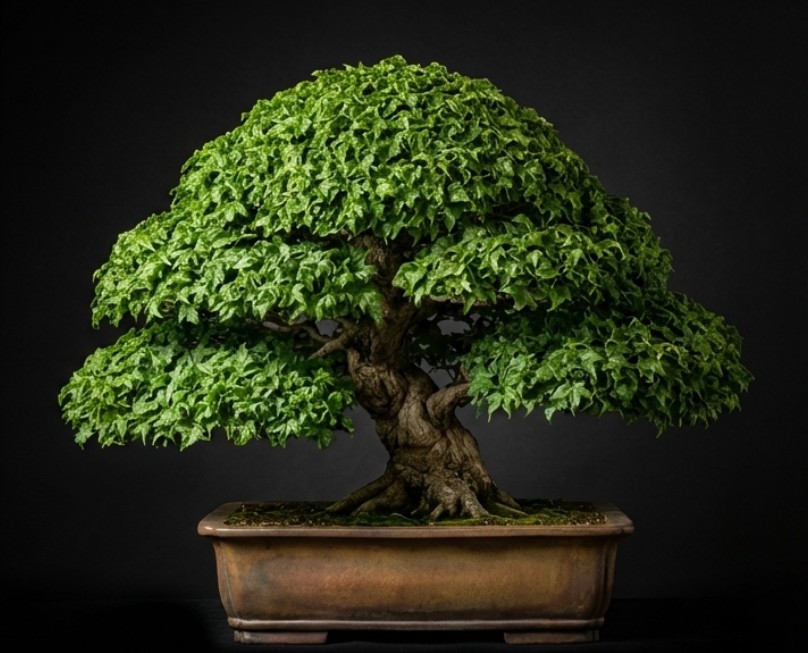
'Shishigashira' is one of the best-known dwarf palmate Japanese maple cultivars in the bonsai world, and for good reason. Its natural characteristics — short internodes and dense branching — provide an excellent foundation for development. Through pruning and pinching, these dwarf traits can be further enhanced, resulting in an exceptionally dense and intricate branch structure.
Shaping and Pruning
The back-budding tendency along the branches is strong, which is both an opportunity and a challenge: successive styling sessions require particular care to avoid damaging newly emerging buds.
Developing fine ramification — tertiary and even finer branching — demands considerable work and patience. It is worth selectively managing the buds appearing on individual branches, taking into account both their number and their precise position along the branch.
On older trees, the thick, dense branch structure can also make wiring more difficult — another factor worth accounting for in advance.
Pinching: In spring, when the first pair of leaves unfurls, remove the tiny bud (apical bud) between them to encourage fine ramification. This intervention immediately halts elongation growth. It forces the tree to direct its energy into the axillary buds, dramatically increasing the density of secondary and tertiary branches (ramification). (This technique can also promote greater branching in container-grown specimens.)
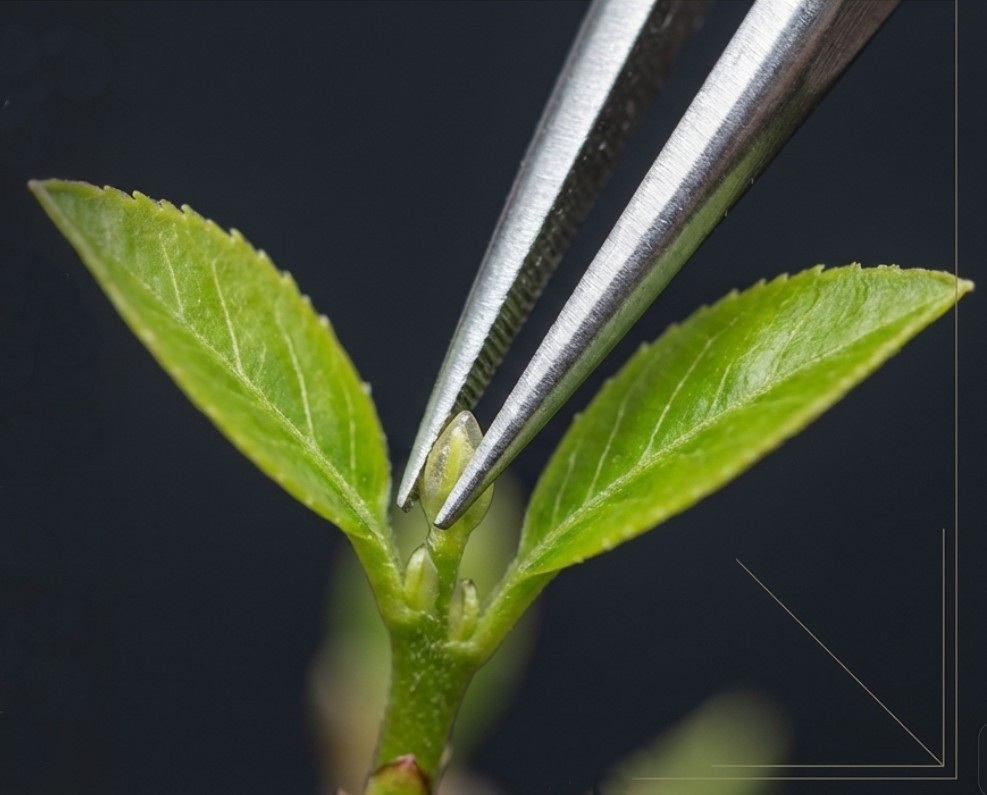
Thinning: Due to the dense foliage, the interior of the tree is prone to light deprivation, which can lead to branch dieback. Regular removal of interior shoots and downward-facing leaves is essential.
Wiring: The branches are brittle and break easily. Use anodized aluminum wire and bend with a gentle technique.
Positioning and Light Requirements
Morning sun with filtered afternoon light is ideal. On particularly hot summer days it is worth moving the tree to a semi-shaded position, although — as mentioned earlier — this cultivar tolerates sunny positions better than most of its counterparts.
Watering and Soil
Japanese maples require a consistently moist but well-draining medium. For bonsai, a granular mix is recommended (e.g. akadama, pumice, and lava rock); hard, alkaline water should be avoided where possible.
Overwintering
‘Shishigashira’ exhibits excellent resistance to winter cold and frost — this is one of its most reliable traits. As a bonsai, the root system in a ceramic pot is more vulnerable than that of a garden-planted tree; in severe frost (below −10 °C) it is worth protecting the root ball from freezing through in an unheated garage or cold greenhouse.
Propagation
‘Shishigashira’ can be propagated by grafting onto rootstock or by air layering. It does not propagate from cuttings. It is important to note that air-layered specimens generally display more moderate vigor compared to their grafted counterparts.
Acer palmatum ‘Shishigashira’ is a true living sculpture: with its slow growth, dramatic texture, and unparalleled autumn color display, it can be a jewel of any garden or bonsai collection. Developing the fine ramification takes years, but the end result — this mythologically resonant, dense, compact tree — is worth every hour of effort invested.
- Andrea Meriggioli – Bonsai Maples: Acer palmatum ‘Shishigashira’ (Technical description)
- Bonsai Today: Acer palmatum
- The Omiya Bonsai Art Museum, Saitama: Shishigashira (Japanese Maple)
- Missouri Botanical Garden: Acer palmatum ‘Shishigashira’ - Plant Finder
- Iseli Nursery: Acer palmatum ‘Ojishi’ (Male Lion’s Head Japanese Maple)
- SJG bloom: Acer palmatum ‘Shishigashira’ • Lion’s Mane Maple
- Stone Lantern: Lion’s Head Bonsai
- Plant Addicts: Japanese Maple Diseases
- Wilson Bros Gardens: What Causes Black or Brown Leaf Scorch & Burn on Japanese Maple Leaves
- Bonsai Boy: Shishigashira Japanese Maple Bonsai Tree
- Jason Hanrahan (YouTube): Shishigashira Japanese Maple