Japanese maple is too sensitive, I'd never buy one.
Is the Japanese maple a hypersensitive luxury plant?
“No, never again with Japanese maples — mine died last time too.” “Japanese maple is too sensitive, I’d never buy one.” “It doesn’t belong in our climate, it’s too hot here.”
Let’s dispel the myths
If you spend time among garden enthusiasts, chances are you’ve heard these lines before. Maybe you’ve said them yourself. And that’s completely understandable: over the years, a kind of hazy mystique has formed around the Japanese maple, as if it were a delicate, expensive porcelain figurine — handle it wrong once, and it shatters.
The reality, however, is far simpler and far more reassuring.
In this post, I’m pulling back the curtain on the “too sensitive Japanese maple” myth and showing you why this isn’t a luxury plant at all — but a tree with three fundamental needs. Once we understand them, it becomes a remarkable companion for years to come.
Where does the “too sensitive” myth come from?
The fears surrounding Japanese maple aren’t baseless. They’re mostly rooted in bad experiences, misunderstandings, and unfortunate circumstances.
A common story goes like this: the freshly purchased maple ends up in the sunniest, most exposed corner of the garden — the spot where other plants and trees “seem to do just fine.” But Japanese maple doesn’t like scorching afternoon sun or drying winds. Its leaves burn quickly, start browning, and within a short time the foliage looks scorched, sickly, or drops entirely. Other times, the opposite happens. A well-meaning gardener lavishes the tree with excessive care: frequent watering, strong fertilizers, constant attention — after all, it was expensive, and we expect it to be the crown jewel of the garden. But the Japanese maple doesn’t experience this as a gift; it experiences it as stress. The shock of import, the change of environment, overwatering, and nutrients applied at the wrong time can finish it off faster than a missed watering.
And let’s not forget the dried-out, stressed plants languishing on the shelves of big-box garden centers — many are already condemned before you even buy them. Once home and planted in unsuitable soil, they drop all their leaves, leading many frustrated gardeners to throw them out on the spot. If only they knew that this is a natural survival strategy. It’s almost certain the tree would have resprouted the following spring, had the roots continued to be cared for.
What does “sensitive” actually mean?
The Japanese maple is a surprisingly adaptable, resilient plant. But it is reactive. This means it signals relatively quickly and visibly when conditions aren’t ideal. If the air is too dry, the wind too strong, or the sun too intense, the leaf edges begin to brown. This alarms many people, but it’s actually a protective mechanism: the tree reduces transpiration to protect its roots and branches. I find this quality genuinely remarkable.
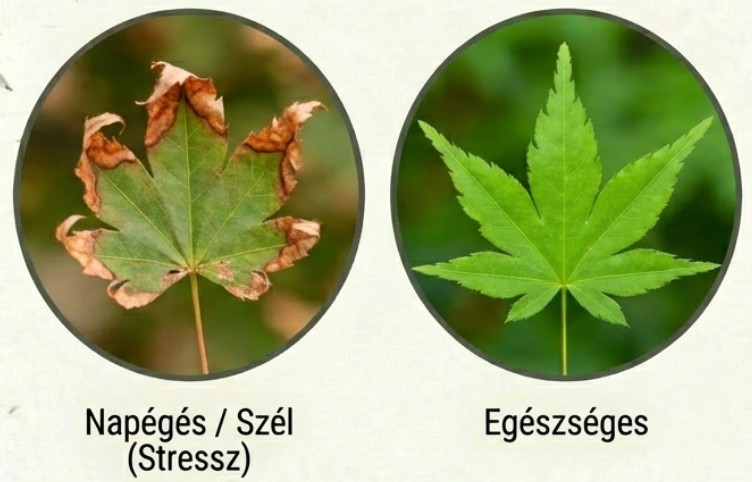
What’s more surprising is that in other respects it’s genuinely tough. Most Japanese maple cultivars handle winters down to -15 to -20 °C without trouble. If a late spring frost nips the fresh shoots — though this is extremely stressful — a healthy tree is capable of pushing new growth from dormant buds.
Compared to many popular garden plants, it doesn’t require more attention, just a different kind. Not constant intervention, but a solid understanding of the basics.
The real needs of Japanese maple — no overthinking required
If you understand just three things about Japanese maple, you’re already on the right track.
The first is light and location. Filtered light, partial shade — that’s the ideal. A spot in the garden that’s sheltered from the intense afternoon sun, but receives some morning or late afternoon light. This is when the foliage of red-leaved cultivars looks its most stunning. (Many cultivars can thrive in full sun as well, provided they are mature enough and have a well-developed root system.)
The second is soil. The Japanese maple’s greatest enemy isn’t cold — it’s standing water. It needs an airy, well-draining medium. While it appreciates a slightly acidic environment, it grows excellently in well-structured neutral soil too.
The third is water. The key word is balance. The soil should stay lightly moist, but never waterlogged. A simple layer of mulch — pine bark, for instance — works wonders: it keeps the root zone cool and helps retain moisture.
Why do so many Japanese maples die, then?
When a Japanese maple dies, the species itself is rarely to blame. Far more often, it comes down to technical mistakes.
One of the most common is planting too deep. The root collar — where the trunk meets the roots — must never be buried below soil level. If it is, the plant quite literally suffocates.
Equally fatal can be root rot, when water pools in heavy soil and the roots decay. This is often compounded by overfeeding. Too much fertilizer, or fertilizer applied at the wrong time, can easily cause root burn.
There’s one more condition I want to highlight: Verticillium wilt. Sudden wilting of a branch, with the branch blackening from the tip downward. The cause is a soil-dwelling fungus that attacks through the roots. Prevention: avoid disturbing the root zone in summer — no weeding, no digging near the trunk — and disinfect all tools used on the tree. (Unfortunately, no cure is currently known.) I felt it was important to mention this so that if your tree is affected, you understand that despite every care you’ve taken, it may not survive — and that is not your fault.
When is it not advisable to plant a Japanese maple?
We have to be honest: not every garden is right for a Japanese maple.
If the soil is extremely alkaline and rocky, and there’s no option to amend it or grow the tree in a container, the tree will likely struggle. The same applies to spots with constant, strong, dry wind (wind tunnels) where there’s no natural or artificial windbreak. And if there isn’t a single corner of the garden that offers shade on hot summer afternoons, it may be worth considering another plant. But even then, we don’t have to give up — Japanese maple grows exceptionally well in containers. In fact, some growers swear by container cultivation. I’ve written an article about the possibilities; I warmly recommend it: Three paths, three philosophies: open ground, container, and bonsai.
Closing thoughts — a shift in perspective
Japanese maple is not a difficult plant to grow. Given what it needs at planting time, it will be one of the most valuable and characterful ornaments in the garden for decades to come.
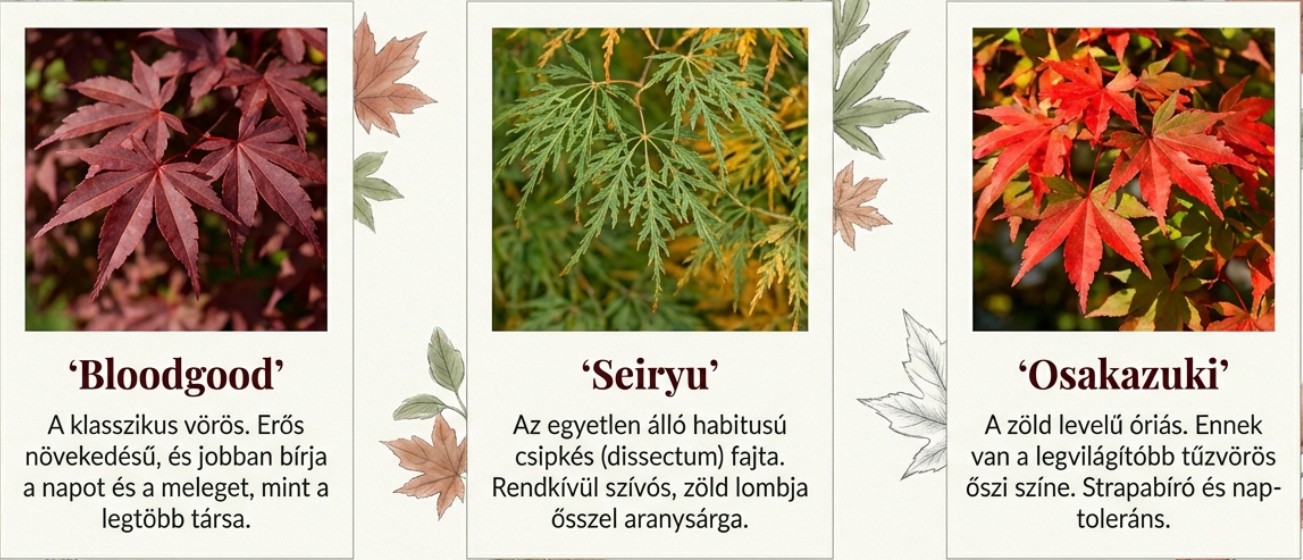
Beginners would do well to start with hardier, upright-growing cultivars such as the burgundy Bloodgood or the green Osakazuki. The beauty of the extremely fine, deeply dissected, lace-like cultivars is undeniable, but they are more sensitive to drought and sunscorch. Similarly, experimenting with seed-grown specimens of uncertain origin is not advisable — they rarely match the stability and beauty of named, grafted cultivars.
Go for it with confidence. Japanese maple is not the preserve of expert gardeners.