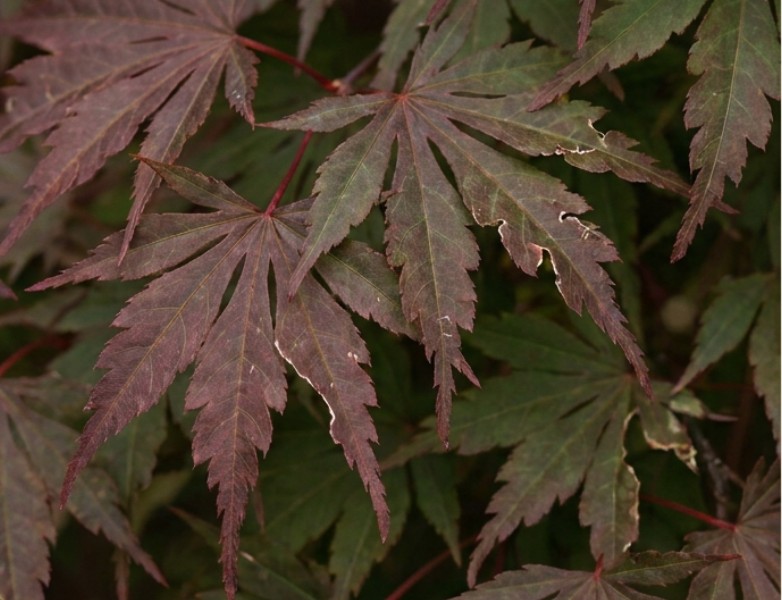
Help, My Japanese Maple's Leaves Are Scorched!
The Japanese maple (Acer palmatum and japonicum) is one of the most beautiful ornamental trees, yet its cultivation sparks much debate — especially regarding its light requirements. Many people claim: “Mine gets full sun all day and it’s perfectly fine,” while others see the same cultivar scorched in a single afternoon. What’s the truth? Can a Japanese maple truly tolerate full sun all day, especially during Hungary’s 40°C heatwaves?
The answer is not a simple “yes” or “no.” Japanese maples are naturally understory trees, meaning they are accustomed to abundant shade and filtered light in their native habitat. To understand whether yours can handle direct sun, several factors must be examined. Let’s look at what those factors are.
The Deadly Combination: Sun and Wind
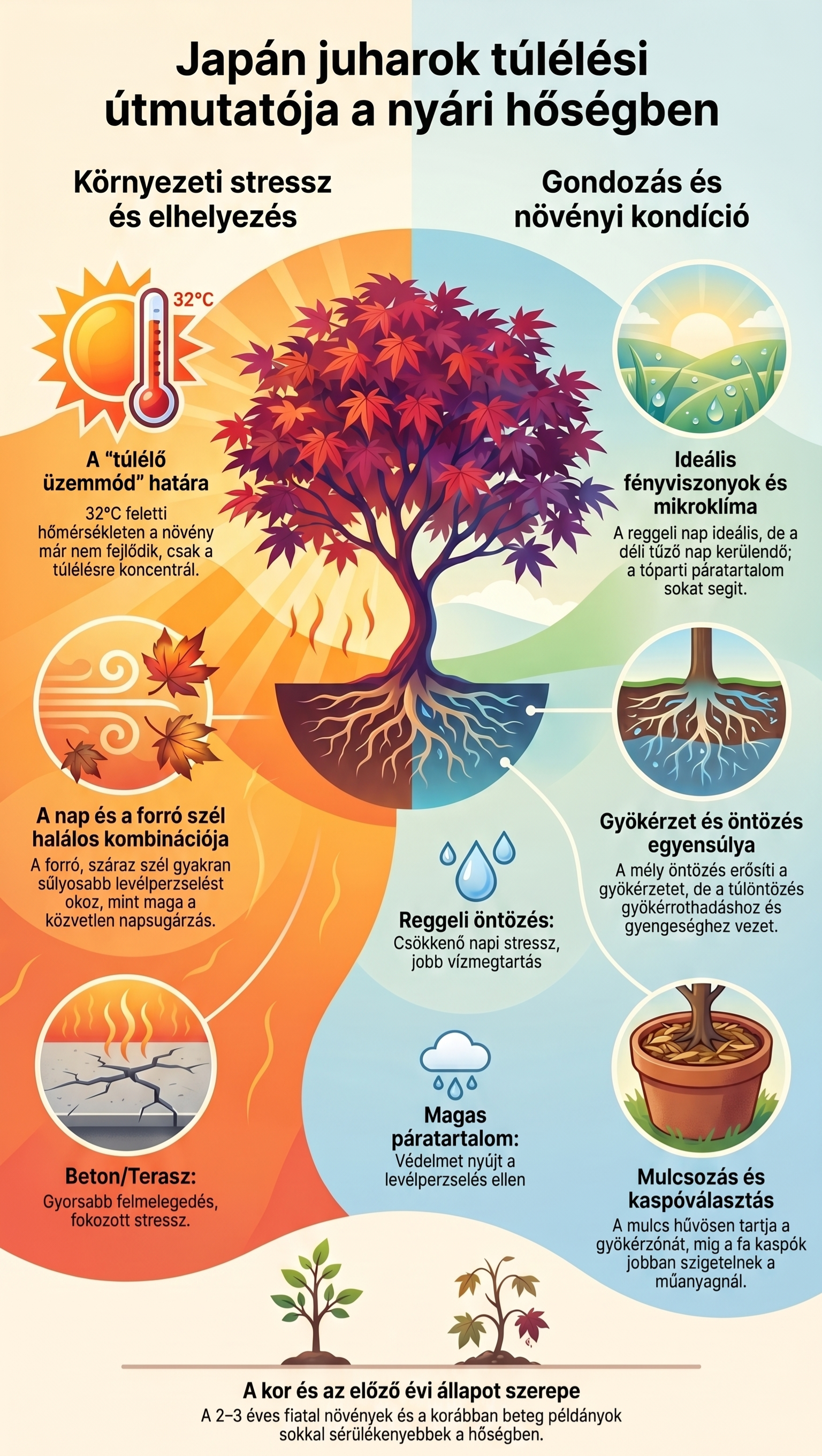
Hot, dry summer wind often causes more damage than the sun itself. Wind and sun together drive enormous amounts of water to evaporate from leaf surfaces. Leaf scorch occurs when the tree cannot replenish this loss quickly enough through its roots. A sheltered location is already half the battle.
Root Health and Stress
The tree’s ability to withstand heat lies in its root system.
Pot vs. in-ground: The roots of container-grown plants are far more exposed to temperature fluctuations. Root damage can begin at soil temperatures above 32°C.
Water management: Although maples prefer consistently moist soil, overwatering (especially in poorly draining locations) can lead to root rot, which causes leaf scorch just the same — because the damaged roots suffocate and cannot take up or transport water.
The tree’s health from the previous year is a determining factor. If the plant was under stress or lost its leaves early, it may not have stored enough carbohydrates (sugars), which also act as a natural antifreeze. The root system may have been damaged by prolonged frost over winter, affecting its resilience this year.
Environment and Microclimate
Concrete patio vs. garden pond: Concrete and asphalt reflect heat, increasing transpiration and stress. By contrast, the higher humidity near a garden pond helps cool the leaves.
Mulching: Covering the soil (e.g. with pine bark) is essential. Mulch moderates soil temperature, keeping roots cooler in summer — which is critical for survival.
The Paradox of Imported Specimens: Nursery Adaptation and “Import Stress”
The sudden wilting and leaf scorch symptoms seen in Japanese maples purchased from garden centres are due to acclimatisation stress. Many imported specimens were previously grown under perfectly controlled, automated greenhouse conditions, where ideal humidity and filtered light caused the leaves to develop earlier and more tenderly.
When these plants are placed in a real garden environment, the suddenly altered microclimate, drying wind, and intense solar radiation trigger immediate scorching and leaf curl, as the tissues are unprepared for the rigours of the weather.
This dramatic set of symptoms paradoxically creates a sense of failure for the enthusiastic hobby gardener, who believes they have “killed” the plant, when in fact the tree is simply going through a drastic adaptation phase.
It is important to understand that Japanese maples need 1–2 years to acclimatise to their new climate and conditions, and during this time their foliage will suffer aesthetically from the environmental change.
On the other hand, if you purchase a young specimen (2–3 years old), these are the most susceptible to leaf scorch, as their root systems are not yet sufficiently developed for adequate water uptake. Older, mature specimens with well-developed fibrous root systems are far more resilient against summer heat.
Rather than giving up, we should know that scorching is mostly cosmetic: come the following spring, the plant — now hardened to local conditions — will unfurl far more resilient leaves.
Instead of the feeling of “I don’t know what I’m doing,” patience and initial shading are the key, because the Japanese maple is actually remarkably tough once it gets past the initial shock. And for goodness’ sake, do NOT overwater it! Check the top 2–3–4 cm of soil with your finger — if it’s still moist, wait. Otherwise, you are destroying the tree with your own hands, when it has simply switched into “self-healing” mode.
Cultivar-Dependent Sun Tolerance
Some cultivars handle sun notably better and actually produce more vibrant colours in full sun. A few examples:
‘Seiryu’: Possesses exceptional heat tolerance.
‘Fireglow’: Holds its colour well and resists scorching even in intense heat.
‘Sangokaku’ and ‘Osakazuki’: Also among the more resilient cultivars.
By contrast, variegated-leaf cultivars or finely dissected Laceleaf types will almost certainly scorch in afternoon direct sun. Only in environments with an exceptionally favourable microclimate is there a chance of growing beautiful, fully developed, healthy specimens.
Looking Ahead
Due to climate change, summers will grow increasingly hot. What today “tolerates our summers well” may be struggling in 10–20 years at peak temperatures of 42°C. The afternoon sun (between 12:00 and 16:00) is the most intense and most damaging. It would be a real shame if a 20-year-old specimen were to perish simply because we planted it in an entirely unfavourable spot today.
Conclusion
Although certain cultivars can thrive in full sun, if you want optimal development and beautiful foliage, an east-facing position (morning sun, afternoon shade) is the safest choice. Remember: full direct sun is not a vital “need” for the Japanese maple — it is a condition that, under the right circumstances (healthy roots, mulch, water), the tree can tolerate, but one in which it is not necessarily happy.
If we completely ignore the above considerations at planting time, can we still end up with a beautiful tree? The answer is: yes. But the emphasis is on consciously providing optimal conditions so that no unpleasant surprises await us later.
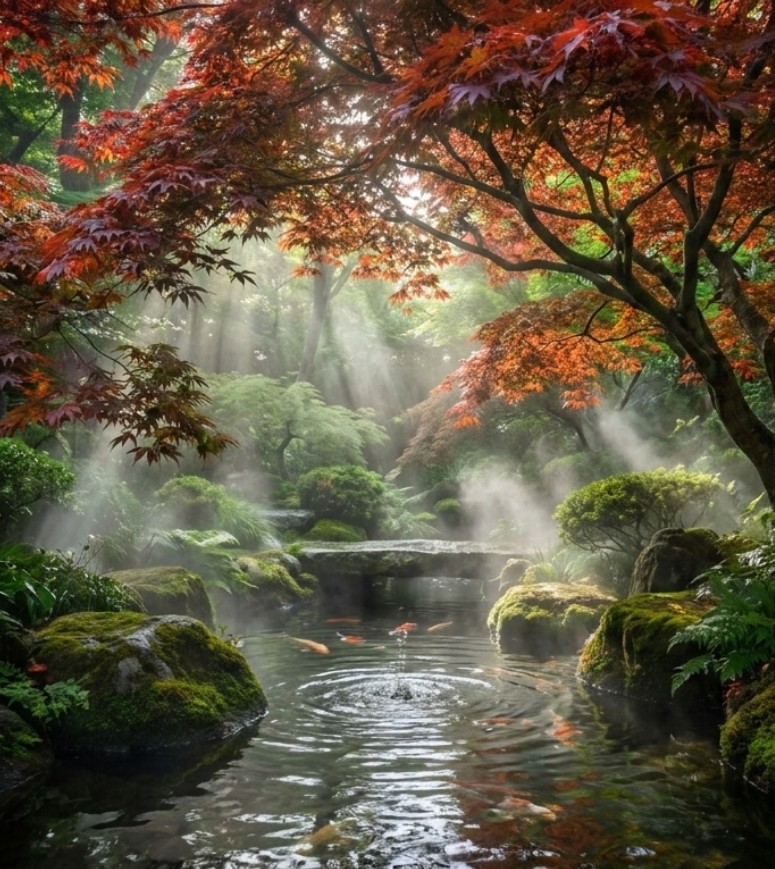
From the very day of planting, factor in the provision of afternoon shade during summer. Poor placement cannot simply be compensated for later by watering alone. Strive to create a cooling oasis — plant windbreak shrubs, shade trees (e.g. silk tree) and evaporating water features around your Japanese maple. All we need to do is cleverly imitate its natural forest home: filtered light, humidity, cool and mulched soil.
The most important ground rules, downloadable graphic: guide
Leaf Scorch of Ornamental Trees and Shrubs
What Causes Black or Brown Leaf Scorch & Burn on Japanese Maple Leaves
How to Prevent Leaf Scorch and Environmental Stress in Japanese Maples Herter Nursery
Protect your Japanese Maples - Alden Lane Nursery
Windbreak Benefits and Design - Utah State University Extension